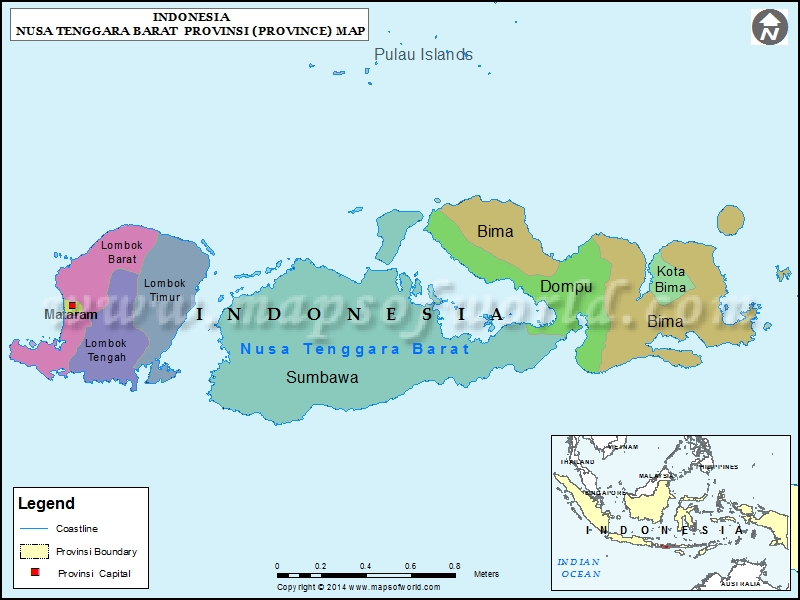
The Indonesian Meteorology, Climatology, and Geophysics Agency (BMKG) has announced the discovery of atmospheric disturbances resulting in extreme weather phenomena in the Nusa Tenggara Barat region, with expectations that these phenomena will continue until April 30, 2026. Zainuddin Abdul Majid, the head of the meteorological station, confirmed that notable developments in atmospheric dynamics could lead to increased rainfall intensity.
Zainuddin pointed out that the factors contributing to these phenomena include tropical Rossby waves and the active Madden-Julian Oscillation (MJO) in the area, along with the presence of convergence zones and a slowdown in wind speed, which enhances the growth of rain clouds on a local scale.
Details of the Event
The agency anticipates that most areas of Nusa Tenggara Barat, including the islands of Lombok, Sumbawa, and Bima, will experience rainfall ranging from moderate to heavy. Some regions, such as Lombok Island and the municipalities of Sumbawa, Dompu, and Bima, are expected to witness very heavy rainfall.
The agency has also warned of the possibility of high sea waves reaching heights of 4 meters in the southern waters of Nusa Tenggara Barat, including the Lombok Strait and Alas Strait, which could affect maritime navigation activities.
Background & Context
Nusa Tenggara Barat is considered one of the Indonesian regions prone to severe climatic fluctuations, significantly affected by global climate changes. Historically, the area has experienced similar instances of extreme weather, highlighting the importance of monitoring and predicting weather patterns to ensure the safety of the population.
It is noteworthy that climate changes have led to an increase in the frequency and intensity of extreme weather phenomena in many regions around the world, necessitating effective preventive measures.
Impact & Consequences
These extreme weather phenomena require a swift response from local authorities and civil society. Residents must take necessary precautions to ensure their safety, including avoiding activities in flood-prone areas or areas with high waves.
Moreover, these phenomena could impact agriculture and the local economy, prompting the government to take measures to enhance resilience to climate changes.
Regional Significance
While these phenomena may seem distant from the Arab region, climate changes affect the entire globe. The increased intensity of weather events could exacerbate humanitarian crises in other areas, requiring Arab countries to collaborate in research and development to address climate challenges.
In conclusion, the need for awareness and preparedness to face climate changes and weather fluctuations remains vital to ensure the safety of communities worldwide.