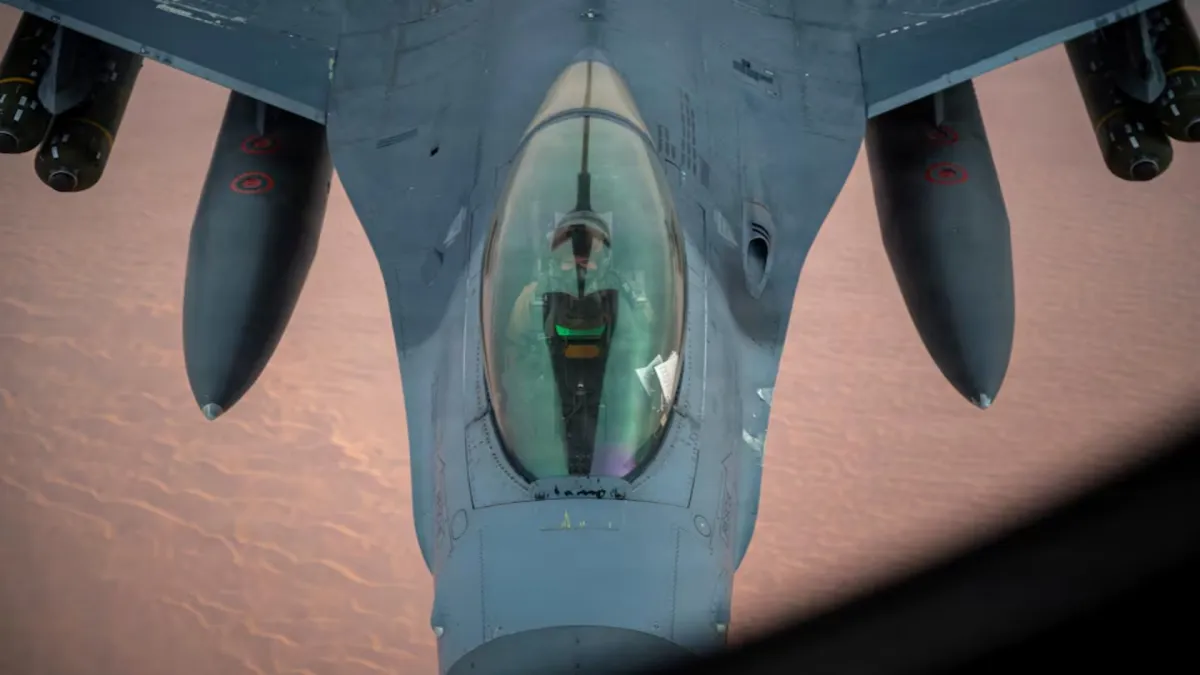
A U.S. report reveals that the United States is preparing to deploy most of its long-range stealth missiles as part of an ongoing military campaign against Iran that has lasted for over five weeks. According to Bloomberg, the next steps in the U.S. military campaign will utilize nearly the entire stockpile of the military's stealth cruise missiles, known as JASSM-ER, following the withdrawal of its stockpiles designated for other regions.
According to an informed source, an order was issued to withdraw these missiles, each valued at $1.5 million, from the "Pacific stockpiles" at the end of March. The source, who requested anonymity due to the sensitivity of the details, added that missiles located at U.S. facilities elsewhere will be transferred to U.S. Central Command bases or to the RAF Fairford base in the UK.
Details of the Event
U.S. President Donald Trump reiterated his threat on Saturday to expand the scope of attacks on Iran if Tehran does not comply with his warning to agree to a peace deal or open the Strait of Hormuz. Trump wrote on his platform "Truth Social": "Do you remember when I gave Iran 10 days to make a deal or open the Strait of Hormuz? Time is running out; they have 48 hours before destruction befalls them."
Trump had previously threatened to target Iranian power stations if Iran did not open the vital Strait of Hormuz for global oil and gas trade. He postponed the warning until April 6 after discussing fruitful talks with Iranian leadership.
Israel is preparing for another two weeks of fighting in Iran, having decided to target the remaining economic and infrastructure aspects of the war. Israeli security sources told "Kan" TV that the Iranian economy will be the next target in the campaign, as they have prepared a list of targets to strike in the coming weeks.
Background & Context
These developments coincide with an increasing military escalation in the region, where 198 workers were evacuated from the Busher nuclear power plant in Iran following a new U.S.-Israeli strike. Russia condemned this strike, indicating that it poses a threat to nuclear security.
In recent days, there has been an escalation in mutual attacks between Iran and Israel, with Iran targeting the Israeli Ministry of Defense, resulting in significant damage. At the same time, the percentage of Israelis supporting the continuation of the war has declined, reflecting increasing internal pressures on the Israeli government.
Impact & Consequences
Analyses predict that these developments will lead to a greater escalation in the conflict, as the United States and Israel seek to achieve their strategic objectives by targeting Iranian infrastructure. This escalation may exacerbate humanitarian conditions in Iran and increase suffering among the Iranian people.
Furthermore, the continuation of the war could impact global oil markets, as the Strait of Hormuz is a vital point for oil trade. Any military escalation in this region could lead to rising oil prices and increase instability in global markets.
Regional Significance
These events are particularly significant for Arab countries, as they may affect regional security and stability. The rising tensions between the United States and Iran could reflect on the relationships between Arab states and Iran, intensifying sectarian and political divisions in the region.
In conclusion, it appears that the conflict in the Middle East has entered a new phase of complexity, where military and political interests intertwine, making it difficult to predict the course of events in the future.