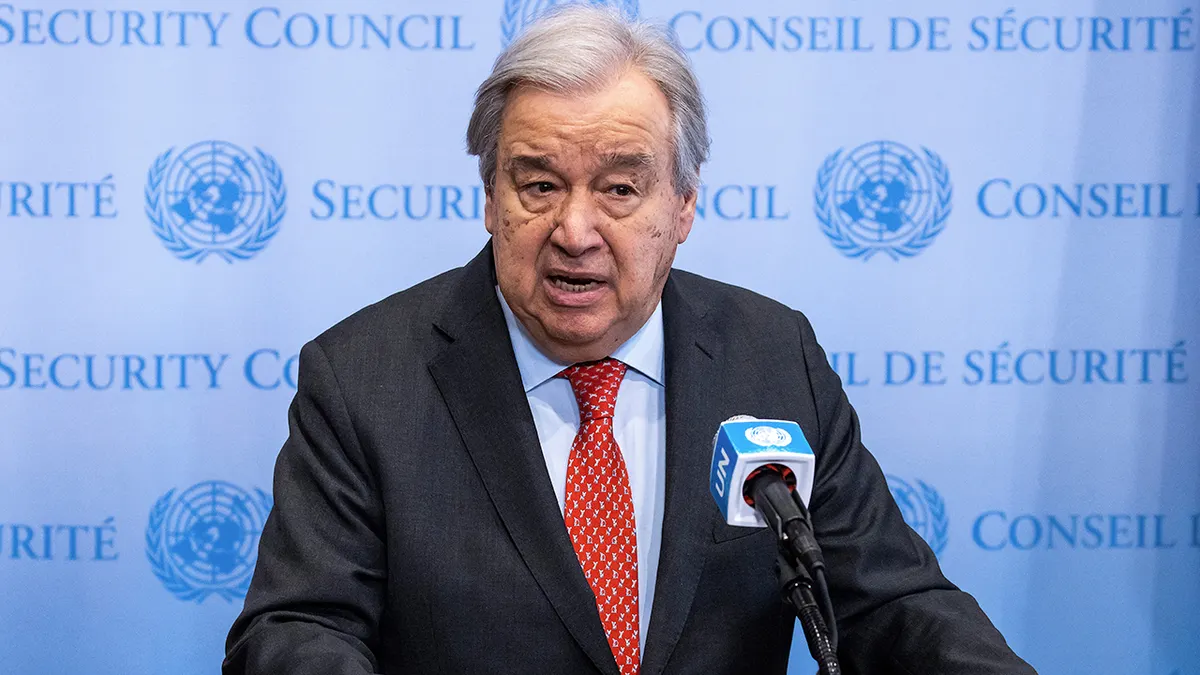
United Nations Secretary-General Antonio Guterres welcomed the two-week ceasefire agreed upon between the United States and Iran, as stated in a release by his spokesperson Stefan Dujarric. Guterres emphasized the significance of this decision in bolstering efforts aimed at achieving long-term peace in the Middle East.
Dujarric noted that the UN Secretary-General expressed hope that this agreement would help ease tensions between the two sides and serve as a step towards a comprehensive dialogue that ensures regional stability. This announcement comes at a sensitive time, as relations between Washington and Tehran are experiencing increasing tensions.
Details of the Ceasefire
The ceasefire was announced on Tuesday and will last for two weeks, reflecting intense diplomatic efforts by the international community. This decision followed a series of discussions between American and Iranian officials, leading to understandings aimed at reducing military escalation in the region.
This agreement represents a glimmer of hope amidst the multiple crises plaguing the Middle East, which has seen a rise in armed conflicts in recent years. Observers hope that this agreement marks the beginning of a new phase of dialogue and cooperation between the two nations.
Background & Context
The roots of tensions between the United States and Iran extend back decades, with relations between the two countries escalating notably since Washington's withdrawal from the Iranian nuclear agreement in 2018. Since then, the United States has imposed strict economic sanctions on Iran, exacerbating the economic and social conditions within the country.
In recent years, military tensions have intensified, with both nations exchanging accusations of hostile actions. The region has witnessed numerous incidents that have led to escalating conflicts, prompting the international community to call for dialogue and negotiations to resolve outstanding issues.
Impact & Consequences
The ceasefire is viewed as a positive step that may lead to a reduction in regional tensions and could contribute to rebuilding trust between the United States and Iran. Furthermore, this agreement may open the door for further negotiations on other issues of mutual concern, such as the Iranian nuclear program.
If this agreement succeeds in achieving its objectives, it could have positive implications for regional stability, encouraging other countries in the area to take similar steps towards dialogue and cooperation. Additionally, the success of this agreement may enhance the United Nations' position as a key mediator in resolving international disputes.
Regional Significance
This agreement represents an opportunity for the Arab region, as it may help alleviate tensions between Arab states and Iran. Given the multiple crises affecting some Arab countries, there could be a positive impact on security and stability in the region.
Moreover, the success of this agreement could pave the way for increased cooperation between Arab nations and Iran, potentially contributing to peace and development in the region. Many hope that this agreement marks the beginning of a new phase of stability in the Middle East.