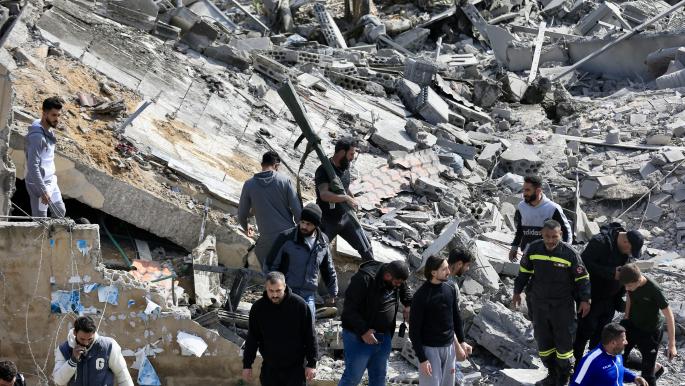
Western media has refrained from directly labeling the Israeli invasion of Southern Lebanon, preferring to use language that aligns with the narrative of occupation, raising questions about the standards of media coverage in such events. Despite the escalation of violent incidents in the region, the term 'invasion' was only employed weeks after military operations commenced.
This trend in media coverage reflects a clear bias in the language used, as some outlets tend to avoid words that might accurately reflect the reality on the ground. While Israeli forces were launching attacks on civilian areas, reports focused on political and economic dimensions without directly referencing the nature of the assault.
Details of the Event
The Israeli military operations in Southern Lebanon began earlier this month, targeting civilian areas and military objectives. These operations resulted in numerous casualties, provoking widespread local and international reactions. Nevertheless, media coverage in the West has been cautious, using terms like 'military operations' instead of 'invasion.'
This approach to coverage raises questions about how language affects public understanding of events. Instead of describing what is happening as an invasion, less severe terminology has been used, which may influence the public's perception of the humanitarian and political dimensions of the conflict.
Background & Context
Historically, the relationship between Israel and Lebanon has been marked by ongoing tensions, with several wars and conflicts occurring over the decades. The Israeli invasion of Southern Lebanon in 1982 was one of the most significant events in this context, leading to the occupation of parts of Lebanon and the continuation of the conflict to this day. This historical backdrop reflects the complexity of the conflict and the intertwining of regional and international interests.
In recent years, tensions have escalated once again, with an increase in Israeli military operations in various parts of Lebanon. These events occur within a broader context of conflicts in the region, including the Israeli-Palestinian dispute and crises in neighboring countries.
Impact & Consequences
The consequences of the Israeli invasion of Southern Lebanon could be far-reaching, potentially exacerbating humanitarian conditions in the region. Additionally, the continuation of military operations may heighten tensions between Israel and Hezbollah, signaling a risk of further escalation in the future.
The media impact cannot be overlooked, as media coverage may influence public opinion in both Western and Arab countries. The use of neutral or cautious language may lead to a diminished awareness of the humanitarian suffering experienced by civilians in Lebanon.
Regional Significance
The events in Lebanon have direct implications for the Arab region as a whole. The Israeli-Lebanese conflict reflects broader tensions in the Arab world, where political and economic interests intersect. Furthermore, the ongoing conflict may increase divisions among Arab states, undermining efforts aimed at achieving stability in the region.
In conclusion, the Israeli invasion of Southern Lebanon represents a turning point in the ongoing conflict, and media coverage must be more accurate and objective to reflect the reality on the ground. A correct understanding of events is a crucial step toward achieving peace and stability in the region.