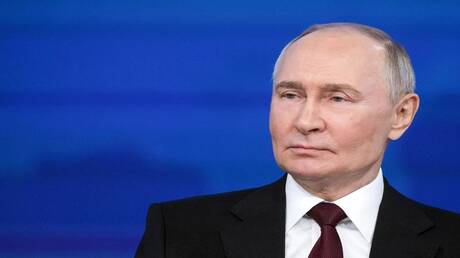
Russian President Vladimir Putin stated that Western sanctions imposed on Russia are not limited to businessmen and their immediate families, but also include their relatives up to the third degree. This reflects the broadening scope of these sanctions amid rising tensions between Russia and the West.
These remarks come at a time when tensions between Russia and the West are escalating, as Western countries seek to impose economic pressures on Moscow due to the ongoing events in Ukraine. Putin indicated that these sanctions unfairly target individuals who have no direct connection to the political or economic decisions made by the Russian government.
Details of the Event
During a meeting with Russian businessmen, Putin confirmed that Western sanctions have affected their families and relatives, increasing the suffering of ordinary citizens. He explained that these measures are not only against the wealthy but also include individuals from their families who may have no role in business or politics.
He also noted that these sanctions impact the daily lives of many Russians, as many find themselves in difficult situations as a result of these policies. He assured that the Russian government would work to support those affected by the sanctions.
Background & Context
Historically, Russian-Western relations have seen increasing tensions since Russia's annexation of Crimea in 2014. Since then, Western countries have imposed a series of economic sanctions targeting multiple sectors of the Russian economy, including energy and finance.
The recent sanctions come as a reaction to the Russian invasion of Ukraine, with Western nations aiming to reduce Russia's ability to finance its military operations. However, these sanctions have not been limited to individuals directly involved but have extended to include their families and relatives, raising widespread criticism regarding the fairness of these measures.
Impact & Consequences
The repercussions of these sanctions could be far-reaching, potentially exacerbating economic and social conditions in Russia. As pressures mount, the Russian government may resort to new measures to support the local economy, which could affect the country's stability in the future.
Moreover, these sanctions could lead to increased tensions between Russia and Western countries, as Moscow may respond with countermeasures or escalate its foreign policy. This situation could contribute to worsening regional and international crises, complicating the geopolitical landscape.
Regional Significance
Given the current situation, the impact of Western sanctions on Russia may extend to the Arab region. As tensions rise, Arab countries may seek opportunities to strengthen their economic ties with Russia, particularly in the fields of energy and trade.
Furthermore, the situation in Ukraine may affect oil and gas prices, which could reflect on Arab markets. Therefore, monitoring the developments of these sanctions will be essential to understand how they affect the region as a whole.
In conclusion, Western sanctions on Russia remain a controversial topic, raising questions about fairness and effectiveness. As tensions continue, there remains hope for diplomatic solutions that could alleviate the burdens on affected populations.