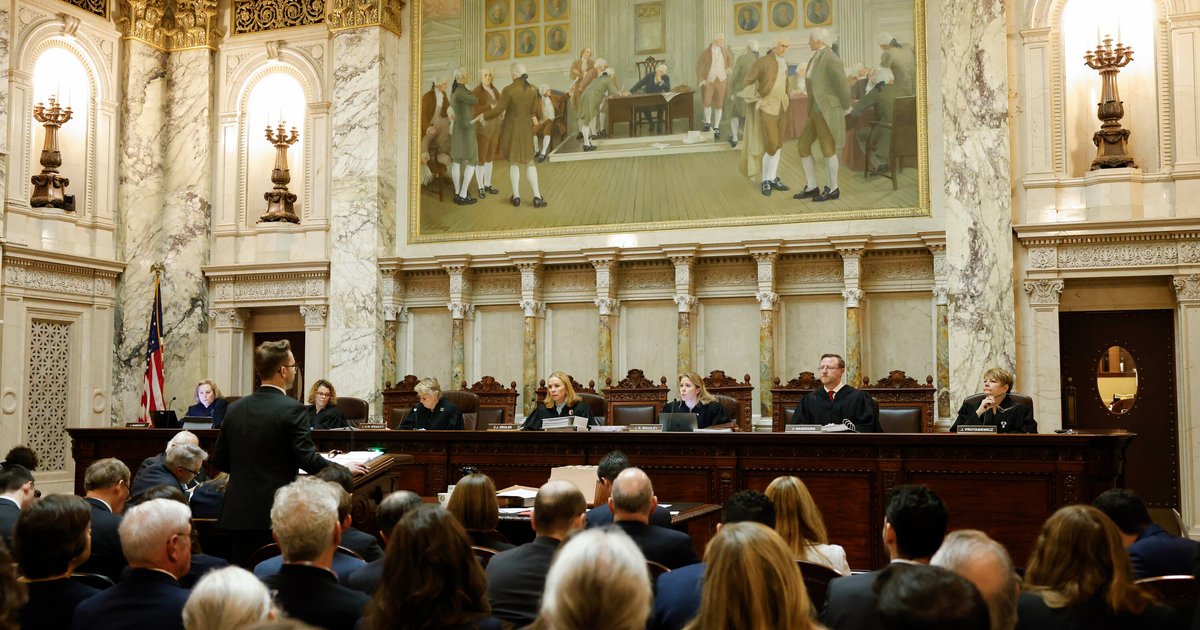
A judicial committee in Wisconsin has rejected the Democratic Party's attempt to redraw electoral maps, underscoring the persistent political tensions in the country. This decision comes at a crucial time as the United States gears up for midterm elections, raising questions about the impact of this move on the upcoming election results.
Typically, attempts to redraw electoral maps aim to achieve a better balance between political parties; however, the recent decision reflects the difficulties faced by Democrats in achieving this in a state traditionally considered a Republican stronghold. This ruling has elicited mixed reactions among political circles, with some viewing it as a step toward reinforcing Republican control over electoral districts.
Details of the Event
The case revolves around redistricting in Wisconsin, where Democrats seek to adjust electoral boundaries to ensure better representation in Congress. However, the judicial committee found that this attempt lacked sufficient legal grounds, leading to its rejection. Some observers have noted that this decision could affect Democrats' ability to compete in the upcoming elections.
It is worth mentioning that Wisconsin has experienced significant political shifts in recent years, with previous elections showing a disparity in results between the two parties. Nevertheless, Republican control over electoral districts may mean that Democrats will face greater challenges in securing seats in Congress.
Background & Context
Historically, the process of redistricting in the United States has been a contentious issue, often used as a means to bolster one party's power at the expense of another. In Wisconsin, there have been previous attempts to redraw maps, but these have often faced strong opposition from the Republican Party. This struggle has been ongoing for many years, as each party seeks to enhance its position in the political arena.
In recent years, issues related to redistricting have become more complex, especially with the increasing political divisions in the country. These divisions have affected how states handle these matters, making it difficult to achieve consensus on electoral boundaries.
Impact & Consequences
The decision by the Wisconsin judicial committee could have far-reaching implications for the upcoming elections. If the current situation persists, Democrats may find themselves in a weakened position, potentially affecting their ability to achieve a majority in Congress. Additionally, this ruling may encourage Republicans to solidify their positions in other states facing similar conflicts.
Moreover, this decision could spark broader discussions about electoral fairness and voter rights. Amid growing concerns about election integrity, this ruling may increase pressure on the electoral system in the United States, necessitating a reevaluation of how these processes are managed.
Regional Significance
While events in Wisconsin may seem distant from the Arab region, there are lessons to be learned. Political conflicts over power distribution and representation are global issues, and Arab countries may face similar challenges in the context of promoting democracy and political participation. Understanding how these issues affect elections in the United States can help guide discussions about political reforms in the Arab world.
In conclusion, the decision by the Wisconsin judicial committee illustrates how local issues can impact the broader political landscape. As elections approach, it remains to be seen how political parties will respond to this ruling and whether it will influence future election outcomes.