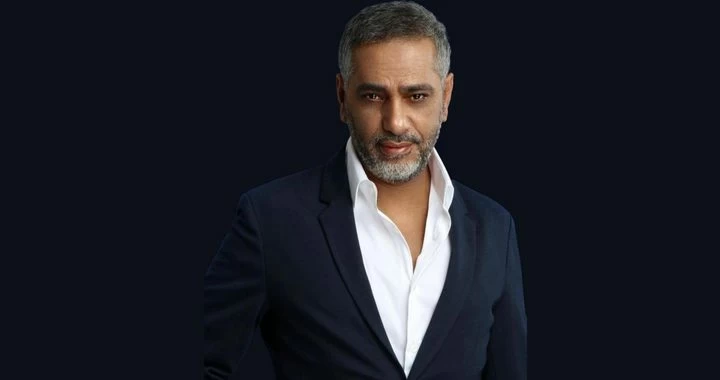
The Beirut Criminal Court has witnessed new developments in the case of Lebanese artist Fadl Shaker, where the testimony of Walid Al-Balbeisi, Shaker's personal assistant, was heard. He confirmed that the artist was unaware of the onset of clashes that occurred during the Abra events. The session, held on March 24, lasted no more than 10 minutes, during which Al-Balbeisi provided a detailed account of the events leading to the confrontations between Sheikh Ahmad Al-Assir's group and the Lebanese army.
During the session, Al-Balbeisi stated that Fadl Shaker was abruptly awakened to be moved to a safe location, indicating that he later relocated to the Ain al-Hilweh camp, where he remained for several years before surrendering to the Lebanese army on October 5 of last year. He also pointed out that all weapons held by the group responsible for protecting the artist were handed over to the army a week after the clashes began, in coordination with the relevant authorities.
Details of the Incident
The Criminal Court continues to examine the case involving Fadl Shaker and Sheikh Ahmad Al-Assir, which includes incitement to assassinate Sheikh Hilal Al-Hamoud. A new court session is scheduled for April 24. Additionally, the military court will hold another session on May 26 to review the Abra events file.
The last session did not involve in-depth discussions with the witness, as the court limited itself to listening to his testimony, resulting in the brief duration of the session. The defense team for Fadl Shaker has requested an extension to prepare legal defenses, citing new information that emerged from Al-Balbeisi's testimony.
Background & Context
The Abra events date back to 2023, when the region witnessed violent confrontations between Sheikh Ahmad Al-Assir's group and the Lebanese army, resulting in casualties on both sides. Fadl Shaker, who was under the protection of Al-Assir's group at the time, became a focal point of the case after being accused of inciting violence.
This case is considered one of the prominent issues in Lebanon, reflecting the political and social tensions in the country, especially amid the ongoing economic and security crises. Furthermore, the role of artists in such events raises significant debate regarding their influence on society.
Impact & Consequences
The repercussions of this case extend beyond the trial itself, reflecting the internal conflicts in Lebanon and their impact on artists and society at large. As tensions escalate, artists face increasing pressures that may affect their artistic careers.
Moreover, the case could open the door to further discussions about freedom of expression and art in Lebanon, particularly under the current political circumstances. Will artists be able to express their opinions freely, or will they face severe consequences?
Regional Significance
The case of Fadl Shaker exemplifies the challenges faced by artists in the Arab world, where politics increasingly intertwines with art. In many Arab countries, artists suffer from restrictions on freedom of expression, impacting their ability to produce works that reflect the realities of their communities.
This case highlights the importance of supporting freedom of expression and art in the Arab world, as art can play a crucial role in fostering dialogue and understanding between different cultures.
In conclusion, the case of Fadl Shaker remains a focal point for many, intertwining legal, social, and political dimensions, making it one of the most complex cases in the Lebanese arena.