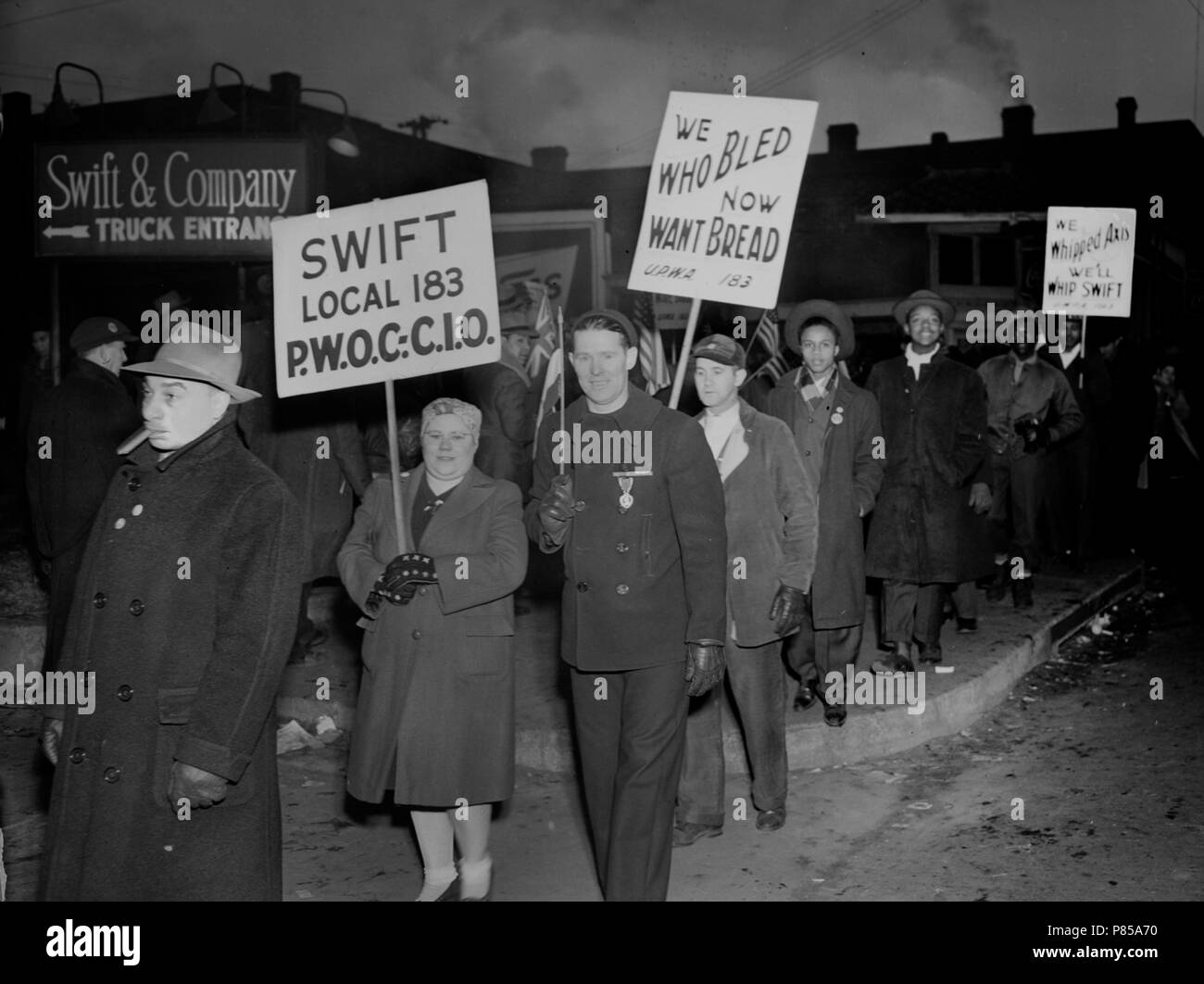
The workers' strike at one of the largest meat processing plants in the United States has entered its third week, with employees demanding improved working conditions and higher wages. This strike comes at a sensitive time as the industrial sector faces increasing pressures, raising questions about the future of the meat industry in the country.
The plant, located in Illinois, supplies the American market with massive quantities of meat and is considered one of the largest in the country. The strike began earlier this month after negotiations between the plant management and workers failed, with employees feeling that their wages and working conditions do not reflect the challenges they face amid rising living costs.
Details of the Strike
Thousands of workers are participating in the strike, and the protests have seen an increase in the number of participants over time. Workers are demanding a wage increase of up to 15%, in addition to improvements in working conditions, such as reducing overtime hours and increasing break times. Union representatives have indicated that workers feel exhausted due to long working hours and increasing pressures.
These protests come at a critical time for the meat industry, which faces significant challenges due to rising raw material prices and increased demand for meat. Reports have shown that several other plants in the United States have also experienced similar strikes in recent months, indicating that this issue is not confined to just one facility.
Background & Context
Historically, the meat industry in the United States has witnessed numerous strikes and protests, especially during tough economic conditions. In recent years, pressures on workers have increased due to rising living costs, leading to calls for improved wages and working conditions. The COVID-19 pandemic has also revealed many structural problems in this industry, where many workers suffered from unsafe working conditions.
These strikes are part of a broader movement encompassing various industrial sectors in the United States, where workers are striving for their rights and better conditions. This movement has contributed to raising public awareness about labor issues and workers' rights, prompting some companies to reconsider their policies.
Impact & Consequences
If the strike continues for an extended period, it could lead to a shortage of meat supplies in the American market, potentially affecting prices and increasing pressures on consumers. Additionally, these protests may inspire workers in other sectors to take similar actions, potentially leading to a new wave of strikes in the future.
These events serve as an indicator of the state of the American economy, as many industries struggle to adapt to rapid market changes. The continuation of strikes could lead to changes in government policies related to labor, which may impact the future of workers in the country.
Regional Significance
These events are significant for the Arab region, as they could affect the prices of meat imported from the United States. Given the heavy reliance on American meat in many Arab countries, any shortage in supplies could lead to price increases, impacting household budgets.
Moreover, these protests reflect the challenges faced by workers worldwide, which may encourage labor movements in Arab countries to demand their rights and improve their working conditions. Amid the economic crises affecting many Arab nations, these events could serve as a catalyst for changing economic and social policies.