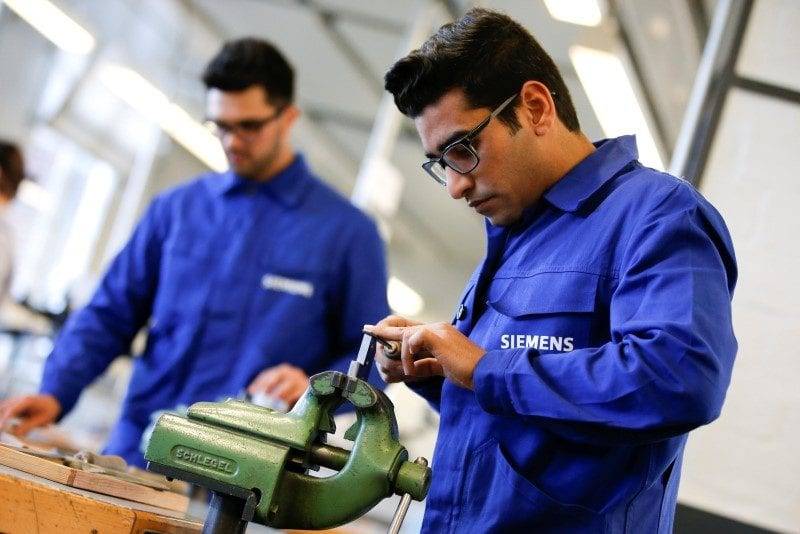
Discussions in Germany are increasing regarding the importance of integrating refugees into the labor market, especially given the current economic challenges facing the country, including labor shortages. Reports indicate that the percentage of refugees who have managed to secure jobs remains lower than expected, raising questions about the policies in place in this area.
Statistics show that approximately 40% of refugees in Germany are currently employed, while 60% are still searching for job opportunities. These figures reflect the challenges refugees face in integrating into the labor market, including language and cultural barriers, as well as a lack of required skills in certain fields.
Details of the Situation
These figures coincide with escalating political discussions on how to address labor shortages in the country. The German government is under increasing pressure to boost productivity and working hours, making it essential to consider how to better utilize the potential of refugees. In this context, many experts have pointed to the importance of improving training and vocational guidance programs for refugees, which would enable them to integrate more quickly and effectively into the labor market.
There are also growing calls from certain political parties to increase financial and training support for refugees, facilitating their access to jobs that match their qualifications. These efforts could help reduce the unemployment rate among refugees while simultaneously boosting the German economy.
Background & Context
Historically, Germany has witnessed a significant influx of refugees, particularly following political and economic crises in regions such as the Middle East and Africa. Since 2015, the country has welcomed over 1.5 million refugees, making it one of the primary destinations for refugees in Europe. However, the integration process has not been easy, as many refugees have faced difficulties in securing jobs due to language barriers and cultural differences.
Despite these challenges, there are inspiring success stories of refugees who have managed to build new lives in Germany. Many have established their own businesses or secured jobs in various fields, contributing to the local economy.
Impact & Consequences
The percentage of working refugees directly affects the German economy, as an increase in the number of refugees who are employed can help fill gaps in the labor market. Given the demographic challenges Germany faces, such as an aging population, leveraging the potential of refugees is an urgent necessity.
Furthermore, improving working conditions for refugees can contribute to enhancing social cohesion and reducing tensions between different communities. By providing fair job opportunities, refugees can feel like part of society, which promotes stability in the country in the long term.
Regional Significance
The issue of refugees in Germany is particularly significant for the Arab region, as many refugees come from Arab countries such as Syria and Iraq. The success of these refugees in integrating into German society can serve as a model for other countries facing similar challenges.
Additionally, improving working conditions for refugees can help strengthen relations between Germany and Arab countries, as cooperation in training and employment sectors can have a positive impact on economic development in the region.
In conclusion, the issue of integrating refugees into the German labor market is not just an economic matter; it is also a humanitarian and social issue that requires joint efforts from all stakeholders involved. By enhancing job opportunities and improving training programs, Germany can benefit from the potential of refugees, contributing to building a more stable and diverse society.