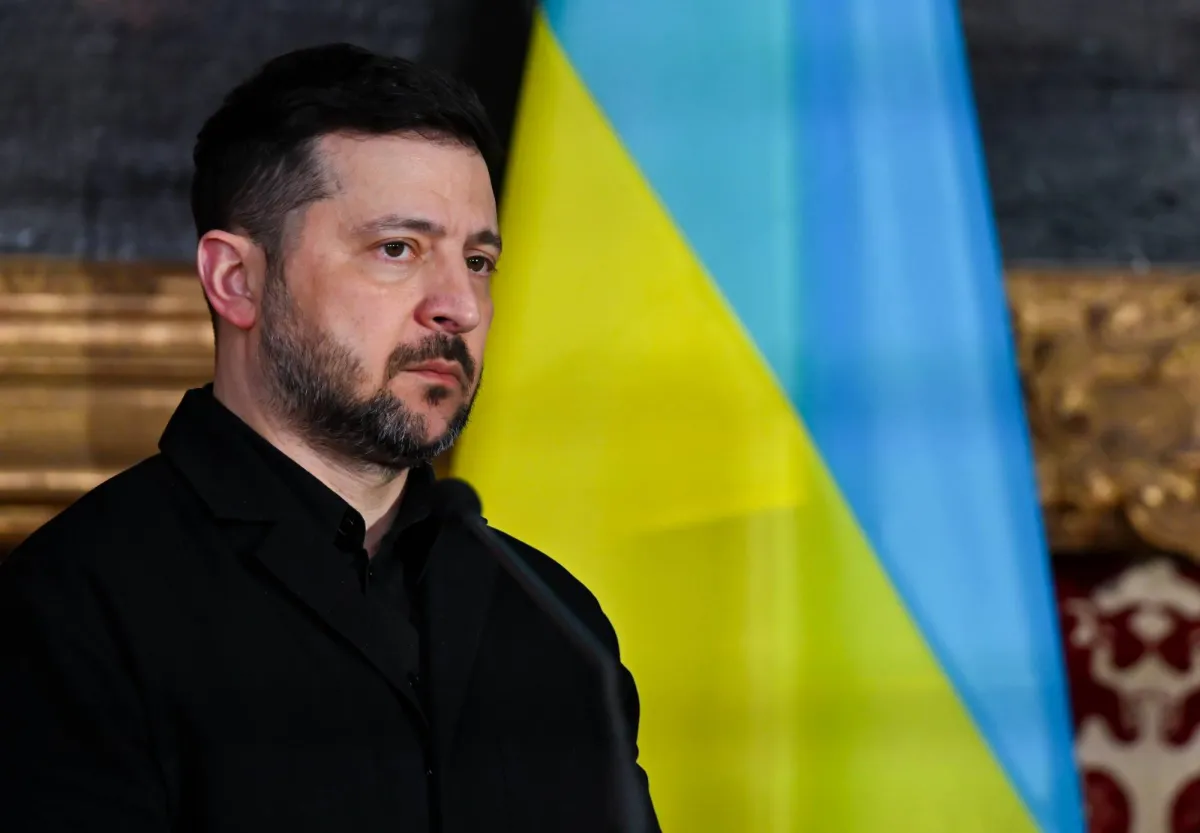
Ukrainian President Volodymyr Zelensky announced on Monday that there is clear and solid evidence confirming that Russian military intelligence is still providing intelligence to the Iranian regime. These statements were made in the context of a report presented by the head of Ukrainian defense intelligence, Oleg Ivashchenko, which Zelensky shared via a post on the platform 'X'.
Zelensky explained that Russia relies on its own capabilities regarding electronic intelligence and communication signals, along with data received through its partnerships with countries in the Middle East, indicating Iran as a primary beneficiary of this information.
Details of the Event
Zelensky added that Ukrainian defense intelligence provides periodic assessments of the situation on the front lines, including internal information related to Russian military operations in Ukraine. This information reveals the complexity of the relationship between Russia and Iran, which extends beyond military cooperation to intelligence activities.
For his part, Kremlin spokesman Dmitry Peskov stated that Russia is cautiously monitoring the statements regarding the current situation with Iran, pointing to conflicting statements on this matter.
Background & Context
It is noteworthy that relations between Russia and Iran have seen a significant rapprochement in recent years, particularly amid multiple regional crises. Both Moscow and Tehran seek to achieve strategic interests, representing an opportunity for Russia to enhance its influence in the Middle East, while Iran views Russian support as a means to pressure its regional and international adversaries.
Additionally, these developments coincide with rising tensions in the region, especially with the ongoing Ukrainian crisis and its effects on international relations. These joint operations between Russia and Iran are likely to further complicate relations in the Middle East, especially with intersecting interests with other major powers.
Impact & Consequences
Zelensky's assertions indicate that Russian-Iranian cooperation in the field of intelligence could lead to greater support for the Iranian regime in its regional conflicts, potentially enhancing Tehran's ability to face American and Arab pressures. Thus, this cooperation remains key to understanding the negative dimensions that may affect the stability of the Middle East.
Internal conflicts in Iran and disputes with the West may find in such intelligence a support to strengthen its positions. Furthermore, this Russian-Iranian collaboration illustrates how countries seeking to alter regional power balances can utilize intelligence data to achieve their strategic goals.
Regional Significance
Considering the regional situation, these developments could increase challenges to Arab national security. Especially in light of calls from some countries in the region to confront the growing Iranian influence. This trend signals an escalation of tensions and poses difficulties for any efforts to achieve peace and stability in the region, reflecting a state of perpetual instability in regional relations.
This intelligence underscores the urgent need for Arab countries to monitor developments related to Russian-Iranian relations and to work on strengthening their alliances to ensure effective strategies to confront this growing challenge.
In conclusion, the information provided by Zelensky illustrates how dynamics between major powers can influence conflicts in varying regions, necessitating effective political and diplomatic responses from Arab countries to address such challenges.