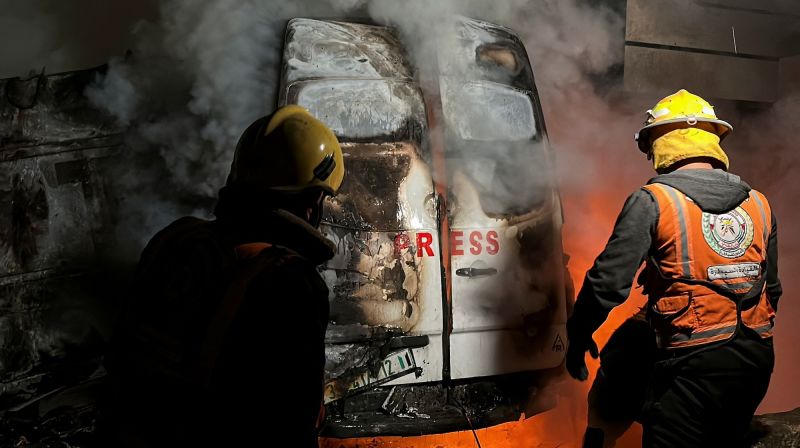
Airstrikes have led to the deaths of three journalists and nine medics in Lebanon, marking a new escalation of violence in the region. These events come at a sensitive time, as the Houthi group from Yemen has confirmed that it launched an attack on Israel, the first of its kind during the ongoing war. In contrast, the internationally recognized Yemeni government has expressed its refusal to involve Yemen in Iran's conflicts, further complicating the regional situation.
Events in Lebanon are unfolding amid rising regional tensions, with the country facing multiple pressures due to the ongoing conflict in the area. The airstrikes that targeted journalists and medics reflect the deteriorating security situation and highlight the risks faced by journalists and humanitarian workers in conflict zones.
Details of the Incident
According to local sources, the airstrikes targeted areas in Lebanon, resulting in the deaths of three journalists who were covering events on the ground, along with nine medics who were on a humanitarian mission. This incident is not the first of its kind, as the country has witnessed numerous attacks targeting journalists and humanitarian workers in recent years, raising concerns about press freedom and the safety of those working in this field.
On the other hand, the Houthi group has confirmed that it launched an attack on Israel, representing a new escalation in the ongoing conflict. This attack comes at a sensitive time, as tensions between Iran and its allies on one side and Israel on the other are increasing. The attack has sparked varied reactions within political and media circles.
Background & Context
Historically, Lebanon has experienced multiple conflicts, with its geographical location serving as a meeting point for various regional disputes. Since the outbreak of the Lebanese Civil War in the 1970s, the country has suffered from the repercussions of recurring conflicts, affecting its stability and security. In recent years, tensions have escalated due to the Syrian conflict and the influence of armed groups, turning Lebanon into a battleground for regional conflicts.
As for the Houthi group, its military activities have intensified in recent years, especially following the outbreak of the war in Yemen in 2015. These activities have impacted relations between Yemen and neighboring countries, further complicating the situation in the region.
Impact & Consequences
The recent events underscore the deteriorating security situation in Lebanon, raising concerns about the safety of journalists and humanitarian workers. Additionally, the Houthis' escalation against Israel could provoke military responses from Tel Aviv, increasing tensions in the region.
These events necessitate an urgent international response, as the global community must work to protect journalists and humanitarian workers and ensure their safety in conflict zones. Diplomatic efforts should also be made to de-escalate tensions and prevent the escalation of regional conflicts.
Regional Significance
The events in Lebanon and Yemen are part of a larger picture of conflicts in the Arab region. The rising violence in Lebanon and the increasing military activities of the Houthis reflect the challenges faced by Arab countries in achieving stability and security. Furthermore, these events could exacerbate humanitarian crises in the region, requiring a coordinated response from Arab nations and the international community.
In conclusion, the situations in Lebanon and Yemen remain under close observation, as fears of escalating violence and its impact on civilians grow. It is crucial for the involved parties to seek peaceful solutions to conflicts and provide protection for civilians and humanitarian workers.