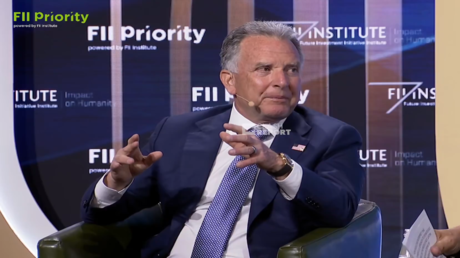
The spotlight is on Washington, D.C., where the United States special envoy, Steve Witkoff, has announced expectations for meetings with Iran this week. These statements come at a time when President Donald Trump continues to assert that Tehran is seeking an agreement, prompting questions about the future of relations between the two countries.
These anticipated meetings are seen as a significant step in the diplomatic efforts the United States aims to achieve with Iran, especially after years of escalating tensions between the two sides. Witkoff noted that these discussions could help alleviate tensions, although no specific details about the agenda or participating parties have been disclosed.
Details of the Upcoming Meetings
These talks come at a sensitive time, as mutual statements between Washington and Tehran have intensified. Trump has repeatedly stated that Iran is looking to reach an agreement, hinting at the possibility of returning to the nuclear deal established in 2015, from which the United States withdrew in 2018. Meanwhile, Iran continues to develop its nuclear program, complicating the situation further.
The discussions are expected to cover multiple issues, including Iran's nuclear program, Tehran's support for militias in the region, and tensions in the Arabian Gulf. There is also significant international interest in the outcomes of these meetings, as they could greatly impact regional stability.
Background & Context
The roots of tensions between the United States and Iran date back decades, with relations deteriorating significantly following the Iranian Revolution in 1979. Since then, the United States has pursued a policy of pressure on Iran, including the imposition of strict economic sanctions.
In 2015, a nuclear agreement was reached between Iran and the 5+1 group (the United States, the United Kingdom, France, Russia, China, and Germany), aimed at limiting Iran's nuclear program in exchange for the easing of sanctions. However, the U.S. withdrawal from the agreement in 2018 led to a spike in tensions, prompting Iran to take steps to reduce its commitments under the deal.
Impact & Consequences
If the upcoming talks succeed, they could lead to a de-escalation of tensions between the United States and Iran, contributing to regional stability. However, failure to reach an agreement may result in renewed conflicts, especially as Iran continues to advance its nuclear program.
The outcomes of these discussions could also affect U.S. relations with its allies in the region, such as Saudi Arabia and Israel, who express concern over any potential agreement with Iran. Thus, any developments in this context will have wide-ranging implications for regional security.
Regional Significance
The U.S.-Iranian relationship is pivotal in shaping events in the Middle East. The tensions between the two countries directly impact Arab nations, particularly those sharing borders with Iran or influenced by its presence in the region.
If the United States and Iran can reach an agreement, it may lead to a reduction in military tensions in the area, providing Arab nations an opportunity to enhance their stability. Conversely, escalating tensions could exacerbate crises in neighboring countries such as Iraq, Syria, and Lebanon.
In conclusion, all eyes remain on the anticipated talks between the United States and Iran, as their outcomes could define the future of relations between the two parties and their impact on regional stability.