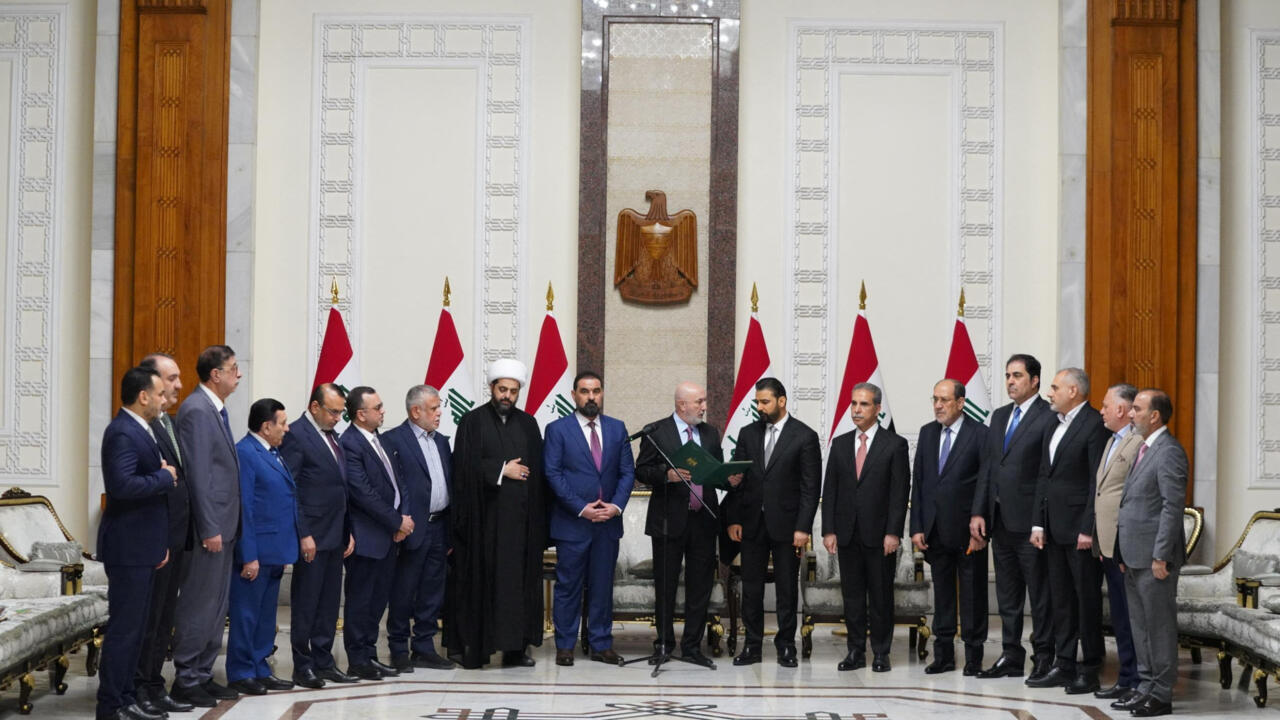
Iraqi President Nizar Amidi appointed Ali Al-Zaydi on Monday to form the new government after he was nominated by the Coordination Framework, the largest bloc in parliament. This appointment follows Nuri Al-Maliki's announcement of his withdrawal from the prime ministerial candidacy, reflecting significant political shifts in Iraq.
This move came after a meeting of the Coordination Framework, where Al-Zaydi was selected as the bloc's candidate for the position of Prime Minister. The framework praised the concessions made by both Al-Maliki and Mohammed Shia' Al-Sudani, highlighting their commitment to national interests and overcoming political deadlock.
Details of the Appointment
Ali Al-Zaydi, considered a compromise candidate, is a businessman and banker who was not widely known in political circles. Despite not having held any previous government position, his appointment reflects the Coordination Framework's desire to present a new face for the government. Al-Zaydi has expressed his determination to work with all political forces to form a government that meets the citizens' demands.
In this context, Prime Minister Mohammed Shia' Al-Sudani congratulated Al-Zaydi, emphasizing the importance of cooperation during this appointment period. Yasir Al-Maliki, head of the State of Law bloc, also confirmed their support for Al-Zaydi in his national mission.
Background & Context
Historically, Nuri Al-Maliki led the government from 2006 to 2014, a period marked by numerous challenges, including strained relations with the United States. Last January, Al-Maliki was nominated again, but this nomination faced American opposition, leading to confusion in political circles.
At 40 years old, Al-Zaydi could become the youngest Prime Minister in Iraq's history if he succeeds in forming the government. This nomination comes amid regional tensions, with Iraq affected by the U.S.-Israeli war on Iran, complicating the political landscape further.
Impact & Consequences
Al-Zaydi will have 30 days to form the government, a challenging task influenced by the interests of major powers such as the United States and Iran. It is expected that Al-Zaydi will address Washington's demands for disarming Iran-backed groups, which could affect the stability of the new government.
Moreover, Al-Zaydi will face significant economic challenges, especially following revenue declines due to disruptions in the Strait of Hormuz, where oil exports account for about 90% of Iraq's budget. He will also need to improve relations with Gulf countries affected by attacks from Iran-backed groups.
Regional Significance
Al-Zaydi's appointment comes at a sensitive time for the region, as tensions between Iran and the United States are escalating. If Al-Zaydi successfully forms a strong government, it could contribute to Iraq's stability, positively impacting regional security.
In conclusion, the appointment of Ali Al-Zaydi represents a new step in the Iraqi political landscape, with many hoping he can overcome current challenges and achieve the desired stability.