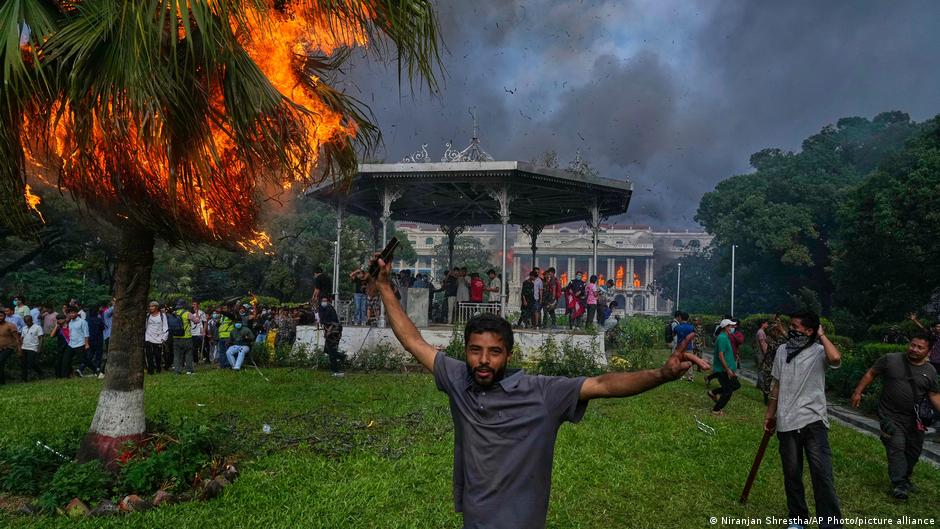
Nepalese police arrested former Energy Minister Deepak Khadka in Kathmandu on Sunday as part of a money laundering investigation. The arrest was carried out by a team from the Central Investigation Bureau, and Khadka is currently being held at the bureau's detention center.
This move comes just a day after the arrest of former Prime Minister K.P. Sharma Oli and former Interior Minister Ram Bahadur Thapa, due to allegations regarding their roles in suppressing protests against corruption last September. The announcement of Khadka's arrest was made on social media by the new Interior Minister Sudan Gurung, who confirmed that the arrest is linked to an investigation into funds found in Khadka's home during the protests.
Details of the Arrest
The investigations are being conducted under the supervision of Nepal's Money Laundering Investigation Department, where the spokesperson for the Central Investigation Bureau, Shiva Kumar Shrestha, confirmed that the case involves allegations of money laundering that may include funds recovered from Khadka's residence. The protests that began in September 2025 resulted in the deaths of over 70 people and injuries to approximately 2,300 others, raising ongoing corruption issues in the country.
Protesters had set fire to the parliament building and government offices, leading to the downfall of Oli's government. Khadka's home was also set ablaze, and videos circulated showing protesters throwing money found in the air, reflecting public outrage towards corruption.
Background & Context
Historically, Nepal has faced numerous political and social crises, with corruption and poverty being key issues affecting the country's stability. The recent protests were a reaction to a temporary ban on social media, which ignited feelings of accumulated frustration among Nepalese youth. These protests marked a turning point in Nepalese politics, leading to new elections earlier this month.
In the elections, the Rastriya Swatantra Party achieved a landslide victory, with its leader, Palindra Shah, assuming the role of Prime Minister. The new government has announced an ambitious agenda that includes governmental reforms, including the establishment of a commission to investigate the assets of politicians and high-ranking government officials.
Impact & Consequences
These arrests are part of the new government's efforts to combat corruption and enhance transparency in state management. Such measures could lead to a restoration of trust in government institutions, but challenges remain. With ongoing protests and public demands for reform, the new government must handle these issues cautiously.
These events illustrate how political crises in Nepal can impact regional stability, especially with external powers seeking to increase their influence in the area. Furthermore, these developments may attract international attention, potentially leading to greater pressure on the Nepalese government to implement genuine reforms.
Regional Significance
While events in Nepal may seem distant from the Arab region, issues related to corruption and good governance are global concerns. Nepal's experience can offer important lessons to Arab countries facing similar challenges in corruption and political instability. Promoting transparency and accountability could be key to achieving stability and development in the region.
In conclusion, the recent events in Nepal represent a significant milestone in the country's political history, highlighting the importance of fighting corruption as a fundamental condition for achieving development and stability. The new government must respond to the people's demands and work towards building genuine trust with citizens.