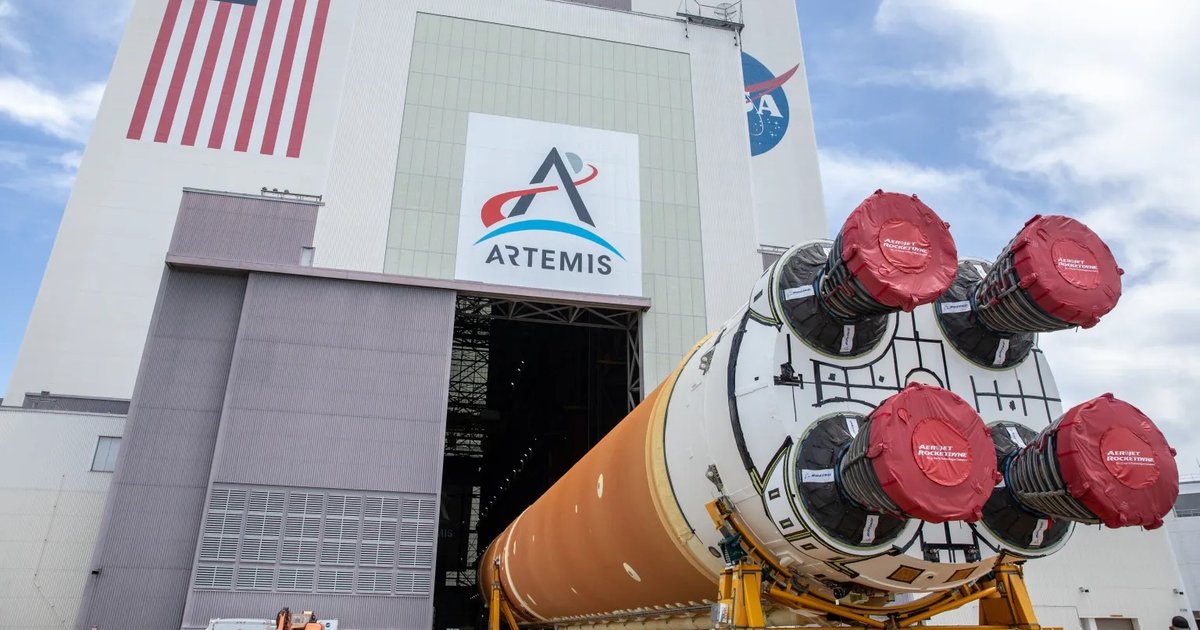
Astronauts participating in the Artemis II mission have arrived at the launch site in Florida, where NASA is preparing to launch the first crewed mission to the moon in over 53 years. This mission is part of the Artemis program, which aims to return humans to the moon and explore more of outer space.
The Artemis II crew consists of four astronauts, including Christina Koch and Jeremy Hansen, who will embark on a journey lasting approximately 10 days around the moon. The launch is expected to take place in the first half of 2024, with the Orion spacecraft transporting the crew into outer space.
Event Details
This mission is part of NASA's efforts to return humans to the moon, with the agency aiming to establish a permanent base on the lunar surface by the end of this decade. The launch site has been selected at the Kennedy Space Center, which is one of the most prominent locations in the history of American space flights.
The mission will also involve testing new technologies that will assist in the future in sending astronauts to Mars, making it a crucial step in space exploration. Additionally, this journey will allow scientists to collect important data about the moon, aiding in a better understanding of the solar system's history.
Background & Context
Historically, the last crewed mission to the moon occurred in 1972 during the Apollo program, when astronauts landed on the lunar surface. Since then, no crewed missions to the moon have taken place, making the Artemis II mission an exciting return to this field. In recent years, there has been a growing interest from countries and private companies in space exploration.
The Artemis program is part of NASA's vision for space exploration, which includes plans to send astronauts to the moon and then to Mars. This vision reflects technological advancements and an increasing interest in space, as countries seek to enhance their capabilities in this domain.
Impact & Consequences
The Artemis II mission is seen as a turning point in space exploration, as it will open doors for further research and innovations in this field. The success of this mission could encourage more countries to invest in space programs, leading to increased international cooperation in space exploration.
Moreover, this mission will contribute to the development of new technologies that may be used in other areas such as communications and navigation, enhancing the economic benefits of these programs.
Regional Significance
In the Arab region, space exploration is an important topic, with some countries like the United Arab Emirates seeking to enhance their capabilities in this field. The UAE recently launched the Hope Probe to Mars, reflecting its interest in technology and innovation.
The Artemis II mission could inspire Arab countries to invest in space programs, potentially leading to the development of new capabilities in science and technology. Furthermore, international cooperation in this field could open new horizons for Arab countries in scientific research.
The Artemis II mission represents a significant step towards space exploration, as humanity returns to the moon after more than half a century. This mission is not just a trip to the moon; it is the beginning of a new era of exploration and innovation in the field of space.