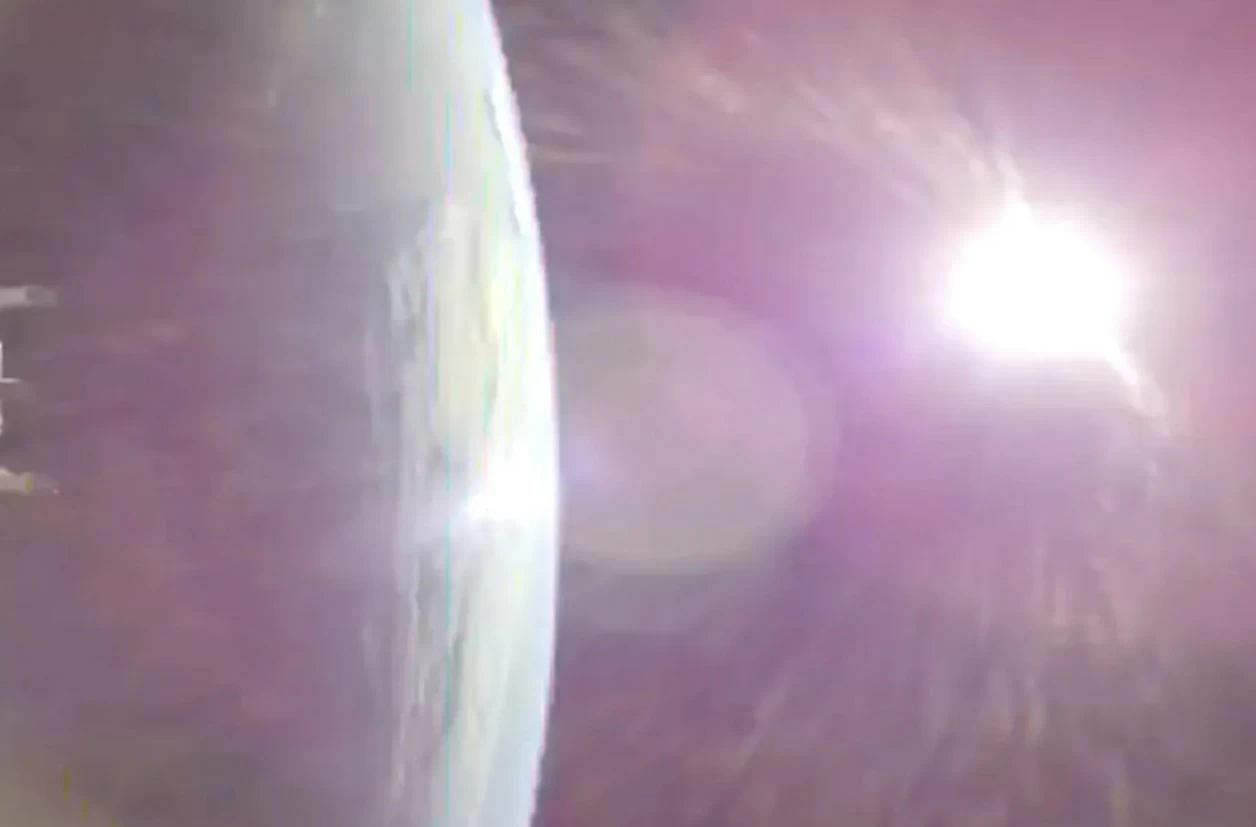
The astronauts of NASA's Artemis 2 mission wrapped up their first day in space by testing the cameras they will use throughout their journey. They captured images of Earth slowly diminishing in size as they headed toward the Moon, creating a unique experience.
On the sixth day of the mission, astronauts are expected to reach a distance of approximately 252,000 miles from Earth, marking the farthest point humans have ever traveled. At this stage, Earth will appear the size of a basketball behind the dark side of the Moon, providing the astronauts with a unique opportunity to document this historic moment.
Event Details
Group leader Reid Wiseman expressed his feelings while taking pictures of Earth using a smartphone camera, stating, "It's like stepping into your backyard and trying to take a picture of the Moon. That's how I feel right now as I try to capture a photo of Earth." Wiseman added that taking pictures from over 40,000 miles (64,000 kilometers) away from Earth was challenging, as the planet appeared as a small glowing ball illuminated by sunlight, making it difficult to adjust the camera's exposure settings.
The journey launched from Florida at 6:35 PM Eastern Time (2235 GMT) on Wednesday, with the four astronauts carrying various devices aboard the spacecraft to capture images of space from inside the Orion capsule throughout the mission. Although no images have been released yet, NASA expects to publish them later in the mission after more exciting moments.
Background & Context
The Artemis 2 mission is part of the Artemis program, which aims to return humans to the Moon by 2024, as part of broader efforts to explore deep space. The program focuses on enhancing international cooperation in space and is considered a significant step toward sending astronauts to Mars in the future.
Historically, there have been several successful space missions to the Moon, but Artemis 2 represents a new turning point in space exploration, as NASA seeks to develop new technologies and expand human knowledge about space.
Impact & Consequences
This mission is an important step in enhancing scientific understanding of space and may lead to the development of new technologies in various fields such as communications, medicine, and energy. Additionally, the success of the mission could encourage further investments in the space sector, promoting international collaboration in this field.
Moreover, this mission could contribute to raising public awareness of the importance of space exploration, potentially leading to increased support for educational and research programs in this area.
Regional Significance
For Arab countries, the success of the Artemis 2 mission could have a positive impact on local space programs, encouraging Arab nations to boost their investments in research and development in the field of space. It could also open avenues for collaboration with global space agencies, enhancing the ability of Arab countries to participate in future space projects.
In conclusion, the Artemis 2 mission represents a significant scientific and technological achievement, as NASA aims to expand the boundaries of human knowledge about space, opening new horizons for exploring the Moon and Mars.