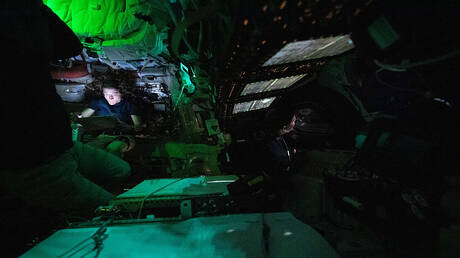
Astronauts from the historic Artemis 2 mission are gearing up to reach the far side of the moon next Monday, setting a new record as the farthest humans to travel in space thus far. This mission is part of NASA's efforts to explore the moon and enhance scientific understanding of space.
Artemis 2 is part of a larger program aimed at returning humans to the moon, where NASA seeks to establish a permanent base on its surface. This mission represents a significant step towards achieving the ambitious goals of the space agency, including sending astronauts to Mars in the future.
Mission Details
The Artemis 2 spacecraft is scheduled to embark on a multi-day journey, orbiting the moon before reaching the far side. This journey will provide the astronauts with the opportunity to explore previously uncharted areas, contributing to the expansion of human knowledge about the moon.
The mission includes a crew of four astronauts, who will conduct scientific experiments and monitor environmental conditions. This information will be vital for understanding how to live and work in space for extended periods.
Background & Context
Historically, the last time humans reached the moon was during the Apollo program in the 1970s. Since then, there have been sporadic efforts to explore the moon, but no new crewed missions. With advancements in technology and a growing interest in space, NASA has returned to place the moon at the center of its future plans.
This mission comes at a time when the world is witnessing an increased interest in space exploration, as many countries, including China and Russia, seek to achieve milestones in this field. This competition presents an opportunity to enhance international cooperation in space.
Impact & Consequences
The Artemis 2 mission carries significant implications for the future of space exploration. The success of this mission could open the doors for more lunar missions, enhancing the possibility of establishing a permanent base on its surface. This base could serve as a launch point for further explorations, including trips to Mars.
Moreover, the information gathered during this mission will aid in the development of new technologies to improve space travel, potentially impacting various fields, including communications and technology.
Regional Significance
Although the Artemis 2 mission focuses on the moon, it has potential implications for the Arab region. With the growing interest in space, Arab countries may seek to enhance their own space programs, thereby boosting their standing in the international community.
This mission could encourage Arab nations to invest in education and scientific research in the fields of space and technology, contributing to the development of local competencies and fostering innovation.
In conclusion, the Artemis 2 mission represents a historic step towards space exploration, as astronauts strive to achieve new milestones that enhance human understanding of the universe.