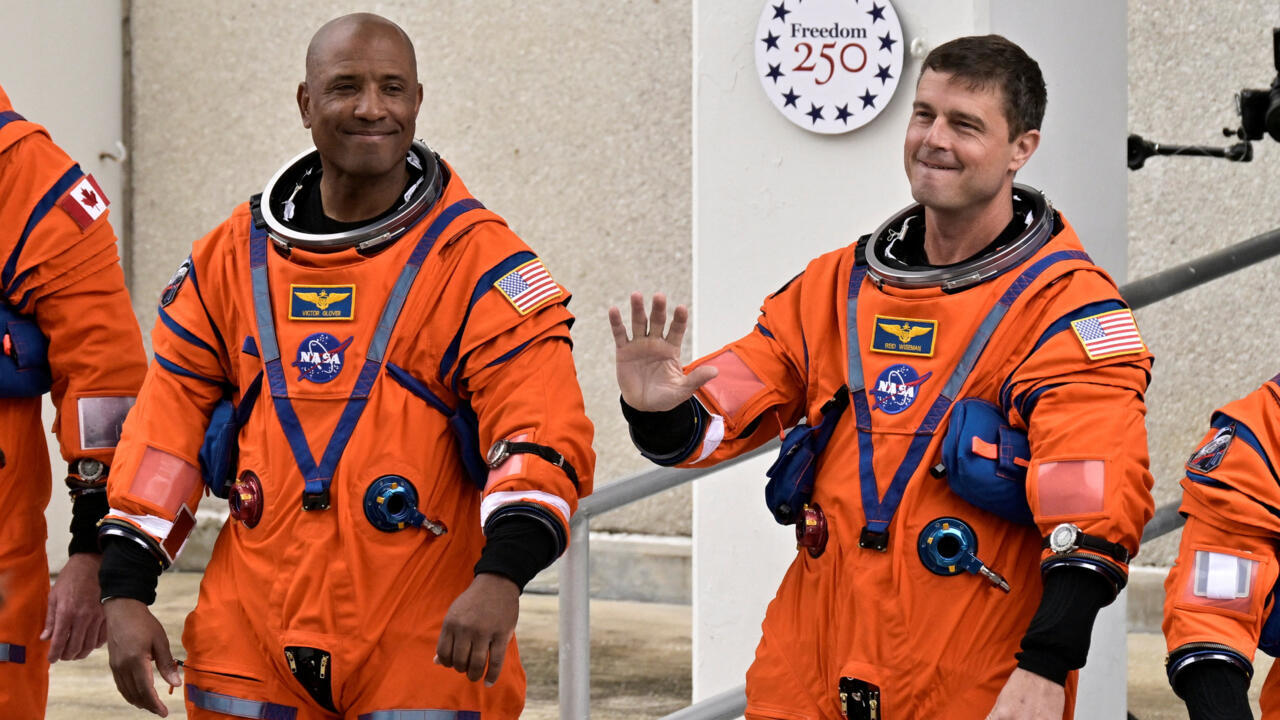
In an exciting step toward space exploration, astronauts on the Artemis 2 mission from NASA completed their first day in space by testing the camera system they will use throughout the journey. They captured images of Earth as it gradually shrank in the background during the spacecraft's ascent before leaving orbit toward the Moon.
During this experience, crew commander Reid Wiseman addressed mission control in Houston while taking pictures of Earth with an iPhone, stating, "It's like going out to your backyard and trying to take a picture of the Moon. That's how I feel right now as I try to capture a picture of Earth."
Event Details
It is worth noting that the astronauts were over 40,000 miles (approximately 64,000 kilometers) away from Earth, where the planet appeared as a small glowing sphere illuminated by sunlight. Wiseman faced challenges in adjusting the exposure settings on his phone camera due to the significant distance.
The Artemis 2 team, consisting of four astronauts, launched from Florida at 6:35 PM Eastern Time (22:35 GMT) on Wednesday. The crew brought a variety of devices aboard the spacecraft to capture images of space from within the Orion capsule throughout the journey. This equipment includes small GoPro cameras, iPhones, and professional Nikon cameras, a brand that NASA astronauts have used for years aboard the International Space Station.
So far, NASA has not released any of the images captured by the crew, and it is expected that they will be published later in the mission after documenting more exciting moments.
Background & Context
The Artemis 2 mission is part of NASA's lunar exploration program, which aims to return humans to the Moon by 2024. This mission represents a significant step toward achieving larger goals, such as sending astronauts to Mars in the future. Additionally, this mission is part of multi-national efforts to explore space, as many countries seek to enhance their capabilities in this field.
During the sixth day of the journey, the astronauts are expected to reach a distance of approximately 252,000 miles from Earth, the farthest point humans have traveled in space to date. At this point, Earth will appear the size of a basketball behind the dark side of the Moon, reflecting the progress humanity has made in space exploration.
Impact & Consequences
This mission marks a milestone in the history of space exploration, reflecting the technological advancements and scientific research achieved in this field. The success of this mission could enhance international cooperation in space and encourage further investments in space-related research and technology.
On the other hand, this mission may inspire future generations of scientists and engineers, increasing young people's interest in the fields of science, technology, engineering, and mathematics (STEM). The images captured during the journey could also help raise public awareness of the importance of space exploration.
Regional Significance
Although Arab countries were not part of this mission, its success could have a positive impact on the region. It may encourage Arab nations to invest in their own space programs, enhancing their technological and scientific capabilities.
Moreover, the growing interest in space could contribute to the development of education and scientific research in Arab countries, helping to build a new generation of scientists and engineers capable of competing on a global scale.
In conclusion, the Artemis 2 mission represents an important step toward space exploration, opening new horizons for international cooperation and scientific advancement.