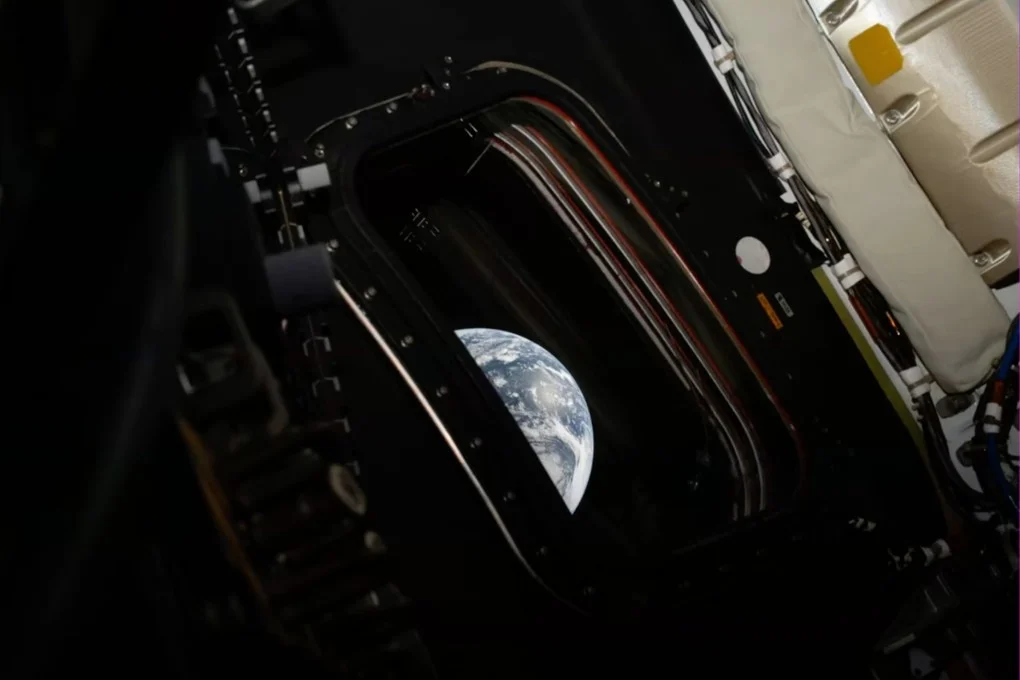
In a historic step, astronauts on the Artemis II mission have released new images of Earth as they approach the Moon. These images, published by NASA, showcase the beauty of our blue planet after more than 50 years since the last crewed mission to the Moon. The images, captured a day and a half after the mission began, depict Earth in a mesmerizing way, with Commander Reid Wiseman taking a photo of a curved part of the planet from the capsule window, while another image shows the entire globe with oceans covered in swirling white clouds.
These images are part of the Artemis II mission, which represents humanity's return to the Moon, as scientists seek to explore more about the Moon and space. This mission is expected to play a significant role in preparing for future missions, including trips to Mars.
Event Details
NASA announced these images on Friday, having been taken 36 hours after the mission's launch. Artemis II is the first crewed mission to the Moon since Apollo 17 in 1972. The four astronauts on this mission are Reid Wiseman, Jessica Watkins, Kareem Allen, and John Shoffner, who have undergone intensive training for this historic event.
The images captured reveal astonishing details about Earth, where oceans, mountains, and clouds are clearly visible. These images reflect the beauty of our planet and remind us of the importance of preserving it.
Background & Context
Historically, space missions to the Moon have represented the pinnacle of scientific and technological achievements. These missions began in the 1960s with the Apollo program, which sent humans to the Moon for the first time. After the conclusion of the Apollo program, crewed missions to the Moon ceased for over 50 years, making the Artemis II mission a strong return to space exploration.
Through the Artemis program, NASA aims to return humans to the Moon, focusing on establishing a permanent base there, which will enable scientists to conduct more detailed research about the Moon and space. These steps pave the way for future missions to other planets like Mars.
Impact & Consequences
The Artemis II mission is a significant step in the field of space exploration, reflecting technological advancement and scientific research. This mission may open doors to further investments in the space sector, enhancing international cooperation in this field.
Moreover, this mission strengthens the United States' position as a leading power in space, which may lead to increased public interest in science and technology, especially among youth.
Regional Significance
For the Arab region, space exploration represents an opportunity to enhance scientific and technological cooperation. Many Arab countries have begun investing in space programs, such as the United Arab Emirates, which launched the Hope Probe to Mars. This collaboration can contribute to the development of scientific and technological capabilities in the region.
In conclusion, the Artemis II mission marks a milestone in the history of space exploration, opening new horizons for scientific research and international cooperation, reflecting the importance of space in the future of humanity.