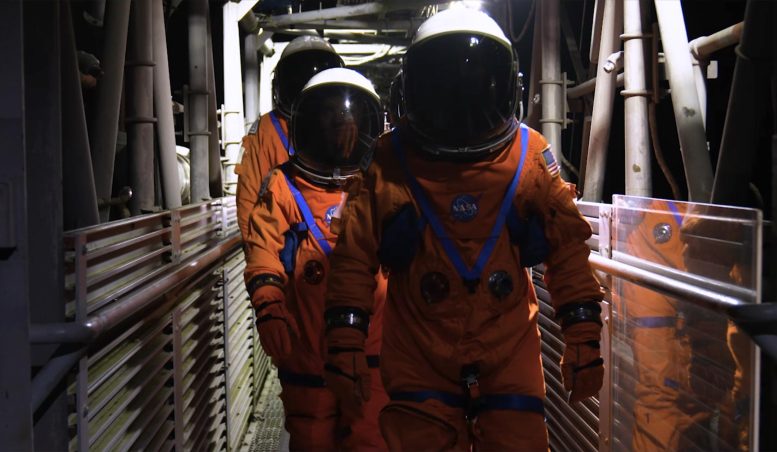
In a significant scientific achievement, the four astronauts belonging to the Artemis-2 program have witnessed the dark side of the moon, being closer to this celestial body than to Earth. This historic moment comes as part of a mission aimed at exploring outer space and enhancing human understanding of the universe.
The Orion spacecraft, carrying the astronauts, provides them with a unique opportunity to document lunar surface features that have never been seen by the human eye. This journey represents a major step towards achieving space exploration goals, including a return to the moon and the exploration of other planets.
Event Details
During this mission, the astronauts were able to capture unique images of geological features on the moon's dark side, which cannot be seen from Earth. These images will assist scientists in gaining a better understanding of the moon's history and evolution, as well as providing valuable information about its composition.
This mission is part of the Artemis program, which aims to return humans to the moon by 2024, focusing on establishing a permanent base on the lunar surface. This project is part of a larger vision for exploring Mars and other planets in the solar system.
Background & Context
The history of lunar exploration dates back to 1969 when the first human mission, Apollo 11, landed on the moon's surface. Since then, there have been numerous missions that have contributed to increasing knowledge about the moon. However, the dark side of the moon remains a significant mystery for scientists.
The Artemis program represents a collaborative international effort, involving several countries and space organizations. This international cooperation reflects the importance of space exploration as a collective human endeavor and enhances the chances of making new discoveries.
Impact & Consequences
The success of this mission could open new horizons in the field of space exploration, potentially leading to new scientific discoveries about the moon and other planets. Additionally, this mission reinforces the United States' position in the space race and emphasizes the importance of investing in technology and scientific research.
Furthermore, this mission may inspire new generations of scientists and engineers, fostering innovation and advancement in the fields of science and technology.
Regional Significance
Although this mission focuses on outer space, it has potential implications for the Arab region. With the growing interest in space, Arab countries could benefit from this momentum by developing their own space exploration programs.
Investments by Arab nations in technology and scientific research are essential to keep pace with global developments, and this mission could enhance cooperation among Arab countries in the fields of science and technology.
In conclusion, the Artemis-2 mission represents a significant step towards space exploration and opens new avenues for understanding the universe. Success in this mission could have far-reaching effects on science and technology and promotes international cooperation in the field of space.