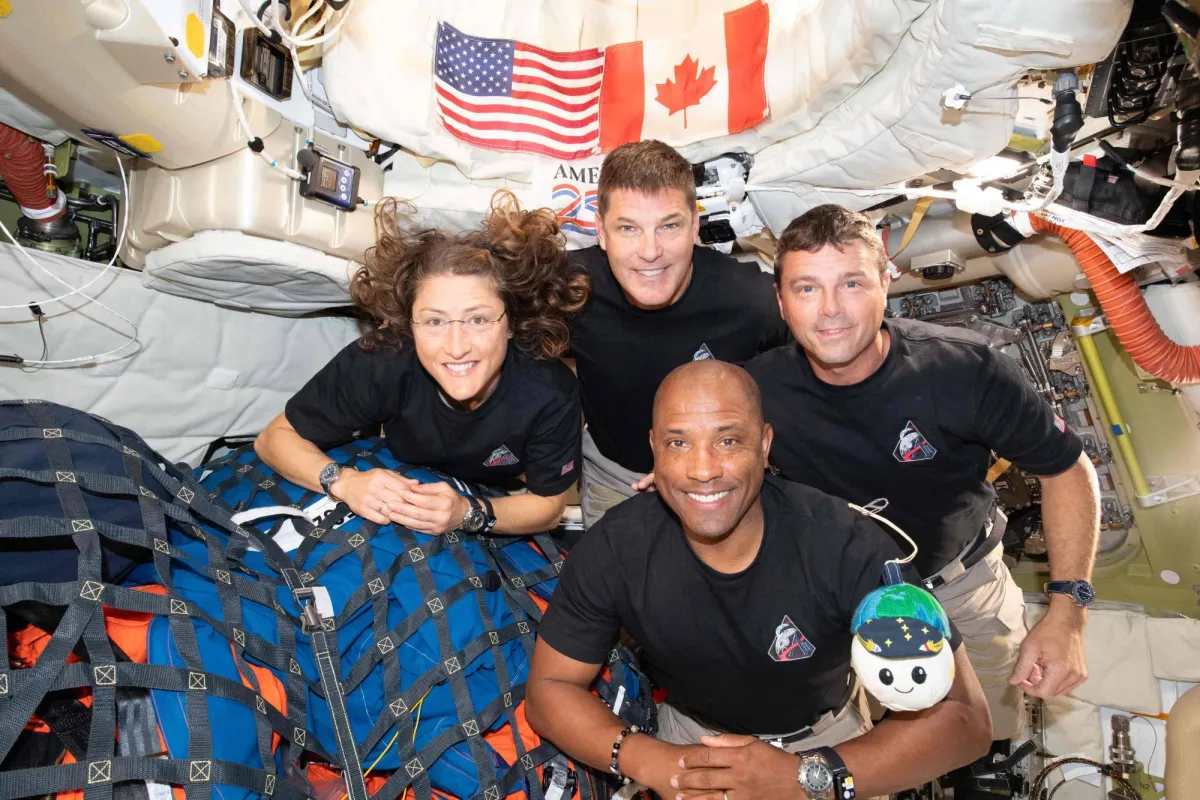
The four astronauts, members of NASA's Artemis 2 mission, witnessed meteor impacts on the Moon's surface, a very rare sight that piques the curiosity of scientists. This unique phenomenon occurred during the first crewed flyby of the Moon in over half a century, adding a new dimension to space exploration.
Mission commander Reid Wiseman stated, "There is absolutely no doubt that these are flashes resulting from impacts on the Moon. Jeremy (Hansen) just saw another one," according to Agence France-Presse. This confirmation reflects the significance of these observations in understanding the natural phenomena occurring on the Moon's surface.
Details of the Event
During the press conference held after the event, the scientific lead for the mission, Kelsey Young, expressed her astonishment, saying, "I don't think I expected the crew to see such phenomena during this mission." She added that these observations were stunning, highlighting the importance of this mission in space exploration.
Wiseman recounted that each flash lasted for a fraction of a millisecond, noting that its color was "white with a hint of light blue." Additionally, backup astronaut Jenny Gibbons explained that seeing four or five flashes is truly remarkable, underscoring the rarity of these phenomena.
Background & Context
The Artemis 2 mission is part of NASA's efforts to return humans to the Moon, aiming to explore the lunar surface and provide new information about its composition. This mission comes more than half a century after the last crewed flight to the Moon, marking a historic moment in space history.
Through this mission, NASA seeks to enhance our understanding of outer space and provide crucial data on how meteors impact the Moon's surface. This information may be beneficial in the future for understanding how to protect astronauts from potential hazards.
Impact & Consequences
These observations are a significant step towards a better understanding of the effects of meteors on the Moon's surface, which could help in developing strategies for protection against potential risks in the future. Furthermore, this information may contribute to advancing scientific research related to space.
Highlighting these rare phenomena may increase interest within the scientific and research community, potentially leading to further investments in space exploration. This mission also represents an opportunity to enhance international cooperation in the field of space.
Regional Significance
These developments in space exploration are important for the Arab region, where many Arab countries are striving to enhance their capabilities in this field. Such successes can inspire Arab youth and encourage them to engage in science and technology fields.
Moreover, international cooperation in space may open new horizons for Arab countries to collaborate with global space agencies, contributing to innovation and technological advancement in the region.
In conclusion, the Artemis 2 mission represents a turning point in the history of space exploration, opening new avenues for understanding the natural phenomena occurring on the Moon and contributing to advancing scientific research.