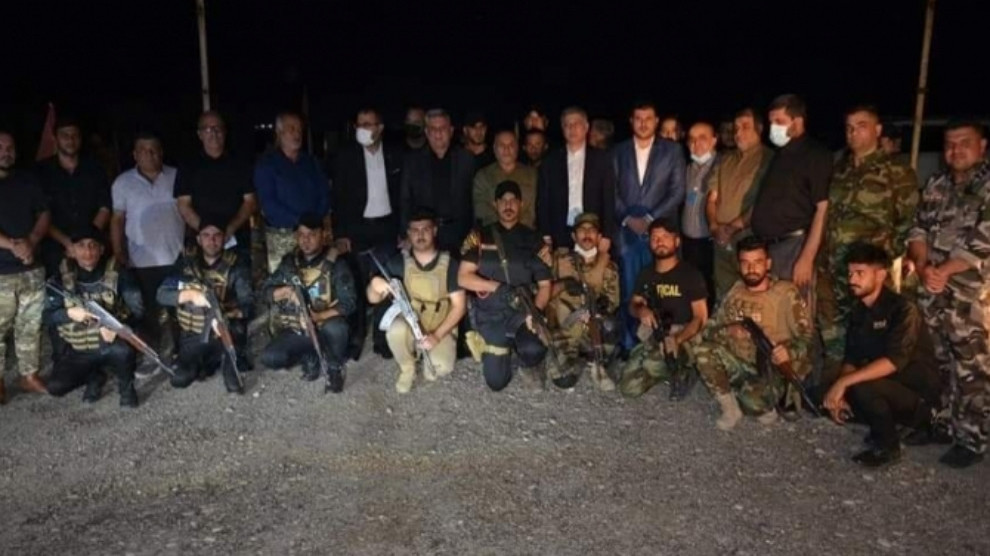
A recent attack targeting Popular Mobilization sites in Kirkuk, northern Iraq, resulted in the deaths of three individuals and injuries to six others. This incident comes amid escalating security tensions in the region, raising concerns about a larger escalation in the ongoing conflict.
The attack occurred late last night, with several rockets targeting the Popular Mobilization sites, a military formation comprising fighters from various Shiite factions, which played a pivotal role in combating ISIS in Iraq. The injured were transported to the hospital for treatment, where their conditions were described as stable.
Details of the Incident
According to local sources, the bombardment targeted Popular Mobilization sites in the Kirkuk area, which is one of the disputed territories between the Iraqi government and the Kurdistan Region. Images circulated on social media showed the destruction caused by the bombardment, reflecting the extent of the damage inflicted on buildings and equipment.
No group has claimed responsibility for the attack so far, but there are fears that these assaults may be part of a series of increasing attacks against the Popular Mobilization, which some consider a deterrent force against ISIS, while others view it as a threat to security and stability in the region.
Background & Context
Historically, Kirkuk has witnessed numerous conflicts and armed struggles, especially following ISIS's invasion of Iraq in 2014. Iraqi forces, including the Popular Mobilization, contributed to regaining control of the city. However, the city continues to suffer from insecurity and ethnic and political tensions.
The Popular Mobilization, formed in 2014, includes a range of armed factions that support the Iraqi government. However, some of these factions receive support from Iran, complicating the security situation in Iraq. This overlap between local and international powers makes achieving stability in the region challenging.
Impact & Consequences
Attacks on Popular Mobilization sites could escalate tensions among various armed factions in Iraq and may open the door to retaliatory operations. These events could also negatively impact the Iraqi government's efforts to achieve stability and security in the country.
Moreover, the continuation of these attacks may contribute to reinforcing sectarian divisions in Iraq, further complicating the political landscape. This could increase pressure on the Iraqi government to address these challenges, potentially affecting its ability to provide essential services to citizens.
Regional Significance
The events in Kirkuk are part of the larger picture of regional security in the Middle East. Tensions in Iraq affect stability in neighboring countries, such as Iran and Syria. Additionally, the rise in violence in Iraq may reflect on the security situation in Gulf states, raising concerns about the spread of chaos.
Under these circumstances, there remains hope that the Iraqi government can regain control of the security situation and achieve reconciliation among the various factions, which could contribute to overall regional stability.