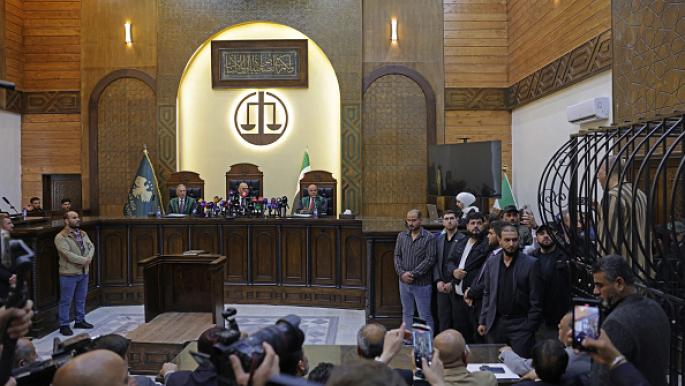
The first public trial sessions for several figures of the former Syrian regime commenced at the Judicial Palace in Damascus, marking a significant step towards transitional justice in the country. This session, held on Sunday, comes at a critical time as the Syrian people seek accountability for the violations experienced during years of conflict.
This trial is part of broader efforts to achieve justice and accountability, with the accused facing charges related to crimes against humanity and war crimes. This step has raised great hopes among Syrians who have suffered from the ravages of war, as many hope these trials will lead to justice for the victims.
Details of the Event
During the first session, evidence and testimonies supporting the charges against the former regime figures were presented. A number of lawyers and local and international observers attended the session, reflecting widespread interest in the judicial process. The importance of transparency in these trials was emphasized to ensure the rights of both the accused and the victims.
These trials are expected to continue over the coming weeks, with more witnesses being summoned and additional evidence presented. Judges indicated that this process would be thorough and comprehensive, stressing the necessity of respecting everyone's rights during the trial proceedings.
Background & Context
These trials come in a complex historical context, as Syria has witnessed a bloody conflict since 2011, resulting in the deaths of hundreds of thousands and the displacement of millions. Numerous serious human rights violations have occurred during this period, leading to increasing calls for accountability.
Despite the significant challenges facing the judicial process, this step represents a glimmer of hope for many seeking justice. Experiences from other countries, such as Rwanda and the former Yugoslavia, have shown that public trials can be an effective tool in achieving national reconciliation.
Impact & Consequences
These trials are expected to have profound effects on Syrian society. In addition to achieving justice, this process may help build trust between citizens and the state, contributing to a more stable future. This step could also encourage more victims to speak out and share their testimonies.
Moreover, these trials may open the door to international accountability for those responsible for violations, strengthening the international community's position in supporting justice and accountability in Syria.
Regional Significance
These trials serve as an indicator of the potential for achieving justice in other conflict areas in the Arab world. This step could inspire other peoples suffering from oppressive regimes to demand justice and accountability.
Furthermore, the success of these trials may encourage the international community to support transitional justice efforts in other conflict areas, enhancing stability in the region as a whole.
In conclusion, these trials represent an important step towards achieving justice in Syria and may have far-reaching implications at both the local and regional levels. There is hope that this process will contribute to building a better future for the Syrian people.