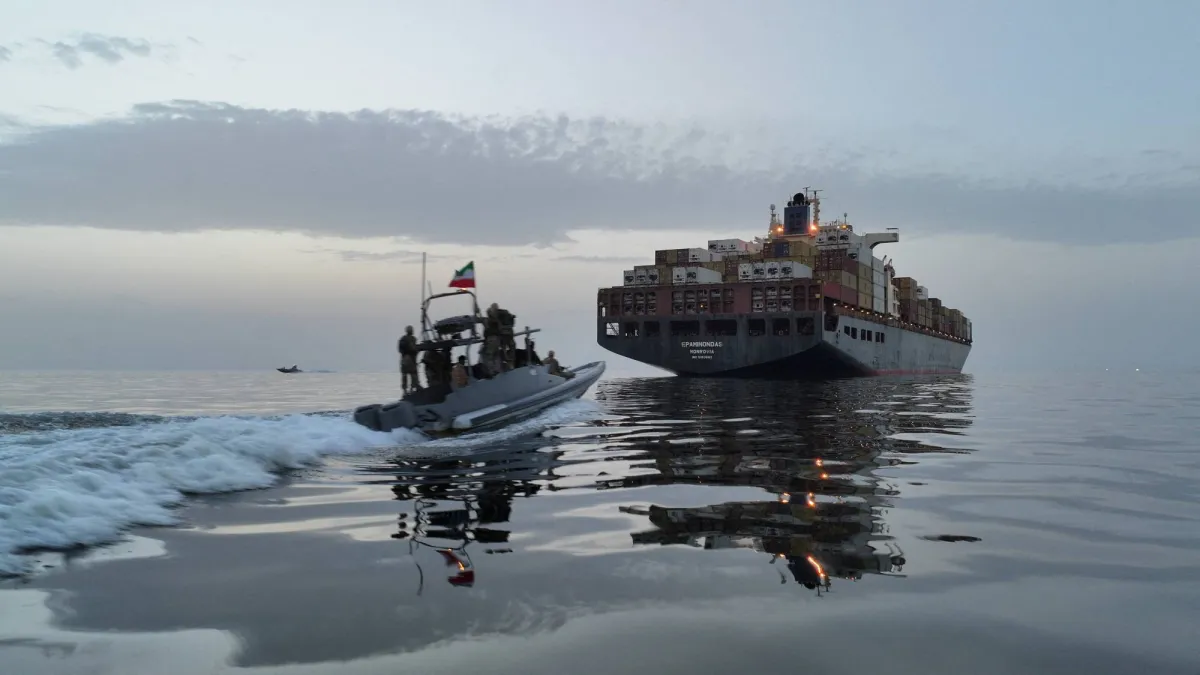
President Donald Trump announced that the US Navy has begun operations to remove Iranian mines in the Strait of Hormuz, which is considered a vital corridor for oil shipments, as disruptions threaten the global economy increasingly.
Reports anticipate that the mine-clearing operations may take several months, despite a fragile ceasefire between the United States and Iran amid escalating tensions.
Details of the Operation
According to the Associated Press, any future announcements regarding the clearing of the waterway may not convince commercial shipping vessels and insurance companies that the strait has become safe. Emma Salisbury, a researcher in the National Security Program, noted that mere suspicion of mines can negatively impact shipping traffic.
The mine-clearing efforts are part of the Trump administration's strategies to restore traffic through the strait, amid rising energy prices and broader economic repercussions. The United States has also imposed a blockade on Iranian ports and detained vessels linked to Tehran.
Background & Context
Pentagon officials informed lawmakers that mine removal could take about 6 months, as presented during a classified briefing to the House Armed Services Committee. When asked about this estimate, Defense Secretary Pete Hegseth confirmed that the military could not predict a specific timeline.
Later, Trump stated that he ordered the Navy to attack any boat laying mines in the strait, emphasizing the need to intensify efforts in this direction. The commander of the US Central Command also noted that the military would work on mine removal without providing precise details.
Impact & Consequences
There are currently no indications that the US military is using warships in the strait, but the Navy has divers and small teams capable of mine removal. Experts say that some mine-clearing equipment can be transported from ships and deployed from land.
Estimates suggest that Iran possesses several thousand mines, most of which are based on old Soviet models, while some newer types are believed to be of Chinese manufacture or locally produced. Planting mines is considered much easier than removing them, complicating the situation further.
Regional Significance
These developments are of significant importance to the Arab region, as the Strait of Hormuz is a major transit point for oil transportation. Any disruption in shipping traffic can directly affect global oil prices, negatively impacting the economies of oil-dependent Arab countries.
Under these circumstances, Arab nations may reconsider their security and economic strategies, especially amid ongoing tensions between the United States and Iran. Restoring confidence in the safety of the strait may take a long time, increasing economic and political risks in the region.