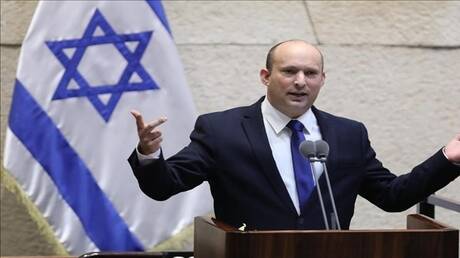
Former Israeli Prime Minister Naftali Bennett announced that he will not rely on Arab parties to form any future government, emphasizing that his new alliance with Yair Lapid will be based solely on a 'Zionist majority'. These remarks come at a sensitive time when the Israeli political arena is witnessing significant transformations, as Bennett seeks to strengthen his position in the face of internal and external challenges.
Bennett, who served as Prime Minister from 2021 to 2022, noted that political alliances should reflect the values and principles he believes in, which for him means excluding Arab parties that he considers non-Zionist. These statements reflect clear political trends in Israel, where the gap between Jewish and Arab parties is widening.
Details of the Announcement
During a press conference, Bennett stated: 'We will not ally with Arab parties; we believe that the government should reflect the Jewish majority.' This statement follows a period of political alliances that included Arab parties, which had played a role in forming the previous government. However, it seems that Bennett and Lapid are aiming to unify the ranks among Jewish parties only.
This stance comes at a time when pressures on the Israeli government are increasing due to rising tensions in the Palestinian territories, complicating the political landscape further. The new alliance between Bennett and Lapid aims to enhance political stability, but the exclusion of Arab parties may exacerbate conditions in the country.
Background & Context
Historically, Arab parties have been part of the Israeli political scene, contributing to the formation of previous governments. However, relations between Jewish and Arab parties have always been tense, especially amid security escalations and ongoing conflicts. Previous alliances that included Arab parties were seen as unconventional but proved necessary at times to achieve stability.
Despite this, Bennett's current positions indicate a shift in Israeli political strategy, as many leaders seek to strengthen the Jewish identity of the state at the expense of political diversity. This shift could negatively impact relations between Arabs and Jews in Israel.
Impact & Consequences
The exclusion of Arab parties from governmental alliances could lead to heightened tensions between the Arab and Jewish communities in Israel. This stance may also contribute to reinforcing feelings of exclusion among Arabs, increasing social and political divisions. At the same time, it could enhance support for Arab parties in the upcoming elections, as Arab voters seek to express their dissatisfaction with current policies.
On the other hand, the new alliance between Bennett and Lapid may contribute to stabilizing the Israeli government in the short term, but in the long run, it could exacerbate political and social crises. The challenges facing the Israeli government require comprehensive strategies that consider all components of society.
Regional Significance
Bennett's stance may affect relations between Israel and Arab countries, especially amid normalization attempts seen in the region in recent years. The exclusion of Arab parties from the political process could negatively impact peace efforts and increase distrust between the sides. Additionally, this may influence the positions of Arab countries towards Israel, as they may reconsider their strategies based on current Israeli policies.
Ultimately, the question remains about how these statements will impact the future of relations between Arabs and Jews in Israel, and whether they will lead to further divisions or new opportunities for dialogue and understanding.