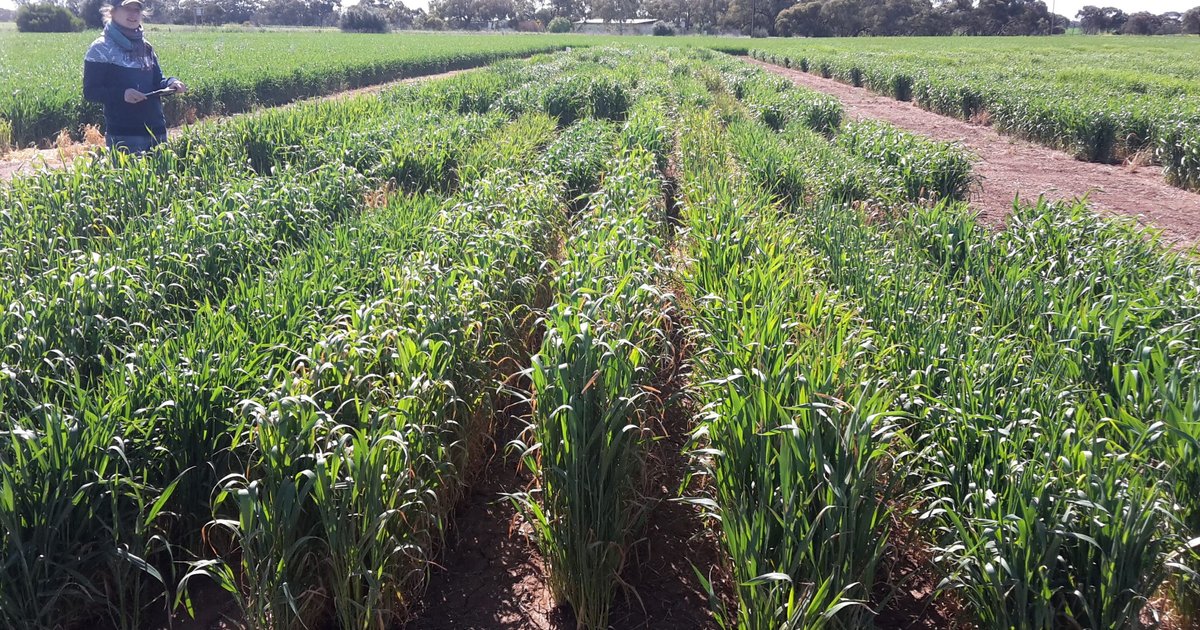
The Egyptian Ministry of Agriculture and Land Reclamation has announced that the Desert Research Center has achieved a new scientific breakthrough that represents a qualitative leap in the cultivation of strategic crops, particularly wheat. The center has managed to increase the productivity of wheat per feddan using highly saline water with a salinity of 8000 parts per million. This achievement comes in line with the directives of Minister of Agriculture Alaa Farouk and reflects the Egyptian government's efforts to enhance food security.
This step is extremely significant given the challenges facing agriculture in Egypt, especially with rising salinity levels in agricultural lands. The Desert Research Center aims to develop new techniques that contribute to improving agricultural production and providing essential crops for citizens.
Details of the Achievement
Researchers at the Desert Research Center have successfully utilized nanotechnology in organic and bio-fertilization, which has contributed to improving soil quality and increasing its water retention capacity. This new technology allows farmers to effectively use saline water, thereby reducing pressure on freshwater resources.
It is noteworthy that this achievement comes at a critical time, as Egypt faces significant challenges in agriculture due to climate change and rising temperatures. Studies have shown that using saline water can be an effective solution to address these challenges.
Background & Context
Historically, Egypt has suffered from soil salinity issues, negatively affecting crop productivity. With the increasing demand for food due to population growth, it has become essential to seek innovative solutions. The Desert Research Center, established to develop agriculture in desert areas, plays a pivotal role in this context.
Moreover, the use of nanotechnology in agriculture is one of the modern trends that has begun to gain global attention. This technology contributes to improving resource efficiency and reducing costs, making agriculture more sustainable.
Impact & Consequences
This achievement could open new horizons for agriculture in Egypt, potentially contributing to increased productivity and improved crop quality. It also reflects the Egyptian government's commitment to enhancing food security and achieving self-sufficiency in essential crops.
Furthermore, this achievement could have a positive impact on the Egyptian economy by increasing agricultural exports and improving farmers' income. It may also encourage new investments in the agricultural sector, contributing to the creation of new job opportunities.
Regional Significance
This step serves as a model for other Arab countries facing similar agricultural challenges. Modern technologies can contribute to improving productivity and providing food under difficult climatic conditions.
Additionally, cooperation among Arab countries in scientific research and experience exchange can enhance the region's ability to face agricultural challenges, contributing to achieving Arab food security.
In conclusion, this achievement represents an important step towards achieving sustainable development in Egypt and reflects ongoing efforts to develop the agricultural sector and improve farmers' conditions.