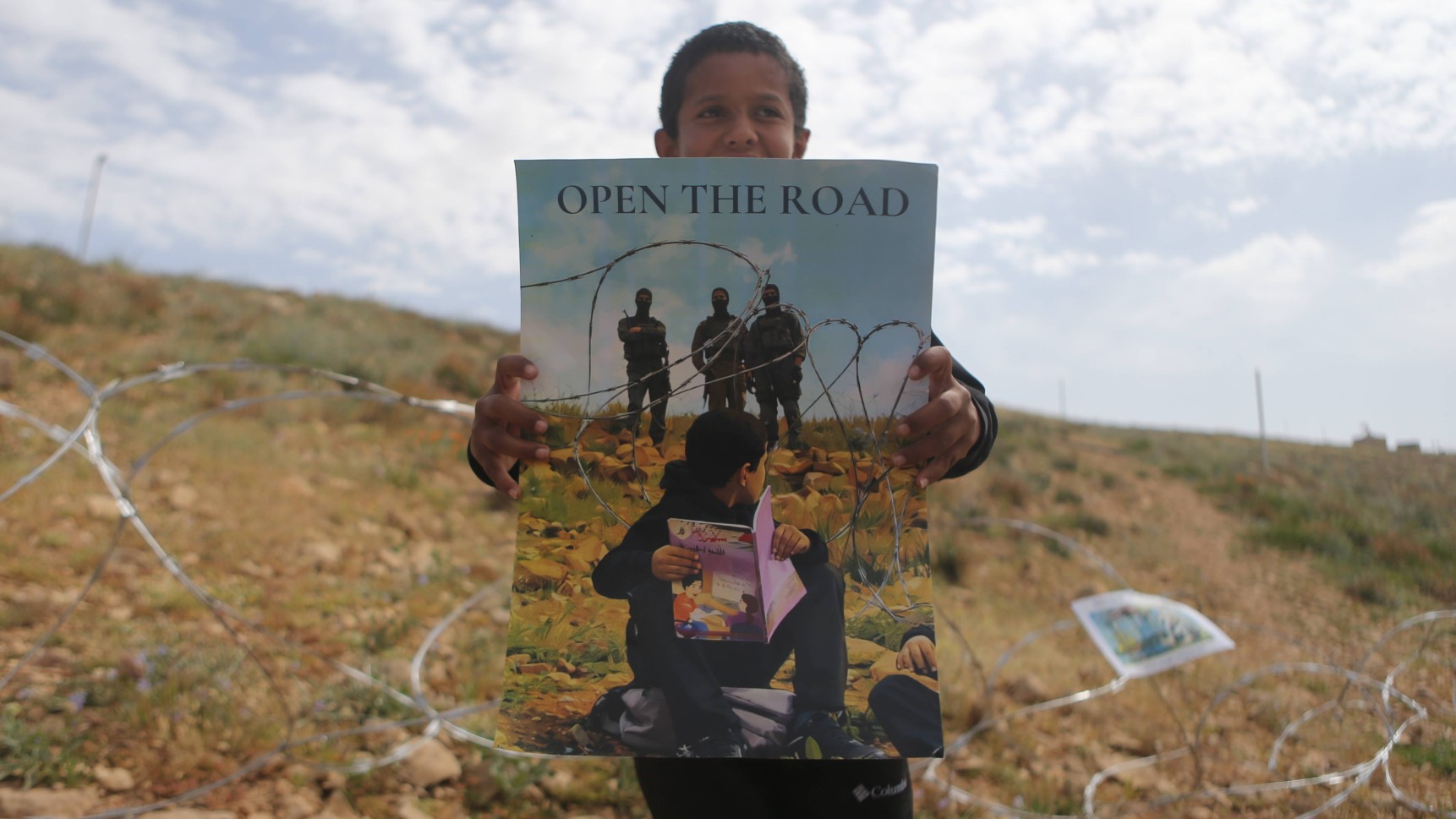
In a recent report, it was revealed that the Israeli occupation has not conducted any trials for the killing of Palestinian civilians in the occupied West Bank since the beginning of this decade, reflecting a clear failure to achieve justice and accountability. Just last month, ten Palestinian civilians were killed by Israeli settlers and police, including an entire family returning home from shopping.
The findings of the report are not an anomaly but rather an expression of a familiar and destructive pattern: the violence perpetrated by the occupation against the Palestinian people, followed by silence, delay, and impunity. This pattern has a troubling precedent in the British occupation of Palestine from 1918 to 1948. During the Arab revolt from 1936 to 1939, British authorities not only responded to protests but also established a legal and military framework that legitimized collective punishment and arbitrary detention.
Details of the Event
In fact, laws were not used to curb violence but to authorize it. The result was a system in which violations could be committed and then isolated from accountability, which strikingly resembles what we witness today. One of the most notable examples of this is the Balata massacre in September 1938, where the British army is believed to have committed a massacre against approximately 50 Palestinian Christians and Muslims as punishment for a roadside bomb explosion.
Britain cannot seriously speak about its commitment to international law in the Middle East while refusing to examine its role in shaping the conditions that made this possible. This is why the campaign "Britain Owes Palestine" comes at a timely moment. The campaign has worked with human rights lawyers and historians to present a 400-page legal petition to the government documenting the illegal acts and systemic violations during that period.
Background & Context
This petition is based on a complex legal and moral case, demonstrating that Britain's actions in Palestine were wrong and that the legacy of those actions continues to impact the massacres and other violations of international law occurring today in Gaza and the West Bank. The petition outlines how Britain occupied Palestine, supported the Balfour Declaration, prevented the Palestinian Arab majority from obtaining meaningful governance, and helped entrench a political system where demographic transformation and coercive control became normalized.
The petition asserts that British authorities used emergency powers to suppress the Arab revolt, rendering violence and collective punishment "legal" in name only, while removing access to courts, allowing illegal coercion to occur without accountability.
Impact & Consequences
This is not merely a historical critique; Britain's methods in Palestine contributed to creating a legacy of violence whose impact extends beyond the mandate period. Repressive techniques such as collective punishment, home demolitions, forced detentions, and impunity were produced in Britain and left in Palestine, and they continue to be used in modern times.
Therefore, the campaign demands more from the British government than vague expressions of concern. It calls for the government to seek out unpublished archives, provide a full public response, acknowledge wrongful acts, issue a formal apology in Parliament, and seriously consider reparations and other forms of accountability.
Regional Significance
These are not just symbolic gestures. Britain has always prided itself on being a nation that values justice, human rights, and fairness. These principles define our identity today. Thus, it is time to uphold those values, honor our national ideals, and work to correct the mistakes of the past so that we can move forward peacefully as a nation.
I recently joined a group of 45 MPs from various parties in signing an open letter urging the Prime Minister to respond to the petition and acknowledge Britain's historical role through a formal apology. Six months after its submission, the government has yet to respond.
Britain cannot seriously speak about its commitment to international law in the Middle East while refusing to examine its role in shaping the conditions that made this possible. If impunity is tolerated in the present, it is because it was normalized in the past. And if history is repeating itself in the West Bank, Britain has a duty not only to acknowledge that but also to bear its historical part in facilitating it.