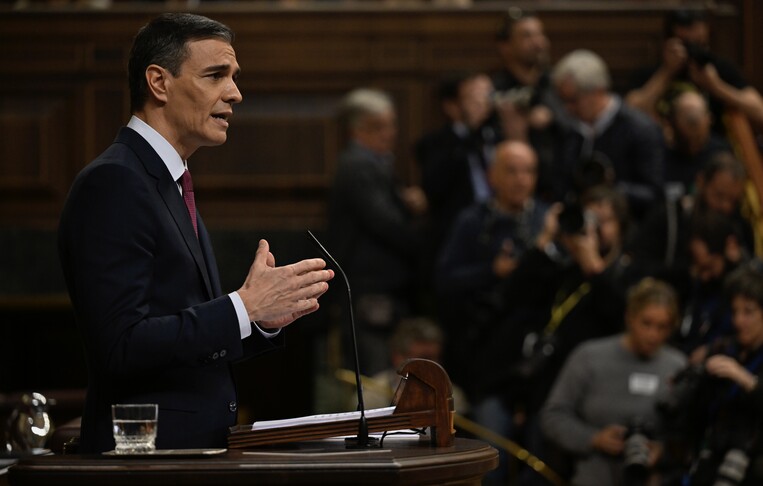
Spanish Prime Minister Pedro Sánchez emphasized that Lebanon did not choose the current war, urging respect for its sovereignty and territorial integrity. This statement was made during a press conference, where he pointed out that the increasing attacks on UN forces in Lebanon pose a threat to security and stability in the region.
Sánchez added that the international community must take immediate action to stop these attacks, warning that the continuation of violence could exacerbate the humanitarian situation in the country. He stressed the importance of supporting Lebanon during these difficult times, noting that military solutions would only lead to more suffering.
Details of the Incident
Sánchez's remarks come at a sensitive time, as Lebanon has witnessed a rise in security tensions, particularly following recent attacks targeting UN forces operating in the country. These attacks have resulted in injuries to several soldiers, raising international concerns about the safety of the UN mission.
The UN forces in Lebanon, known as UNIFIL, have been part of international efforts to maintain peace and stability in the region since 1978. However, the repeated attacks on these forces indicate a deterioration of security conditions in the country, necessitating urgent intervention from the international community.
Background & Context
Lebanon has faced significant challenges for years, including economic and political crises that have severely impacted the lives of its citizens. Since the outbreak of the Lebanese Civil War in the 1970s, the country has experienced periods of violence and instability, making it desperately in need of international support.
Historically, UN forces have played a vital role in promoting peace in Lebanon, but regional and local tensions could undermine these efforts. The ongoing attacks on UNIFIL forces threaten peace initiatives and complicate the situation in Lebanon further.
Impact & Consequences
The repercussions of the attacks on UN forces in Lebanon extend beyond national borders, potentially affecting regional stability as a whole. If these attacks continue, they could provoke military responses from concerned nations, escalating tensions in the region.
Moreover, the continuation of violence may worsen the humanitarian crises in Lebanon, where many citizens suffer from shortages of food, medicine, and essential services. This could contribute to an increase in the number of displaced persons and refugees, placing additional pressure on neighboring countries.
Regional Significance
The situation in Lebanon is part of the larger picture of security and stability in the Arab region. Any escalation in Lebanon could impact neighboring countries, such as Syria and Palestine, as tensions can easily spill across borders.
Furthermore, Lebanon's stability has a direct effect on relations between Arab nations, as all parties seek to enhance cooperation for peace and development. Thus, Sánchez's calls to halt attacks on UN forces reflect the urgent need for unified international efforts to support Lebanon during these critical times.
In conclusion, hope remains pinned on the international community to take effective steps to stop the violence in Lebanon and ensure the safety of UN forces, contributing to stability in the country and the entire region.