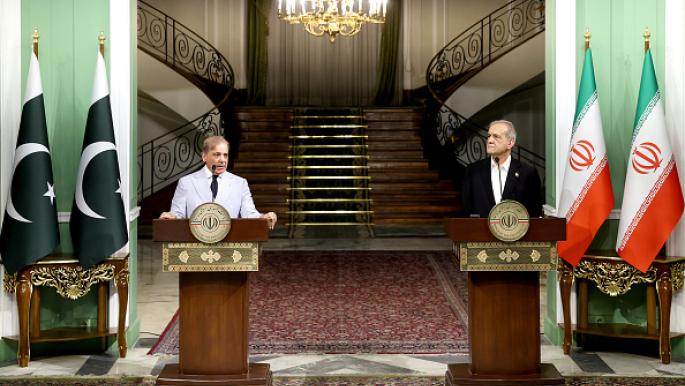
Iranian President Masoud Bezhakian and Pakistani Prime Minister Shahbaz Sharif asserted that Lebanon must be part of the ongoing ceasefire, stressing the need to stop Israeli attacks aimed at the country. These remarks come during a sensitive period marked by increasing tensions in the region, where Lebanon is grappling with the repercussions of political and economic crises.
Concerns about military escalation in the region are growing, especially following a series of Israeli attacks targeting various areas in Lebanon. Bezhakian and Sharif called on the international community to take a firm stance against these aggressions, emphasizing that their continuation would exacerbate the humanitarian situation in Lebanon.
Details of the Event
In his statements, Bezhakian pointed out that Lebanon is suffering from multiple crises, and that the ongoing Israeli attacks will only worsen the situation. Sharif also highlighted the importance of supporting Lebanon during this critical phase, underscoring the necessity to halt hostilities that threaten regional stability.
These statements come at a time when the Lebanese government is under increasing pressure, facing significant economic and political challenges. Officials have indicated that Israeli attacks negatively impact reconstruction and development efforts in the country.
Background & Context
Lebanon has a long history of conflicts and disputes, having been the stage for numerous civil wars and foreign interventions. Israeli attacks on Lebanon are not new, but they have increased recently, raising concerns within the international community. In this context, the calls from Bezhakian and Sharif are part of broader efforts to support Lebanon and its stability.
Historically, Lebanon has been a crossroads for many regional and international powers, making it susceptible to tensions. However, the current situation requires urgent action from the international community to ensure the safety of Lebanon and its people.
Impact & Consequences
If Israeli attacks on Lebanon continue, it could lead to a worsening of humanitarian and economic conditions in the country. Additionally, military escalation could affect the stability of the entire region, threatening regional security. It is crucial for the international community to take effective steps to halt these aggressions.
The repercussions of this situation may include an increase in the number of displaced persons and refugees, putting additional pressure on neighboring countries. Furthermore, the continuation of the conflict could impact peace efforts in the region and complicate political situations.
Regional Significance
The events in Lebanon are part of the larger picture of conflicts in the Arab region. Tensions in Lebanon could lead to negative effects on neighboring countries, necessitating greater coordination among Arab nations to address these challenges. Additionally, the situation in Lebanon may influence relations between Arab countries and Israel, further complicating the political landscape.
In conclusion, the calls from Bezhakian and Sharif to stop Israeli attacks on Lebanon represent an important step towards achieving peace and stability in the region. The current situation demands collective action from Arab nations and the international community to ensure the protection of Lebanon and its people from further tensions.