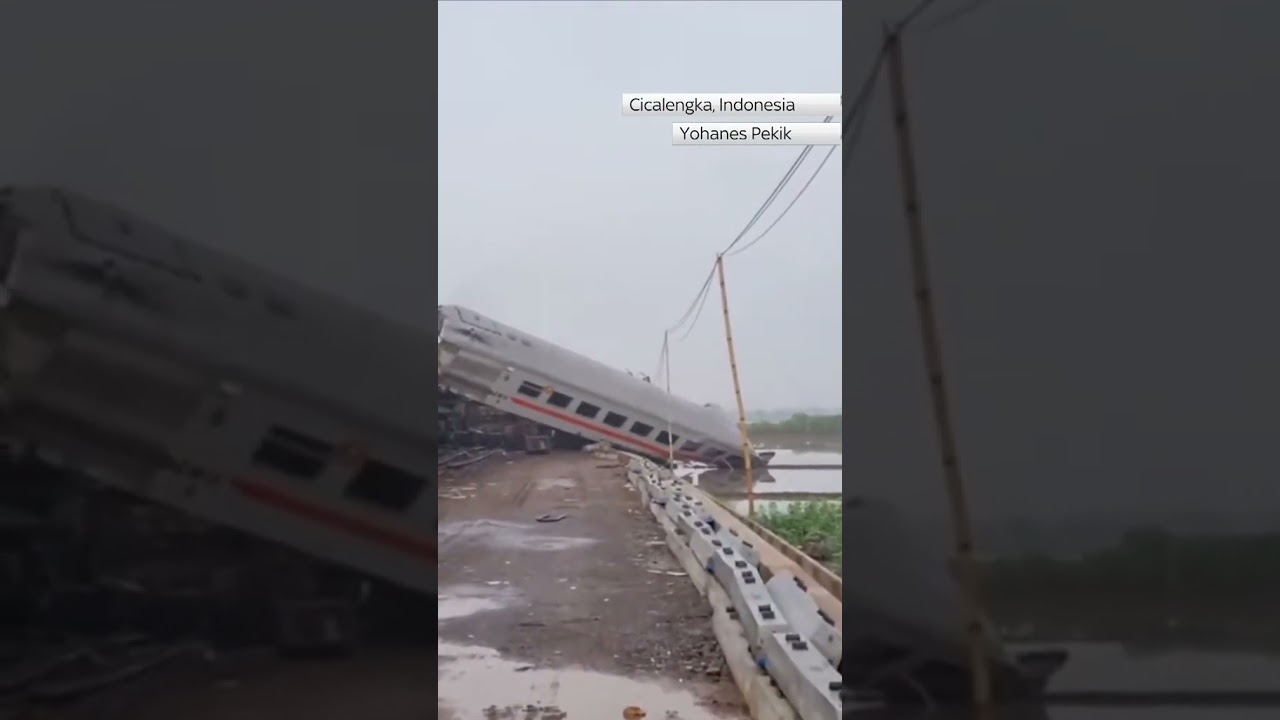
PT Kereta Api Indonesia (Persero) has announced the cancellation of two train services in the Daop 4 area due to the derailment of the Bangunkarta train at Bumiayu station, located in Brebes, Central Java. The incident occurred on Monday at 14:15 local time, affecting train operations in the area.
The Public Relations Director of PT KAI in Daop 4, Luqman Arif, stated that the canceled services include the Kamandaka train connecting Semarang and Purwokerto, and the Joglosemarkerto train linking Semarang and Solo. In addition to the cancellations, operational patterns for other trains in the area have been adjusted.
Details of the Incident
Following the derailment of the Bangunkarta train, the company redirected 13 train services on the southern route via the northern track. Among the trains affected by this change are the Joko Tingkir, Manahan, Gaya Baru Malam, Taksaka, Bima, Argo Dwipangga, Jayakarta, Gajayana, and Senja Utama trains.
The company affirmed its commitment to providing appropriate service to customers whose journeys were canceled, ensuring that ticket refunds will be processed. The importance of passenger safety and smooth train operations was emphasized, necessitating precautionary measures to prevent such incidents from recurring.
Background & Context
The railway network in Indonesia is one of the most important modes of transportation, connecting various cities and provinces. With the increasing number of travelers, there is a growing need to improve infrastructure and provide reliable services. Incidents such as train derailments raise concerns about passenger safety and impact the company's reputation.
Historically, Indonesia has experienced several similar incidents, prompting the government to take action to enhance safety within the railway system. Despite ongoing efforts, accidents continue to occur, highlighting the need for further improvements and upgrades in equipment and infrastructure.
Impact & Consequences
Incidents like train derailments can lead to negative impacts on transportation flow, causing delays and cancellations. This, in turn, affects the local economy, as many individuals rely on railways for commuting to work or school.
Moreover, such accidents can undermine public confidence in railway services, prompting individuals to seek alternative transportation options. Therefore, it is crucial for companies to take effective steps to enhance safety and provide reliable services.
Regional Significance
Although the incident occurred in Indonesia, it underscores the importance of safety in public transportation, a concern that resonates across all nations. In the Arab world, many countries face similar challenges in transportation, striving to improve their services and ensure passenger safety.
The lessons learned from this incident could be beneficial for Arab countries in enhancing their public transport systems, thereby improving passenger safety and reducing accidents.
In conclusion, incidents such as train derailments remind us of the importance of improving infrastructure and providing reliable transportation services. Companies and governments must work together to ensure passenger safety and deliver high-quality services.