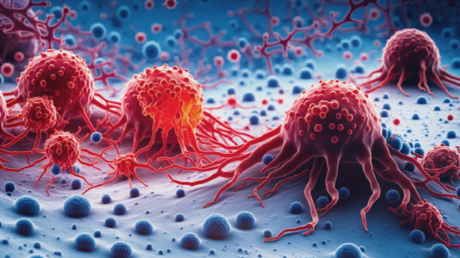
Researchers at New York Langone Health have made a significant discovery regarding cancer cells, revealing that these cells possess an extremely flexible survival mechanism. This mechanism explains why tumors in their advanced stages become resistant to treatments, posing a major challenge for scientists and doctors in the fight against cancer.
These findings are crucial for understanding how cancer evolves and how it resists available treatments. Advanced-stage tumors are often more difficult to treat, leading to negative outcomes for patients. This discovery could open new avenues for developing more effective therapeutic strategies.
Details of the Discovery
The researchers conducted experiments on a variety of cancer cells and found that these cells can modify their behavior to evade the effects of chemotherapy and radiation therapies. This adaptability is attributed to genetic and environmental changes occurring within the tumor, making it difficult to eradicate.
The researchers also indicated that this mechanism may be linked to complex interactions between cancer cells and their surrounding environment. Therefore, understanding these dynamics could aid in developing new treatments that target these mechanisms.
Background & Context
Historically, cancer research has focused on developing new drugs, but with the increasing cases of treatment resistance, it has become essential to understand how cancer cells survive. This discovery comes at a critical time as many countries struggle to address rising cancer incidence rates.
In recent years, substantial resources have been invested in cancer research, but the results have not always met expectations. This new discovery may help redirect these efforts towards a better understanding of the mechanisms that make tumors resistant to treatment.
Impact & Consequences
This discovery could have a significant impact on how cancer is treated in the future. If researchers can develop treatments that target these flexible mechanisms, the healing rates may improve significantly. Additionally, this could lead to a reduction in the side effects of current therapies.
Moreover, this research may contribute to the development of new preventive strategies, helping to lower cancer incidence rates in the community. Enhancing scientific understanding of cancer could lead to improved quality of life for patients.
Regional Significance
In the Arab region, where cancer incidence rates are rising, this discovery could significantly impact treatment strategies and healthcare. Improving understanding of tumor resistance to treatment may lead to the development of more effective health programs.
Furthermore, enhancing scientific research in this field could contribute to improving healthcare standards in Arab countries, helping to better address health challenges.
New discoveries like this reshape our understanding of cancer and open new horizons for treatment. It is essential that research continues in this area to achieve better outcomes for patients.