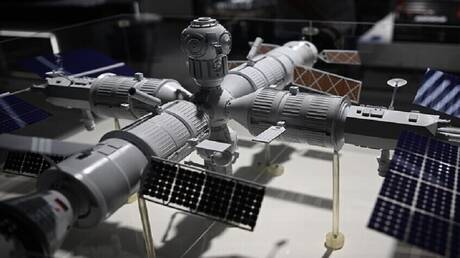
Russian company SoftLab-NSK has announced the commencement of work on an advanced simulator designed to train astronauts in handling the technologies of the new ROS orbital station. This step is part of Russia's efforts to enhance its capabilities in space, as it seeks to develop modern technologies that keep pace with global advancements in this field.
The ROS orbital station is considered one of Russia's ambitious projects, aiming to provide an advanced research platform for studying space and developing space technologies. Through this simulator, astronauts will be able to train on various scenarios, thereby enhancing their readiness to face challenges that may arise during space missions.
Details of the Simulator Development
According to reports, the simulator will include a range of advanced features that will assist astronauts in understanding how to interact with the different systems on the ROS station. The device will be designed to simulate the real conditions that astronauts may encounter in space, contributing to the improvement of their skills and efficiency.
This initiative is part of Russia's broader strategy to strengthen its presence in space, as it aims to develop new projects related to scientific research and technology. Additionally, this simulator will allow scientists and engineers to test new systems before launching them into space, thereby reducing potential risks.
Background & Context
Historically, Russia has been a pioneer in the field of space, having launched the first satellite and the first human into space. However, competition in this field has significantly increased with the entry of new countries such as China, India, and the United States into the space race. Therefore, the development of the ROS station and the simulator represents a strategic step to enhance Russia's position in this domain.
Russia is also seeking to collaborate with other countries on space projects, reflecting its desire to strengthen international partnerships in the field of space. Such collaboration could contribute to the exchange of knowledge and expertise, benefiting all parties involved.
Impact & Consequences
The development of the simulator could have positive effects on the training and qualification of astronauts. By providing an advanced training environment, astronauts will be able to acquire the necessary skills to deal with real challenges in space. This could help reduce accidents and increase the success rate of space missions.
Moreover, the success of the ROS station could open new avenues for international cooperation in space, potentially leading to joint projects between countries. This collaboration could contribute to promoting peace and international stability through the peaceful use of space.
Regional Significance
Although this project focuses on Russia, it may have potential implications for the Arab region. With the increasing Arab interest in space, Arab countries may seek to develop their own space programs. Russian experiences could serve as an inspiration for Arab nations in this field.
Furthermore, cooperation between Arab countries and Russia in the field of space could enhance scientific and technological partnerships, benefiting all parties. This collaboration could open new horizons for scientific research and development in the region.