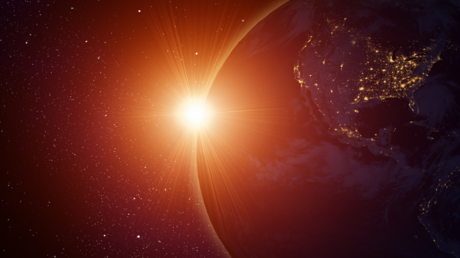
If the sun were to suddenly disappear, Earth would plunge into a state of cosmic chaos. The sun is not just a star in the sky; it is the heart of the solar system and the source of life on our planet. Since Earth formed about 4.6 billion years ago, the sun has been the driving force behind the evolution of life and the balance of the climate.
In the event of the sun's disappearance, photosynthesis, which all plants rely on, would cease, leading to their extinction within a few days. As plants vanish, the food chain would begin to collapse, directly impacting all living organisms, including humans.
Details of the Event
When we talk about the sun's disappearance, we must understand that this event would not occur suddenly or randomly. In reality, the sun will continue to exist for billions of years before it becomes a red giant and eventually ends as a white dwarf. However, if we assume a scenario of its sudden disappearance, the consequences would be dire.
Minutes after the sun disappears, Earth would begin to experience a drop in temperatures. Within a week, temperatures would plummet below freezing, causing oceans to freeze. Over time, Earth would become a dark and cold planet, with all surface water turning to ice.
Background & Context
The sun is the center of the solar system, around which all planets, including Earth, revolve. Life on Earth is entirely dependent on the energy provided by the sun. Through nuclear fusion, the sun produces energy that reaches Earth in the form of light and heat, making life possible.
Historically, ancient cultures viewed the sun as a symbol of life and fertility. In many civilizations, the sun was worshipped as a deity, reflecting its significance in human life. Today, the sun still plays a pivotal role in our lives, whether through agriculture or solar energy generation.
Impact & Consequences
If the sun were to disappear, the effects would not be limited to environmental life but would also encompass social and economic aspects. All agricultural activities would cease, leading to a severe food shortage. Industries reliant on solar energy would be significantly affected, resulting in a global economic collapse.
On a social level, human societies would experience panic and chaos. Conflicts over remaining resources would escalate, potentially leading to violent clashes. Major cities would become uninhabitable, forcing populations to seek refuge in remote areas.
Regional Significance
For the Arab region, which heavily relies on agriculture and natural resources, the sun's disappearance would have devastating effects. Countries dependent on agriculture would be severely impacted, leading to acute food shortages. Additionally, nations that rely on solar energy would face a crippling energy crisis.
Under these circumstances, Arab countries would need to develop strategies to adapt to climate changes and seek alternative energy sources to ensure the continuity of life in the event of any sudden changes in the solar system.
In conclusion, while the sun's disappearance is a fictional scenario, it highlights the sun's importance in our lives. Understanding the sun's role can help us appreciate the value of life on our planet and work towards protecting our environment.