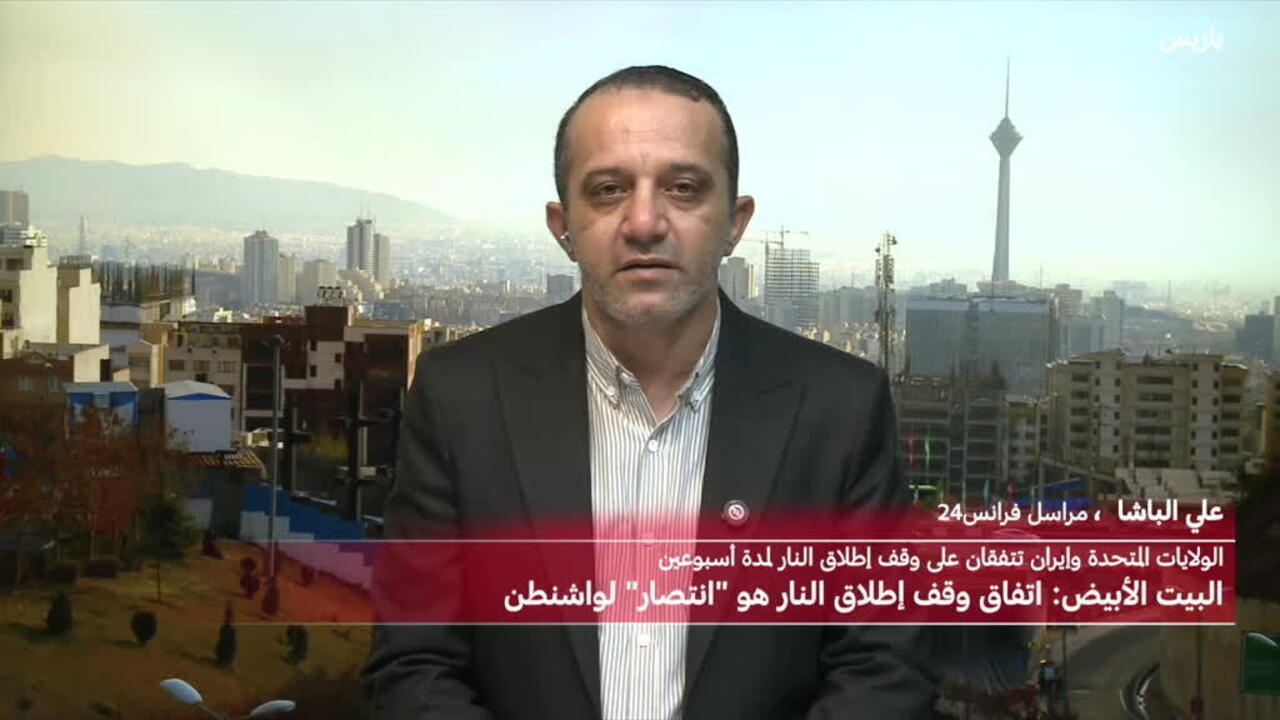
Iran and the United States have announced a two-week ceasefire, opening a new chapter in the relations between the two countries and reflecting a significant shift in the balance of power in the Middle East. This announcement comes at a sensitive time, as the region has witnessed a notable escalation in hostilities, especially between Iran and Israel.
In this context, France 24's correspondent in Tehran, Ali Al-Basha, reported that the Iranian Revolutionary Guard has carried out nighttime strikes on Israeli targets in response to Israeli attacks that targeted petrochemical facilities in Iran. These strikes reflect an escalation in the ongoing conflict and underscore that tensions remain high despite the ceasefire announcement.
Details of the Ceasefire
The temporary ceasefire comes after a series of reciprocal attacks between the two sides, with Israel recently targeting several Iranian sites, leading to strong reactions from Tehran. The Iranian Revolutionary Guard, considered the main military force in the country, has shown readiness to respond to any aggressions, complicating the security landscape in the region.
This ceasefire announcement could have significant implications for international relations, especially amid increasing tensions between major powers in the region. Furthermore, this development may open the door for new negotiations, although doubts remain regarding the intentions of the involved parties.
Background & Context
Historically, relations between Iran and the United States have been marked by increasing tensions since the Islamic Revolution in 1979. These tensions escalated after the United States withdrew from the Iranian nuclear agreement in 2018, leading to severe economic sanctions on Tehran. In recent years, Israel has intensified its attacks on Iranian sites, viewing Iran as a threat to its national security.
The Middle East, considered a crossroads for many international interests, has witnessed numerous armed conflicts that have impacted the region's stability. Therefore, any change in the dynamics between Iran and the United States could have far-reaching effects on neighboring countries.
Impact & Consequences
The ceasefire between Iran and the United States may lead to a reduction in military tensions, but it may not guarantee lasting stability. History teaches us that such agreements are often fragile and can be breached at any moment. Additionally, the Iranian Revolutionary Guard may continue military operations if Israeli attacks persist, potentially leading to a new escalation.
On the international stage, this development may contribute to a reassessment of military and political strategies by major powers, including Russia and China, which seek to enhance their influence in the region. Neighboring Arab countries will closely monitor the situation, as any escalation could affect their security and stability.
Regional Significance
The Middle East is suffering from numerous crises, and the ceasefire between Iran and the United States may have direct implications for Arab countries. Nations grappling with internal conflicts, such as Iraq and Syria, may find themselves in a more complicated position if tensions between Iran and Israel continue.
Moreover, Gulf countries, which view Iran as a threat to their security, will carefully watch these developments. Any new escalation could lead to increased tensions in the region, impacting investments and local economies.
In conclusion, the question remains about the sustainability of this calm amid rising tensions. The challenges facing the region persist, and it is essential for the involved parties to remain prepared for dialogue and negotiation to achieve lasting stability.