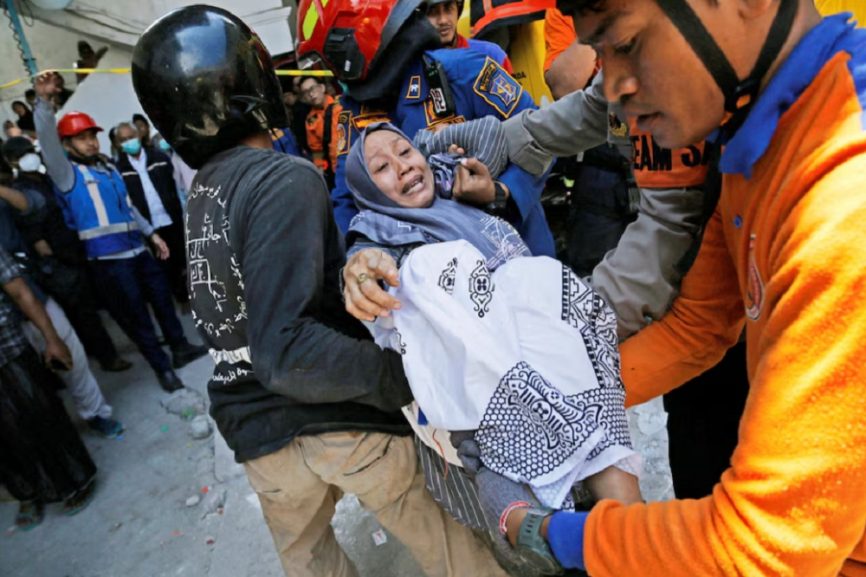
The ceiling of the Bunda Hati Kudus Yesus Church in Romingkor village, North Sulawesi province, collapsed on Thursday morning after the area was struck by a strong earthquake measuring 7.6 on the Richter scale. The earthquake, which occurred at 5:48 AM local time, had its epicenter in the sea, 129 kilometers southeast of the city of Petyong, at a depth of 33 kilometers.
In a statement to the media, Guido Mirong, the church's asset and development coordinator, confirmed that the ceiling collapse did not affect the scheduled religious celebrations, including the Maundy Thursday observances, as necessary measures were taken to ensure the safety of worshippers.
Details of the Incident
Mirong reported that the collapsed materials were made of plaster, while the main structure of the ceiling remains intact. He explained that the collapsed ceiling was located in the middle section of the church, where wooden benches are situated for worshippers during services. He also noted that the ceiling above the altar remains in good condition.
Despite the damage, the site has been cleared, and it has been confirmed that the church, which can accommodate approximately 800 worshippers, will remain open to congregants, with precautions in place.
Background & Context
Indonesia is one of the most earthquake-prone countries in the world, situated on what is known as the "Ring of Fire" in the Pacific Ocean, an area that is seismically active. Historically, the country has experienced numerous devastating earthquakes, leading to loss of life and destruction of property. In recent years, the frequency of earthquakes has increased, raising concerns among both the population and the government.
In this context, the earthquake that struck on Thursday is the latest in a series of quakes that have hit the region. The Indonesian Meteorology Agency has issued warnings about the possibility of aftershocks, heightening fears among residents.
Impact & Consequences
The repercussions of the earthquake extend beyond physical damage, affecting the psychological state of the population. Many individuals feel anxious and fearful of the recurrence of such events, especially given the unstable geological situation in the area. Additionally, collapses in public buildings, such as churches and schools, impact the morale of local communities.
On the other hand, these incidents underscore the importance of enhancing building standards and safety in earthquake-prone areas. The Indonesian government and local communities must work together to ensure the safety of structures and provide necessary support to affected residents.
Regional Significance
While earthquakes in Indonesia may seem distant from the Arab region, they remind us of the importance of preparedness for natural disasters. Many Arab countries, such as Lebanon and Palestine, are also located in seismic zones, necessitating similar preventive measures. Furthermore, natural events in any part of the world affect global markets, including commodity and resource prices.
In conclusion, natural disasters serve as a harsh reminder of the fragility of human life and the importance of preparedness and cooperation among nations to face common challenges.