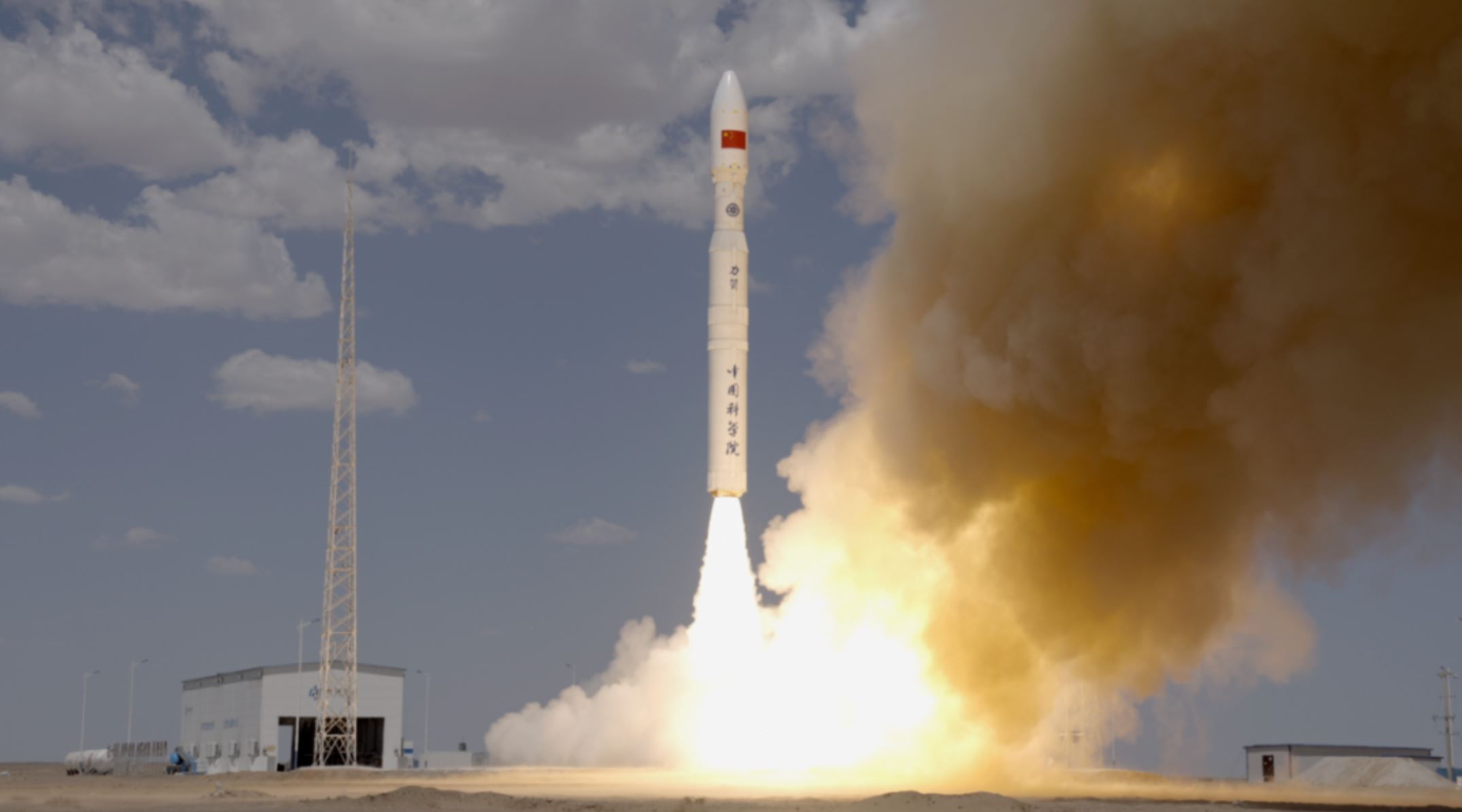
On March 30, 2023, China launched the Lijian-2 Y1 rocket, which carries three satellites, from an innovation testing area for commercial space in the west of the country. The launch took place at 19:00 Beijing time and successfully placed the satellites into their planned orbits.
Among the launched satellites is the Qingzhou satellite, a space test vehicle developed by the Innovation Academy for Microsatellites under the Chinese Academy of Sciences. This test flight carries 27 projects with a total weight of 1.02 tons and will conduct tests in space at altitudes ranging from 200 to 600 kilometers.
Details of the Launch Event
This launch represents the inaugural flight of the Lijian-2 rocket, which is the first of its kind in China to utilize a common booster core design. The rocket stands at a height of 53 meters and weighs 625 tons at launch, with a thrust capacity reaching 753 tons. The rocket can transport 8 tons to a sun-synchronous orbit at an altitude of 500 kilometers, and 12 tons to a low Earth orbit.
Yang Haolian, the commander of the Lijian-2 rocket, stated that this launch signifies a new turning point in the development of China's space transportation system, allowing a shift from reliance on a single type of rocket to a more organized framework that supports a variety of spacecraft, providing flexible support.
Background & Context
Historically, China has witnessed significant advancements in the field of space, having launched numerous successful missions in recent years. Since the inception of its space program in the 1960s, China has achieved major milestones, including sending astronauts into space and developing its own space station. The launch of the Lijian-2 rocket is part of China's strategy to enhance its capabilities in space and expand the use of space technology.
Through these projects, China aims to reduce costs and increase efficiency in launch operations, reflecting the global trend towards the use of reusable rockets. There are also plans to develop new technologies that allow for rocket reuse, which could revolutionize the space industry.
Impact & Consequences
The launch of the Lijian-2 rocket represents an important step towards enhancing China's capabilities in space, as commercial rockets are expected to play an increasingly significant role in national space missions. This development could help reduce costs and increase efficiency, thereby strengthening China's position as a global space power.
These achievements also indicate the growing competition among major countries in the field of space, as each nation strives to enhance its technological capabilities and compete for leadership in this vital sector. Furthermore, these developments may open new avenues for international cooperation in space.
Regional Significance
Looking at the Arab region, China's progress in space may pique the interest of Arab countries seeking to develop their own space programs. Many Arab nations have already begun investing in space, such as the United Arab Emirates, which launched the Hope Probe to Mars. Chinese experiments could serve as inspiration for Arab countries to enhance their capabilities in this field.
In conclusion, the launch of the Lijian-2 rocket marks a milestone in the history of Chinese space and reflects the global trend towards innovation and advancement in this field. As China continues to develop its technologies, we may witness more cooperation and competition in the field of space on a global scale.