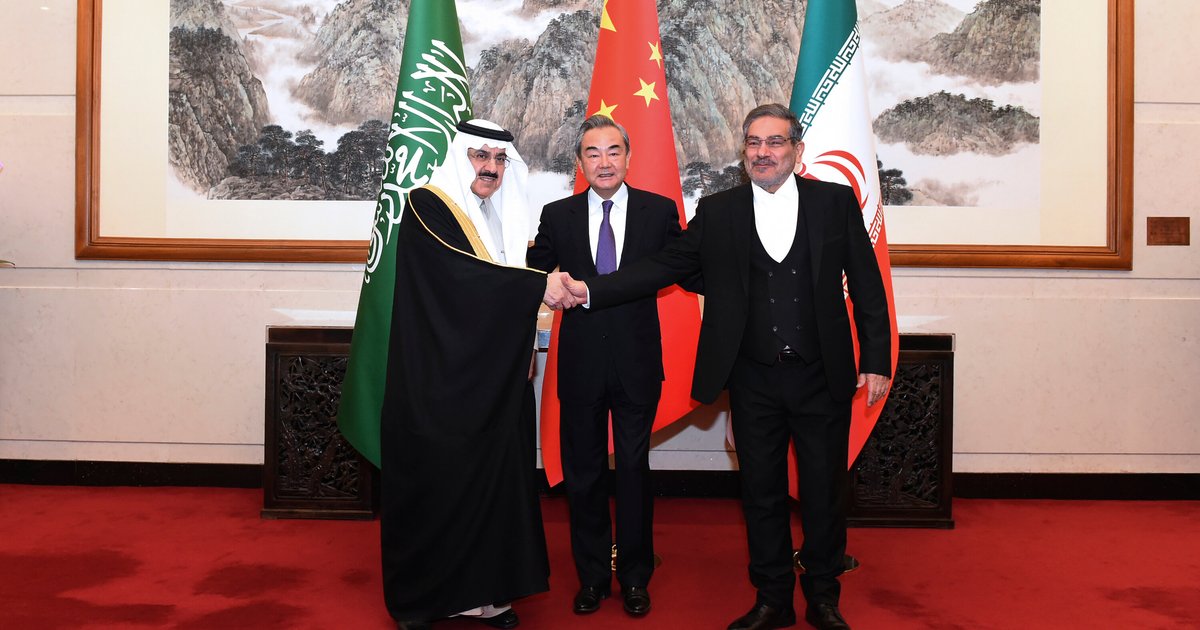
The Chinese government has welcomed the announcement of a ceasefire between the United States and Iran, affirming its support for mediation efforts by countries like Pakistan. This welcome came during a press conference held by Chinese Foreign Ministry spokesperson Mao Ning, who emphasized the importance of ending hostilities through political and diplomatic channels.
Earlier, Pakistani Prime Minister Shahbaz Sharif announced that the United States and Iran, along with their allies, had agreed to a ceasefire in all conflict areas, including Lebanon. This announcement followed Trump's confirmation that he had agreed to suspend bombing and military operations against Iran for two weeks.
Details of the Event
Reports indicated that Trump expressed his belief that China played a role in convincing Iran to come to the negotiating table. Media outlets also reported that Iran accepted the ceasefire mediated by Pakistan after China's last-minute intervention, urging Tehran to 'show flexibility and ease tensions' amid economic concerns.
Mao Ning confirmed that China has actively worked to help end the conflict, noting that Chinese Foreign Minister Wang Yi made 26 phone calls with his counterparts from the concerned countries. Additionally, China's special envoy to the Middle East visited the Gulf and the Middle East as part of mediation efforts.
Background & Context
The roots of tensions between the United States and Iran go back many years, with relations between the two countries escalating after the US withdrew from the Iranian nuclear deal in 2018. Since then, the United States has imposed strict sanctions on Iran, exacerbating the country's economic and political conditions.
In this context, the international community, including China and Pakistan, is seeking peaceful solutions to the conflict. China has demonstrated its commitment to its role as a responsible global power by proposing initiatives aimed at stabilizing the region.
Impact & Consequences
These developments are seen as a positive step towards easing tensions in the Middle East, as the continuation of the conflict could have serious repercussions for regional and international security. The ceasefire may open the door for broader negotiations that include other issues such as the Iranian nuclear program.
This development could also affect relationships among major powers in the region, including Russia and European countries, which are also seeking to achieve stability in the Middle East. The success of these negotiations could contribute to improving economic conditions in the region and enhance cooperation among nations.
Regional Significance
For Arab countries, any progress in negotiations between the United States and Iran could have direct implications for security and stability in the region. Tensions between Iran and Arab states, particularly in the Gulf, may decrease if a comprehensive agreement is reached.
Moreover, the success of Chinese mediation could enhance Beijing's role in the region, potentially leading to increased economic and political cooperation between Arab countries and China. Ultimately, there is hope that these efforts will lead to lasting peace in the Middle East.