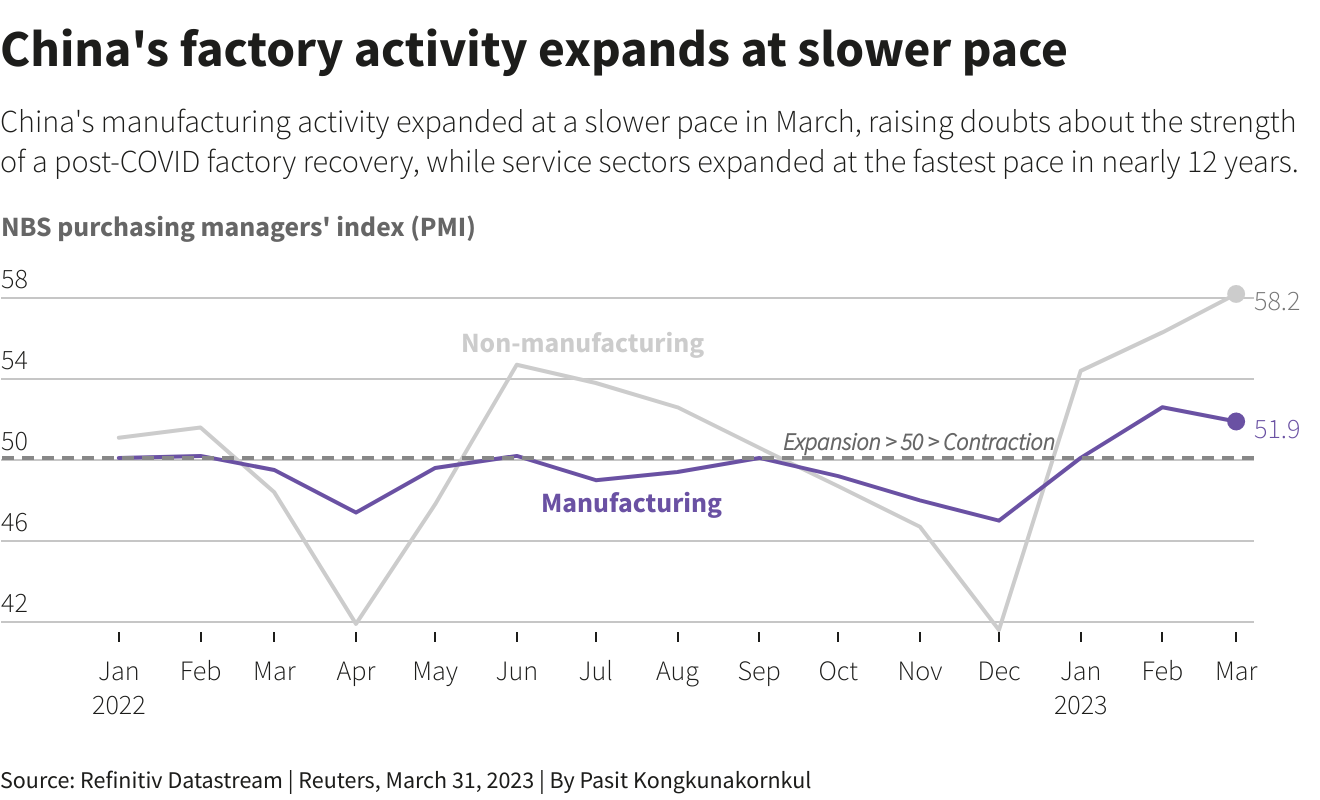
A private survey indicates that service sector activity in China experienced a significant slowdown in March, suggesting weak consumer demand following a temporary boost during the New Year holiday. These results reflect the economic challenges the country faces amid declining consumer confidence.
According to the survey, the service activity index fell from the high levels achieved in February, which had benefited from increased spending during the Chinese New Year holiday. This decline raises concerns about the Chinese economy's ability to maintain growth momentum under current conditions.
Details of the Event
Data shows that service activity, a vital indicator of economic health, has seen a decrease in its pace. The index dropped to levels below expectations, reflecting consumers' inability to sustain the high spending levels witnessed during the holiday. This decline comes at a sensitive time, as the Chinese government hoped to boost economic growth following a period of restrictions related to the COVID-19 pandemic.
Figures reveal that demand for services such as tourism and restaurants has decreased, indicating that consumers remain cautious in their spending. This caution may stem from concerns over rising prices or economic instability.
Background & Context
Historically, service activity in China has been one of the main drivers of economic growth. After experiencing a notable recovery in 2021, expectations were for this trend to continue. However, ongoing economic challenges, including trade tensions with other countries and rising living costs, have negatively impacted consumer confidence.
Moreover, changes in government policies, including restrictions imposed on certain sectors, have contributed to reduced economic activity. In recent years, there have been increasing calls from economists for stimulating growth through more flexible policies.
Impact & Consequences
This slowdown in service activity could have wide-ranging implications for the Chinese economy. If consumer demand continues to decline, it may lead to an overall slowdown in economic growth. This could negatively affect global markets, as China is one of the largest economies in the world.
Additionally, weak demand may impact local businesses, potentially leading to job cuts and increased unemployment rates. If these trends persist, the government may have to implement additional stimulus measures to support the economy.
Regional Significance
China is a significant trading partner for many Arab countries. Any slowdown in the Chinese economy could directly affect trade and investments in the region. For instance, a decline in Chinese demand for oil and gas could lead to falling prices, impacting the economies of exporting countries.
Arab companies relying on the Chinese market may face challenges in achieving their goals. Therefore, it is crucial for Arab nations to closely monitor these developments and take proactive steps to adapt to any changes that may occur in the Chinese economy.