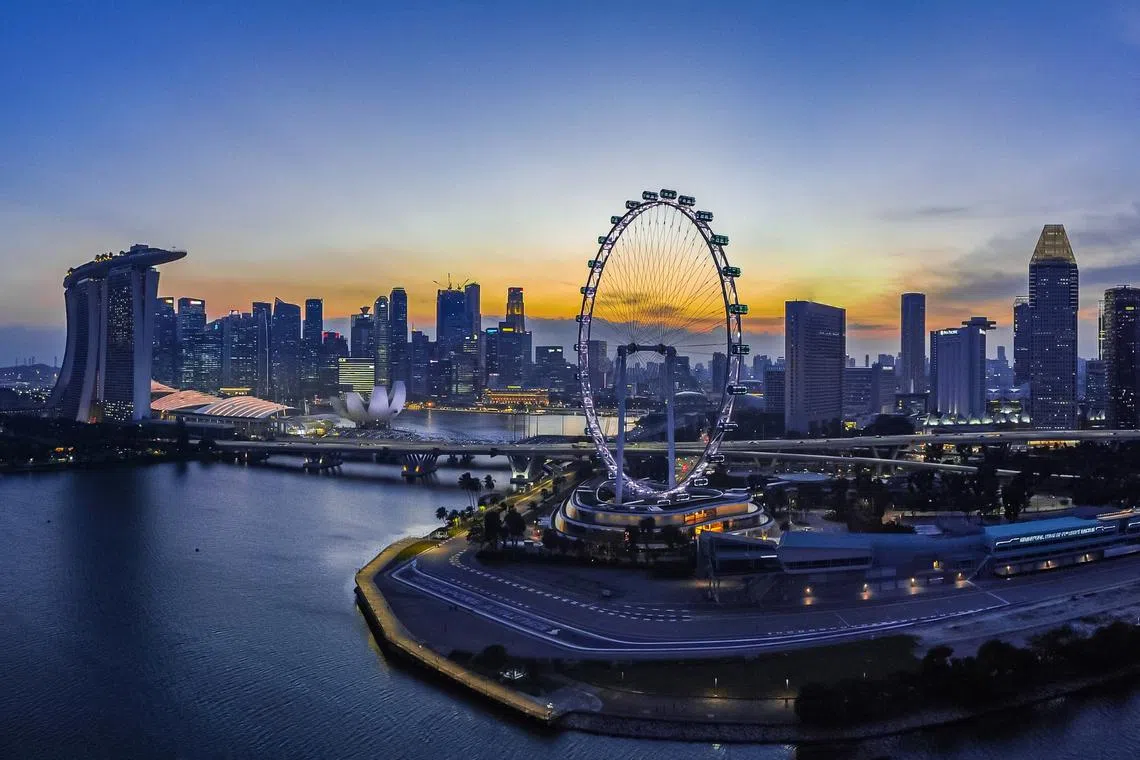
Singapore's Urban Redevelopment Authority (URA) has announced plans to review guidelines governing nighttime illumination in Marina Bay and along the Singapore River, marking a significant shift toward transforming the city's urban landscape after dark. This initiative seeks to enable more daring and sophisticated lighting concepts while maintaining the city-state's commitment to sustainability.
The move represents a strategic pivot by local authorities to engage directly with building owners in exploring innovative lighting concepts that transcend current restrictions originally designed to minimize light pollution and reduce energy consumption. By easing these regulations, Singapore aims to usher in a new era of visual competitiveness for one of the world's premier tourist destinations.
Project Details and Regulatory Framework
The new plan focuses on easing regulatory constraints that currently govern how buildings and external facades are illuminated in the city center. The authority is currently studying mechanisms that would allow greater flexibility in color choices and lighting patterns without compromising fundamental environmental standards.
Sources within the agency indicate that collaboration will involve direct meetings with property developers and managers of commercial and hotel buildings. The goal is to crystallize a unified lighting vision that balances tourist appeal with sustainability, while preserving the unique visual identity that distinguishes Singapore as a modern metropolis.
The targeted areas include Marina Bay with its iconic towers such as the Marina Bay Sands hotel, as well as the historic Singapore River stretch. These changes are expected to redefine the nighttime experience for pedestrians and visitors through more dynamic lighting that interacts with events and special occasions.
Background and Historical Context
Singapore has been renowned for decades for its illuminated night skyline. Over the past two decades, the city developed strict policies for managing external lighting, aiming to protect residents from light nuisance and reduce electricity consumption as part of its transformation into a sustainable smart city.
However, while these policies effectively preserved the environment, they imposed constraints on architectural creativity. Most buildings were limited to static or dim lighting, prompting designers and developers to demand greater flexibility for modern lighting technologies such as moving lights and digital facade projections.
This new shift responds to intensifying competition among global cities to attract tourists and investments, where the nighttime skyline has become a fundamental element of major city identities. This is particularly relevant given the growing night tourism industry and cultural events that rely on lighting as a medium for artistic expression and tourist attraction.
Economic and Environmental Implications
This step is expected to trigger a qualitative transformation in Singapore's tourism industry, enabling the hotel and commercial sectors to use lighting as a marketing and competitive tool. This could increase occupancy rates and tourist spending in affected areas, especially with growing demand for unique travel experiences based on modern visual aesthetics.
Environmentally, the authority faces the challenge of balancing intensive illumination with commitments to sustainability and carbon neutrality that Singapore has pledged. This necessitates adopting energy-efficient lighting technologies utilizing LED systems and smart controls that automatically switch off during designated hours.
The changes may also lead to a reevaluation of property values in the area. Buildings adopting distinctive lighting designs are expected to witness increased commercial and investment value, mirroring trends in cities like Dubai and Tokyo where light displays have become integral to real estate valuation.
Regional Significance for the Middle East
This experiment holds particular significance for Arab cities, especially in the Arabian Gulf, where countries such as the UAE, Saudi Arabia, and Qatar are racing to develop massive real estate and tourism projects competing globally. Singapore's policy review could serve as a model for updating outdated systems to align with contemporary tourism requirements.
Cities like Dubai, Riyadh, and Doha represent major competitors in the global tourism market. The Singaporean development may prompt them to accelerate plans for introducing more advanced lighting technologies in new projects such as Neom, Qiddiya, and Expo City, enhancing the Arab region's attractiveness as a global destination for smart cities and exceptional tourism.
As Singapore redefines its nighttime identity, the move signals a broader trend among leading urban centers to reconsider the trade-offs between environmental responsibility and economic vibrancy, offering valuable lessons for rapidly developing cities worldwide.