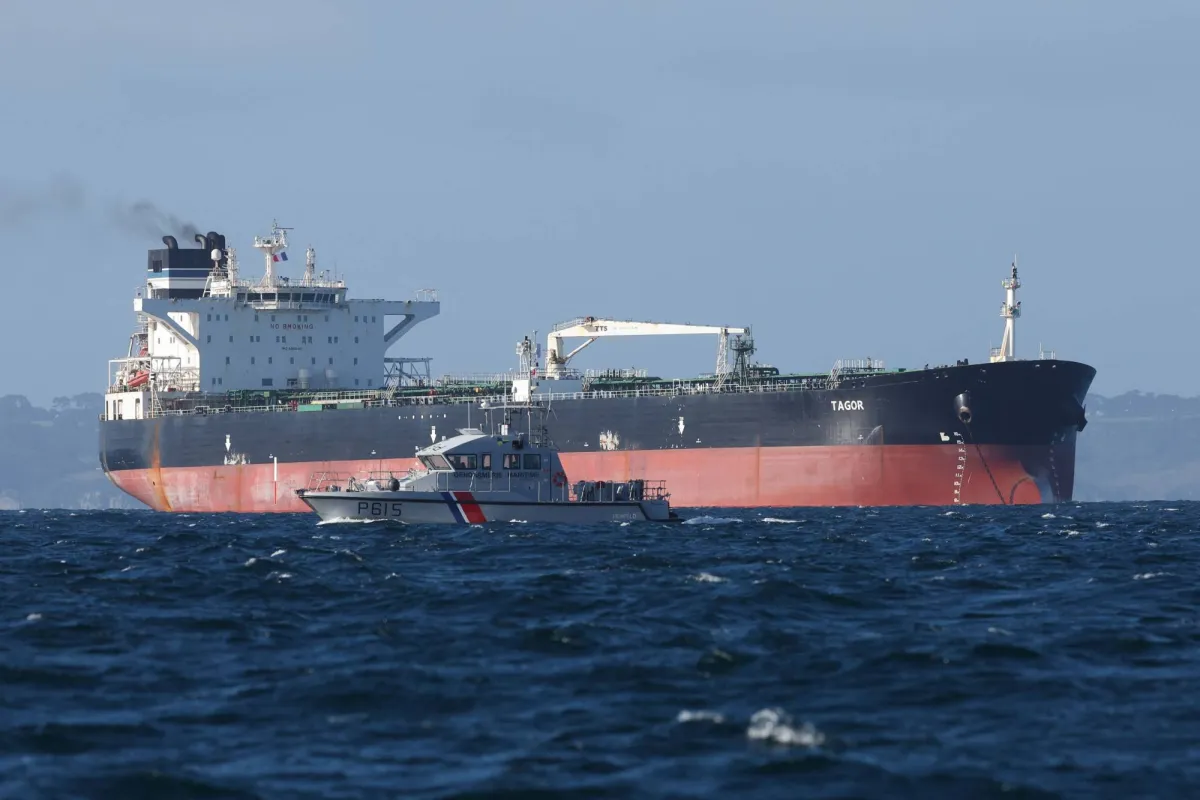
Global oil prices rose in Friday's trading, recording a partial recovery from the heavy losses suffered in the previous session, following the suspension of loading operations at Oman's Al-Fahl port after a suspicious explosion, as well as continued ambiguity surrounding the prospects of reaching a political settlement for the ongoing war in the region.
Brent crude futures rose by 0.35% to reach $95.36 per barrel, while West Texas Intermediate (WTI) crude climbed by two cents to $80 per barrel. Both benchmark crudes are heading toward recording their first weekly gains in three weeks, amid renewed fears of disruptions in global energy supplies.
The Al-Fahl Port Incident
Reuters reported that the Sultanate of Oman, one of the Arab oil-producing countries, suspended loading operations at the Al-Fahl port station following an explosion that occurred near berths for mooring buoys, amid suspicions that the attack was caused by a drone. This development raised concerns about the security of vital maritime passages in the Gulf region, particularly with escalating military tensions between Iran, the United States, and Israel.
Technically, West Texas Intermediate has achieved an increase exceeding 6% since the beginning of military clashes in the Middle East. Analysts believe that continued tensions keep supply risks elevated, especially with the possibility of the Strait of Hormuz—which carries one-fifth of global oil supplies—facing further security risks. Tony Sycamore, market analyst at IG, noted in a memo: "Optimism remains scant amid conflicting news."
Background and Geopolitical Context
These fluctuations come within the context of ongoing military escalation, where Lebanese Hezbollah's Secretary-General Naim Qassem rejected an American proposal for a ceasefire in Lebanon, dashing hopes for a rapid end to military confrontations. Iran insists on linking any potential peace agreement with Washington to a ceasefire in Lebanon first, complicating international mediation efforts.
In contrast, US President Donald Trump announced that he believes progress is being made in talks between Israel and Lebanon, but market analysts see that optimism remains limited. Experts point out that the continuation of the war pressures global oil inventories, particularly with Iranian exports declining to their lowest levels in six years due to the American naval blockade. Shipping data revealed that Iranian exports have dropped sharply, reducing global supply.
Market Impact and Global Consequences
Recent developments have raised real fears of a sharp decline in global oil inventories, which could push prices toward further increases during the third quarter of the year. The geopolitical tension has caused waves of uncertainty in global financial markets, where the currencies of energy-importing countries are directly affected, as seen with the Japanese yen fluctuating near the threshold of 160 yen per dollar, recording its lowest levels since last April.
Nevertheless, OPEC maintained its forecast for oil demand growth at 1.2 million barrels per day during the current year, confirming that conflicts in the Middle East have not yet fully affected navigation through the Strait of Hormuz. However, energy analysts warn that any additional escalation could lead to unprecedented supply disruptions affecting the entire global economy.
Implications for the Arab Region
These developments carry significant importance for Arab countries, whether oil producers or consumers. For the Sultanate of Oman, the suspension of Al-Fahl port represents direct economic pressure on the energy sector, while price hikes constitute a source of concern for importing countries in the region already suffering from inflationary pressures, as evident in Turkey which recorded annual inflation rates of 32.61% last May.
Amid continued uncertainty, oil markets appear likely to remain hostage to field and political developments in the region. As the market analyst noted, as long as US crude remains above the support level of $80, risks remain tilted toward the upside, meaning further pressure on the public budgets of Arab and global countries alike.