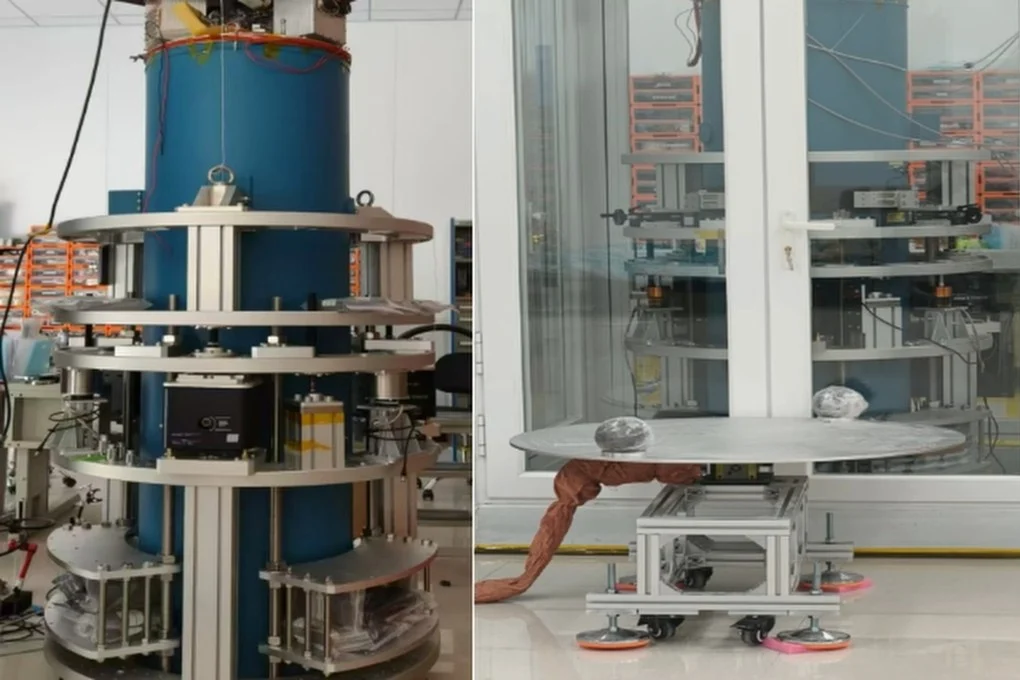
Chinese researchers revealed a gravity detection device with global precision last month, expanding military applications for this technology. The device utilizes superconducting quantum interference device (SQUID) technology to detect objects by measuring slight changes in gravity. The team that developed this device indicates that it can be used in scientific research and underground resource detection, bringing China a step closer to being able to monitor nuclear submarines patrolling its waters.
This technology is highly advanced, allowing for the detection of minute changes in gravity caused by the presence of large objects such as submarines. This innovation comes at a sensitive time, as military tensions are rising in the Pacific region, making it essential for countries to enhance their defensive and technological capabilities.
Event Details
The device was announced at a scientific conference in China, where researchers noted that it can measure changes in gravity with an accuracy of up to parts per million. This high precision makes it possible to pinpoint the locations of large objects beneath the earth's surface or underwater, opening new horizons in various fields, including natural resource exploration and military applications.
This step is part of China's strategy to enhance its military and technological capabilities, as the country seeks to develop advanced technologies that allow it to compete with other major powers, such as the United States. This innovation reflects China's commitment to investing in research and development in the fields of science and technology.
Background & Context
Historically, China has always sought to enhance its military and technological capabilities, especially amid rising tensions with the United States and its allies. In recent years, China has invested heavily in developing new technologies, including artificial intelligence, drones, and maritime technology.
Nuclear submarines are essential elements in the military strategy of major powers, providing deterrence and military operational capabilities. With increasing tensions in the South China Sea and the Pacific, the ability to monitor these submarines has become a top priority for China.
Impact & Consequences
This innovation could have significant implications for the balance of power in the region. If China can effectively develop this technology, the nature of military conflict in the Pacific may change. Other countries, particularly the United States, may be compelled to develop counter-technologies to maintain their military superiority.
Moreover, this technology could raise concerns among neighboring countries, which may feel threatened by China's ability to monitor their military movements. This could lead to a new arms race in the region, increasing tensions and impacting regional security.
Regional Significance
While this news may seem distant from the Arab region, developments in military technology in any part of the world affect regional balances. Arab countries, facing their own security challenges, may need to reassess their military strategies in light of these developments.
Additionally, cooperation between Arab countries and major powers in military technology may become increasingly important in the future, as Arab nations seek to enhance their defensive capabilities in the face of growing challenges.
The development of the gravity detection device in China represents a significant step toward enhancing military and technological capabilities, which could impact military balances worldwide. Other countries, including those in the Arab region, should be aware of these developments and reassess their military strategies accordingly.