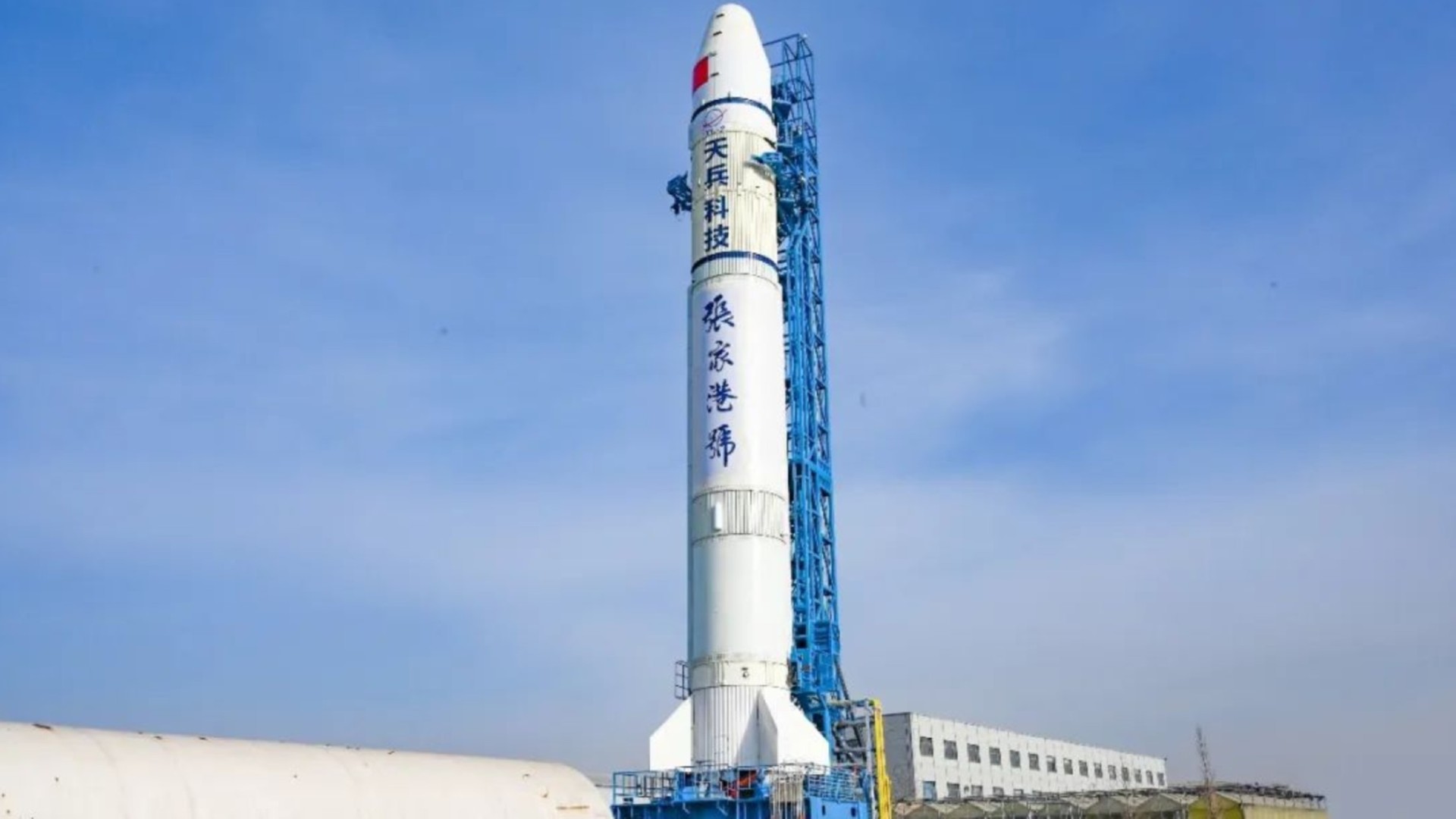
Chinese media reported the failure of the Tianlong-3 rocket launch, which is considered a competitor to the American Falcon 9 rocket, due to technical issues during flight. The launch, which took place from the Jiuquan Satellite Launch Center at 12:17 PM Beijing time (04:17 GMT) on April 3, did not achieve its intended goals.
The Tianlong-3 rocket, developed by the private Chinese company Space Pioneer, is regarded as China's first liquid-fueled rocket, aiming to transport payloads of over 20 tons to low Earth orbit. This rocket was expected to revolutionize satellite launches, as it has the capability to place up to 36 satellites into a single orbit.
Details of the Event
The Tianlong-3 rocket measures approximately 71 meters in length, has a diameter of 3.8 meters, and weighs 590 tons at launch. It is notable for its ability to carry payloads ranging from 17 to 22 tons to low Earth orbit and 10 to 17 tons to geostationary orbit. The rocket consists of two stages, with the first stage equipped with nine liquid-fueled engines of the Tianhuo-12 model, making it reusable up to 10 times.
Although the Tianlong-3 was considered a strong competitor to the Falcon 9 rocket owned by American entrepreneur Elon Musk, the launch failure highlights the challenges China faces in the space sector. The Falcon 9 is one of the most frequently used rockets in the world, known for its successful reusability of the first stage.
Background & Context
China has been striving for years to enhance its capabilities in space, launching numerous ambitious programs, including sending astronauts into outer space and developing its own space stations. However, the failure of the Tianlong-3 underscores the technical challenges that China still faces, especially amid fierce competition with American companies like SpaceX and Blue Origin.
Historically, China has achieved notable milestones in space, including launching its first astronaut in 2003, but it continues to seek the development of new technologies to compete with Western companies. The recent failure serves as a reminder that the path to space is fraught with challenges.
Impact & Consequences
The failure of the Tianlong-3 launch may affect China's future plans in space, as it was considered part of a larger strategy aimed at enhancing its presence in space. This failure demonstrates the need for further research and development in space technologies, which could lead to delays in future projects.
Moreover, this failure could impact the reputation of Chinese companies in the global market, as they compete with American firms that have achieved significant successes in this field. The launch failure serves as a call to reflect on how to improve technologies and processes to ensure future success.
Regional Significance
As Arab countries seek to enhance their capabilities in space, the failure of the Tianlong-3 highlights the importance of international cooperation in this field. Arab nations can benefit from the experiences of both China and the United States in developing their space programs, thereby strengthening their ability to compete in this vital sector.
In conclusion, the failure of the Tianlong-3 launch serves as an important lesson in the field of space, demonstrating that progress requires time and effort, and that failure can be part of the learning and development process.