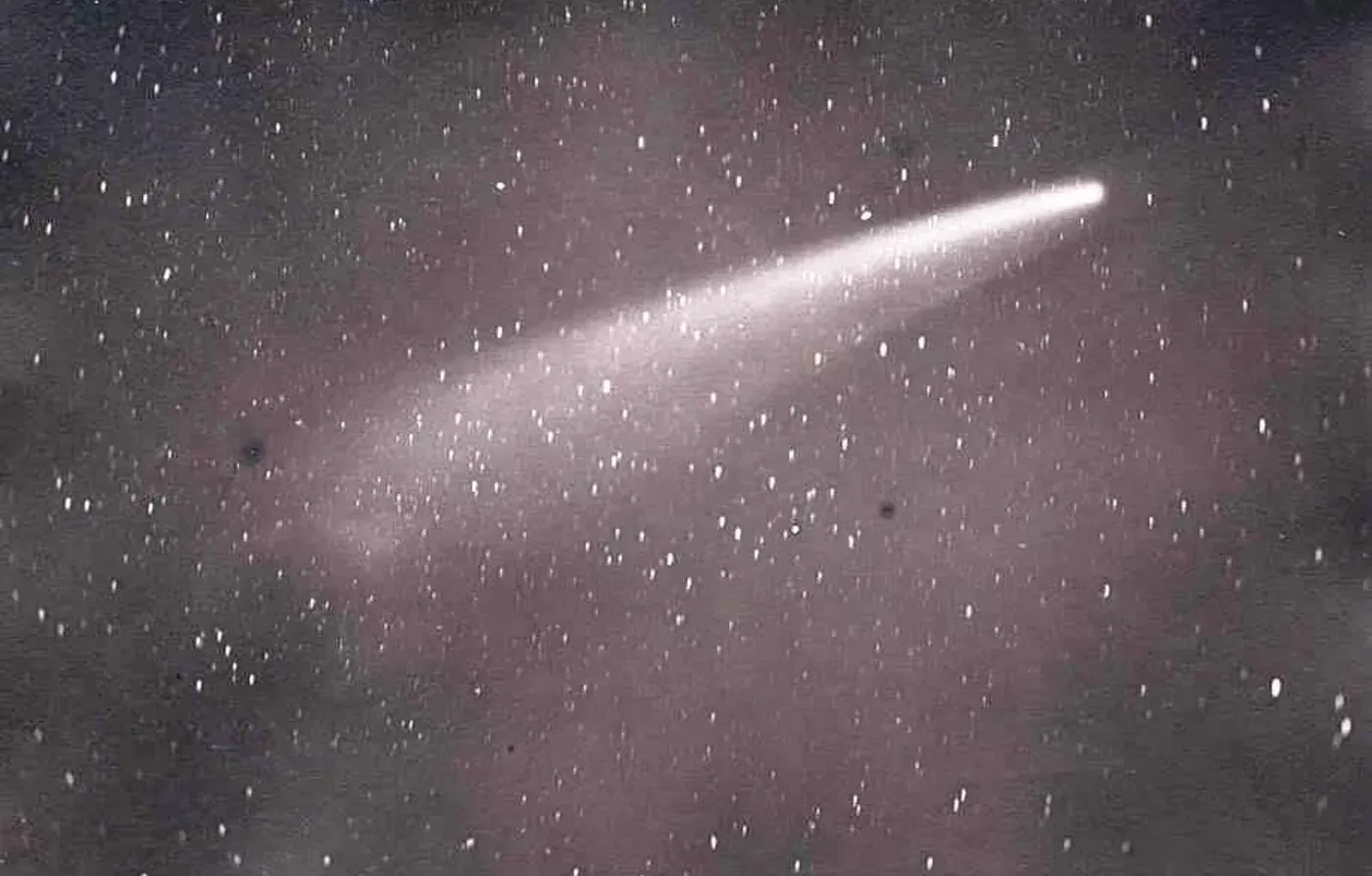
The comet 'MAPS' (C/2026 A1 MAPS) is preparing for a decisive encounter with the Sun today, Saturday, as scientists and astronomy enthusiasts around the world await its fate, which could mark an extraordinary celestial moment. Discovered just three months ago by a team of amateur astronomers in the Atacama Desert of Chile, it is classified as a 'Sungrazer' comet, meaning it will come very close to the Sun's surface.
Opinions among astronomers vary regarding the comet's fate after its close approach to the Sun, with three main possibilities being discussed. The first is that the comet may disintegrate due to the Sun's intense gravity and heat, leading to its disappearance. The second possibility is that the comet may survive but will appear faint and invisible to the naked eye. The third, and most optimistic scenario, involves the comet becoming visible in the sky, providing stargazers and photographers with a rare opportunity to witness it.
Details of the Event
If the comet 'MAPS' successfully survives the Sun's grip, it is expected to appear in the sky just after sunset starting Sunday, April 5, and will continue to be visible for several days. To locate it, observers are advised to watch the sunset location and look directly above it. Using binoculars may facilitate the observation process, while photography will present a fantastic opportunity for astronomy enthusiasts.
Seeing a comet with the naked eye is a unique experience; despite the existence of many comets, most are faint or require special equipment to observe. If the positive scenario occurs, witnessing comet 'MAPS' will remind us of comet 'Hale-Bopp,' which amazed the world in 1997, where the only requirement to see it was to look up at the sky.
Background & Context
Historically, comets have been considered omens or signs of major events. In ancient cultures, the appearance of comets was believed to indicate significant changes in the world. Today, with technological advancements, scientists are better able to track and study the movements of comets, allowing for a deeper understanding of the universe.
The discovery of comet 'MAPS' in the Atacama Desert reflects the importance of collaboration between amateur and professional astronomers. These discoveries contribute to enhancing astronomical knowledge and open new horizons for scientific research in space.
Impact & Consequences
If the comet survives its close approach to the Sun, its appearance in the sky could stimulate greater interest in astronomy and encourage more research in this field. It could also lead to the organization of educational events and astronomical displays in various countries, enhancing scientific awareness among the public.
On the other hand, this event could foster international collaboration in astronomy, as different countries can exchange information and experiences related to observing comets and celestial bodies.
Regional Significance
In the Arab world, such an event could positively impact young people's interest in astronomy. The appearance of comet 'MAPS' in the sky may encourage the organization of workshops and lectures about astronomy, enhancing scientific culture in Arab communities.
This event could also be seen as an opportunity to promote astronomical tourism, as visitors from around the world may come to Arab countries to witness this unique celestial display.
In conclusion, the fate of comet 'MAPS' remains uncertain, but what is certain is that its approach to the Sun represents a rare opportunity to witness a celestial display that may linger in memory for a long time.