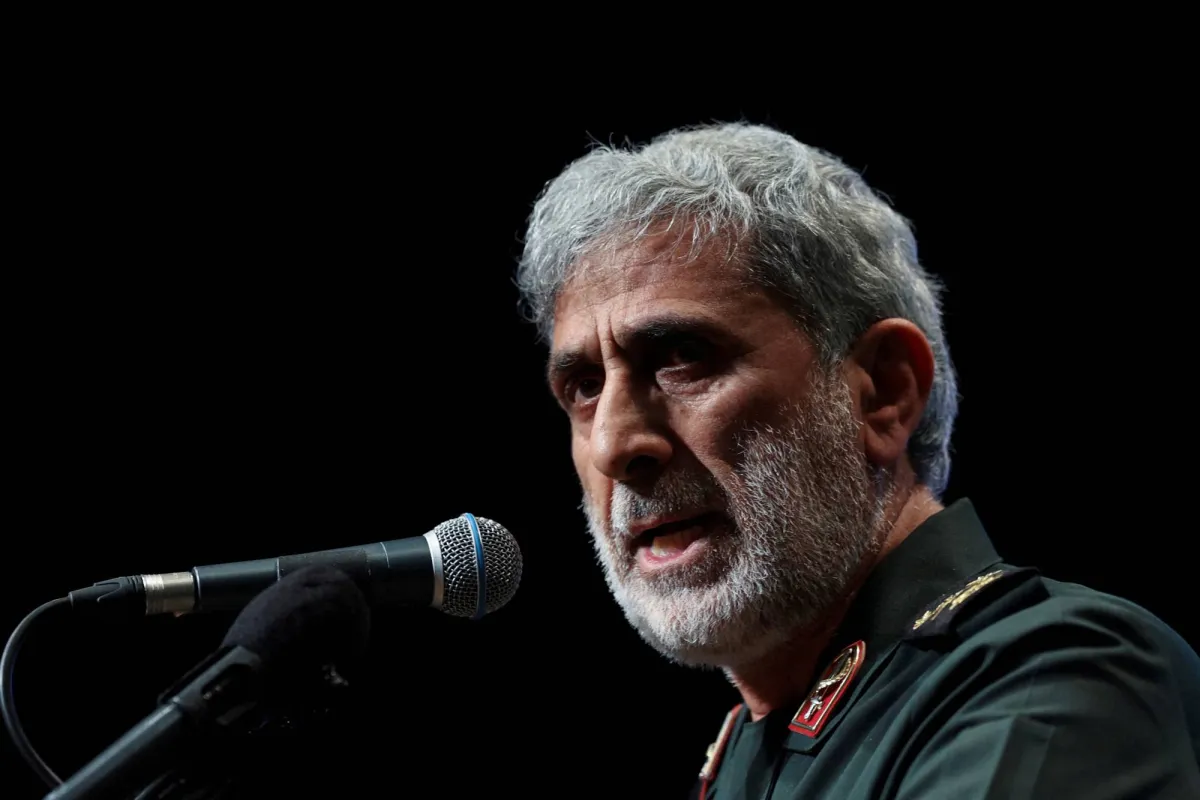
Ismail Qaani, the commander of the Iranian Quds Force, praised the efforts of Tehran-backed armed groups in a social media post, which contributed to what he described as the 'new order in the region.' This comes at a time when Iran is facing rising military tensions with the United States and Israel.
In his post shared on the platform 'X' under the username 'General Qaani,' he affirmed that 'the wishes of the martyr resistance leaders have been fulfilled, and the resistance's war operations room is unified.' He also called for adaptation to what he termed the 'new order' in the region, referring to the military and political alliances formed under current circumstances.
Details of the Event
Qaani specifically discussed the role of the Lebanese group 'Hezbollah,' which is engaged in war against the Israeli army on Lebanon's southern border, and the 'Ansar Allah' Houthi group, which has recently entered into military conflict. This statement has garnered wide attention, especially given the tense conditions in the region.
Although the platform 'X' suspended the account that posted this message, its content was widely circulated, reflecting the significance of the message Qaani intended to convey. It is noteworthy that this post is only the second attributed to Qaani since the outbreak of the war that began with American-Israeli strikes on Iran about a month ago.
Background & Context
Qaani took command of the Quds Force after the assassination of General Qassem Soleimani in 2020 and is considered a prominent figure in the Iranian Revolutionary Guard. Reports of his death during the twelve-day war between Israel and Iran in June 2025 circulated, but he reappeared, raising questions about his role and residence under current conditions.
Tehran is experiencing a state of tension and anxiety, as residents attempt to continue their lives almost normally despite the war. However, many miss simple daily activities such as going to cafes or taking walks. These difficult circumstances reflect the significant impact of the conflict on the daily lives of Iranian citizens.
Impact & Consequences
Concerns are growing that the current war may lead to greater escalation in the region, as the alliance between Iran and its allies is viewed as a threat to regional security. Many Arab countries have expressed their worries about the increasing Iranian influence in the region, which could exacerbate existing crises.
Furthermore, Qaani's statements may provoke strong reactions from Western powers, especially amid ongoing economic and political pressures on Iran. These dynamics are expected to affect relations between Iran and Western countries, in addition to influencing the internal situation in Iran.
Regional Significance
Qaani's statements serve as a warning to Arab countries about the rising Iranian influence in the region, as Tehran seeks to bolster its military and political presence through support for its allies. This could lead to heightened tensions in areas such as Iraq, Syria, and Lebanon, where Iran-backed armed groups are present.
In light of these circumstances, the question remains as to how Arab countries will respond to such challenges and whether they will take effective steps to counter the increasing Iranian influence.
In conclusion, the situation in the region requires vigilance from Arab countries, as Iranian statements and actions may carry serious implications for regional security and stability.