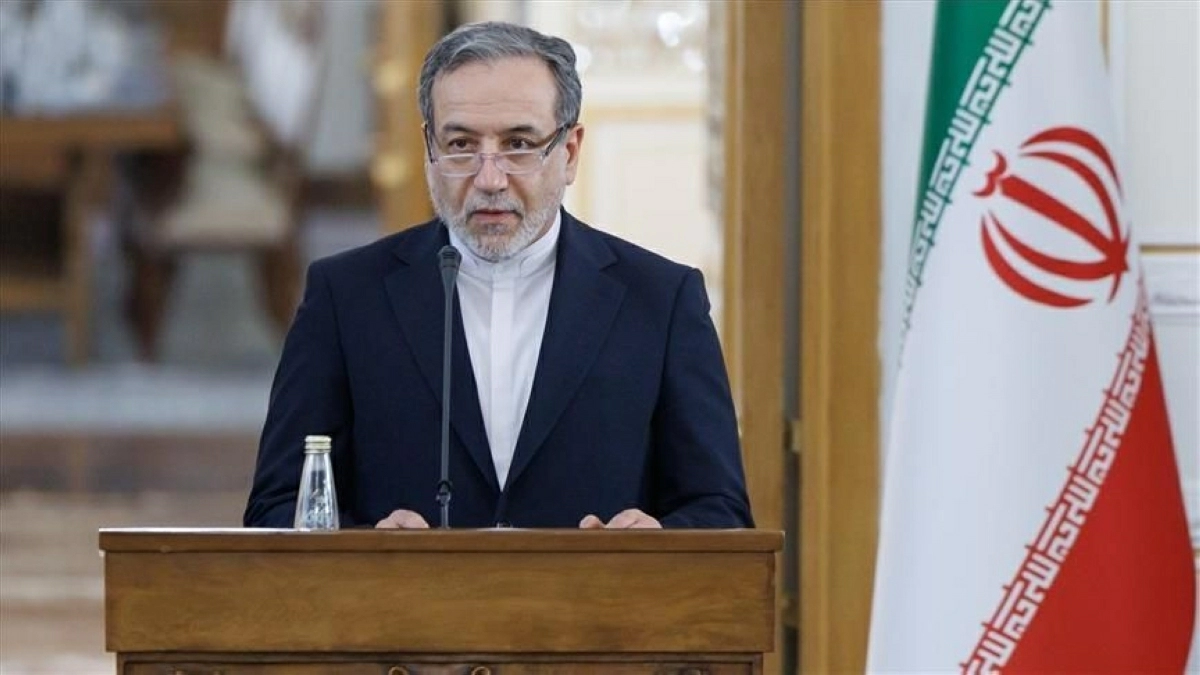
Iranian Foreign Minister Abbas Araghchi accused the United States of orchestrating an attack on an elementary school in Minab, resulting in the deaths of over 175 students and teachers. This accusation was made during an emergency session of the UN Human Rights Council, where Araghchi described the attack as a war crime requiring global condemnation.
In his video address, Araghchi pointed out that the attack, which occurred on February 28, the first day of the US-Israeli war on Iran, was a "premeditated attack." He considered the strike a "crime against humanity" that necessitates clear accountability for those responsible.
Details of the Incident
The attack occurred at a sensitive time, as the United States and Israel had launched a large-scale military operation against Iran, escalating tensions in the region. Araghchi confirmed that the strike, which targeted the school, was a result of a targeting error by US forces, as a Tomahawk missile hit the school instead of a nearby Iranian base.
Initial reports indicated that the data used for targeting was outdated, leading to this grave error. In a related context, the UN's Human Rights Chief, Volker Turk, noted that this attack caused "visceral horror," emphasizing the need for justice.
Background & Context
Historically, Iranian-American relations have seen increasing tensions, especially following the US withdrawal from the nuclear deal in 2018. Since then, military tensions between Iran and the US have escalated, resulting in a series of attacks and reciprocal responses.
The attack on the school is part of a larger escalation in the conflict between Iran and its allies on one side, and the United States and Israel on the other, reflecting the growing tensions in the Middle East. These events could represent a significant shift in the conflict, as targeting civilians, especially children, is a blatant violation of international laws.
Impact & Consequences
The attack on the school is not merely an isolated incident; it reflects a shift in the nature of the conflict in the region. With the escalation of attacks, this may lead to increased polarization among major powers, threatening the stability of the entire region.
This attack may also provoke strong international reactions, as pressure is expected to mount on the United States to conduct a thorough and transparent investigation. This could exacerbate humanitarian crises in the region, where civilians are living under the burden of armed conflicts.
Regional Significance
Arab countries are directly affected by the tensions between Iran and the United States, as any escalation in the conflict could have negative repercussions on security and stability in the region. Some Arab nations may seek to adopt more cautious stances under these circumstances, especially with growing concerns over escalating violence.
Ultimately, the question remains: how will these events affect the future of relations between Iran and Arab countries? This incident could be a turning point in how Arab nations engage with Iran, particularly amid rising tensions.