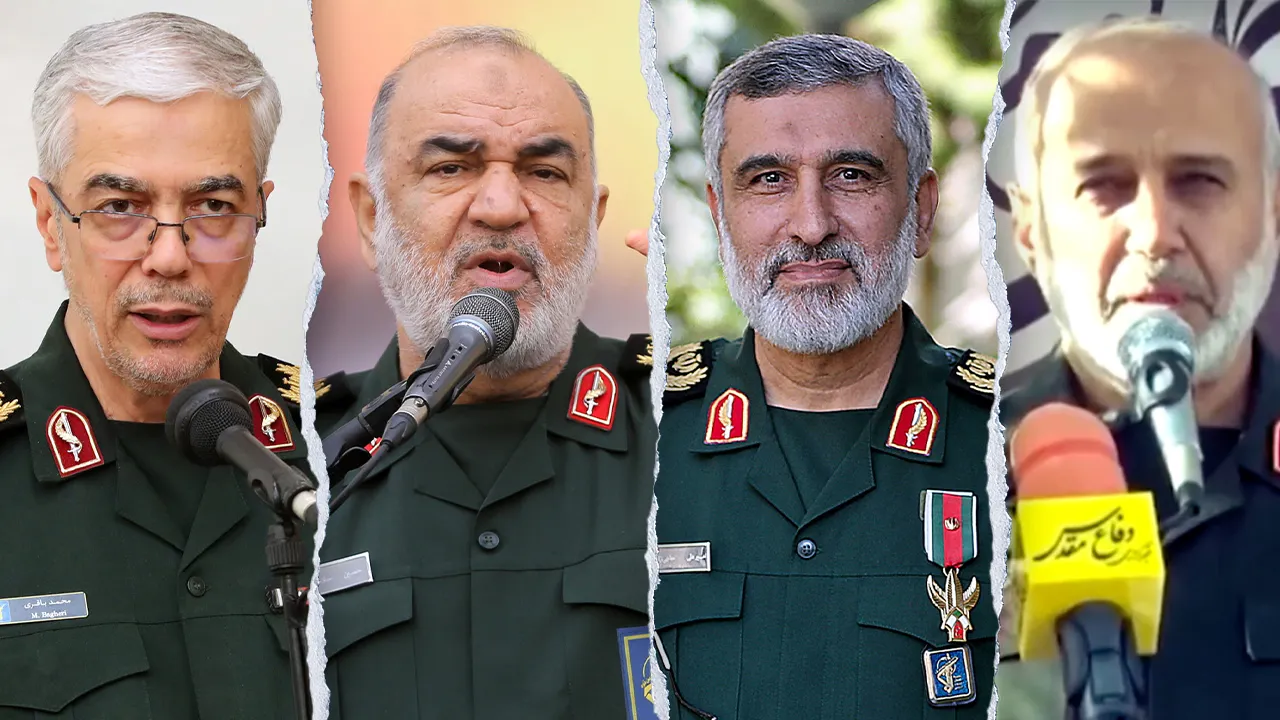
U.S. President Donald Trump announced the death of several senior Iranian military officials in an airstrike on Tehran, posting a video that shows nighttime explosions without providing additional details. These developments come at a sensitive time, as Trump stated that the deadline he set for Tehran to reach an agreement with Washington or reopen the Strait of Hormuz would end on Monday, April 6.
Trump did not address the fate of the American pilot whose aircraft was shot down in Iranian airspace, raising questions about the implications of this incident on relations between the two countries. These events occur amid escalating tensions between the United States and Iran, which have seen a notable increase in recent months.
Details of the Airstrike
This airstrike is considered one of the most significant military operations targeting Iran in recent years, focusing on prominent military figures. The strike has elicited varied reactions on the international stage, with some viewing it as a provocative step that could exacerbate conditions in the region.
It is noteworthy that Trump had previously warned Iran of the consequences of failing to reach an agreement, indicating that this airstrike is part of his strategy to pressure Tehran. The video Trump shared reflects the nature of the psychological warfare the United States aims to achieve against its adversaries in the region.
Background & Context
Historically, U.S.-Iranian relations have been marked by ongoing tensions since the Islamic Revolution in 1979. These tensions have led to a series of military and economic conflicts, including sanctions imposed by the United States on Iran. In recent years, these tensions have escalated significantly, especially following the U.S. withdrawal from the nuclear agreement in 2018.
The recent events also fit within the framework of ongoing regional conflicts, as Iran seeks to enhance its influence in the region by supporting armed groups in Iraq, Syria, and Lebanon. This Iranian influence is a major concern for the United States and its allies in the region, increasing the likelihood of military escalation.
Impact & Consequences
This airstrike is expected to escalate tensions between the United States and Iran, potentially negatively affecting regional security. The killing of prominent military officials may lead to retaliatory responses from Iran, increasing the chances of armed conflict in the region.
Furthermore, these events could impact global markets, particularly oil markets, as the Strait of Hormuz is a vital point for oil transportation. Any threats to close the strait could lead to rising oil prices, affecting the global economy.
Regional Significance
Neighboring Arab countries, such as Iraq and Syria, are among the most affected by these events. Any military escalation could have direct repercussions on security and stability in these countries. Additionally, Gulf states, which are concerned about Iranian influence, may find themselves in a difficult position if tensions escalate.
In conclusion, the situation in the region remains tense, as Arab and global nations await developments in Tehran and the potential future consequences.