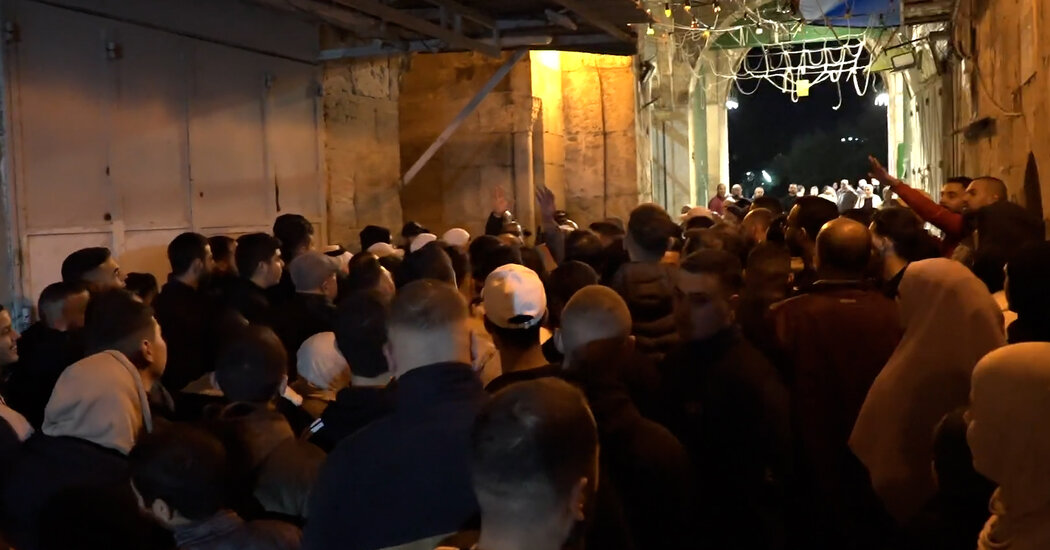
The Israeli authorities are maintaining the closure of Al-Aqsa Mosque and the Church of the Holy Sepulchre for the 37th consecutive day, raising increasing concerns among Palestinians and Arabs. This measure comes amid escalating tensions in the region, where both sites are considered significant religious symbols for Muslims and Christians alike.
These events coincide with repeated calls from Palestinians and the international community to open these sacred sites, as the closure is viewed as a violation of the freedom of worship. In recent days, protests and demonstrations have erupted in various Palestinian cities, with demonstrators demanding an end to the closure and allowing worshippers access to their holy places.
Details of the Situation
The Israeli authorities have implemented strict measures around Al-Aqsa and the Church of the Holy Sepulchre, preventing worshippers from entering, which has exacerbated the situation in Jerusalem. Reports indicate that occupation forces continue to impose severe restrictions on the movement of Palestinians, increasing the state of tension in the city.
Additionally, there have been reports of arrests of several Palestinian citizens during the protests, reflecting the intensifying repression in response to popular demands. Many activists have condemned these actions, viewing them as indicative of the occupation's policy of ignoring Palestinian rights.
Background & Context
Historically, Al-Aqsa Mosque and the Church of the Holy Sepulchre are among the most prominent religious landmarks in Jerusalem, attracting millions of Muslim and Christian visitors annually. As the Israeli-Palestinian conflict escalates, these sites have become focal points for global attention, often used as tools for political and religious tension.
In recent years, Jerusalem has witnessed numerous events that have led to heightened tensions, including repeated incursions into Al-Aqsa Mosque by Israeli settlers, provoking anger among Palestinians. The current closure comes at a sensitive time, coinciding with religious holidays.
Impact & Consequences
The ongoing closure of Al-Aqsa and the Church of the Holy Sepulchre significantly affects the daily lives of Palestinians, preventing them from practicing their religious rituals. This measure could also exacerbate security conditions in the city, increasing the likelihood of new confrontations between Palestinians and occupation forces.
Moreover, the continuation of these policies may negatively impact relations between Palestinians and Israelis, complicating peace efforts in the region. International organizations have warned that these actions could lead to an escalation of violence in Jerusalem.
Regional Significance
The events in Jerusalem have a profound impact on the Arab world, stirring feelings of solidarity with Palestinians across various countries. Many Arab governments have condemned the ongoing closure, calling for the respect of Palestinian rights to worship.
These developments may also affect relations between Arab states and Israel, as pressures mount on Arab governments to intervene and support the Palestinian cause. In light of these circumstances, hope remains pinned on international efforts to find a fair and lasting solution to the conflict.