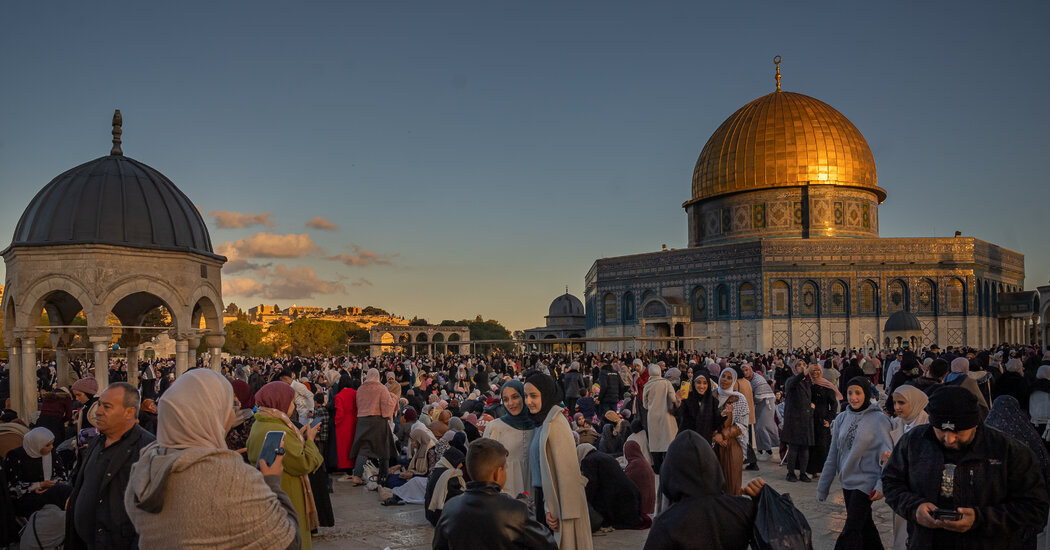
The Israeli occupation continues to close Al-Aqsa Mosque for the 36th consecutive day, raising concerns among Palestinians and the international community. This closure comes at a time when the security situation in Jerusalem is witnessing a significant escalation, with increasing incidents of violence and tensions between Palestinians and occupation forces.
This step is considered part of the occupation's policy aimed at controlling the sacred sites in the city, provoking widespread condemnation from Palestinians and Arab and Islamic countries. In recent days, protests and demonstrations have erupted in various Palestinian cities, where demonstrators express their rejection of these measures, viewing them as violations of their religious rights.
Details of the Incident
The occupation measures include closing all doors of Al-Aqsa Mosque, preventing worshippers from accessing it. Military barriers around the mosque have been reinforced, making access even more difficult. Arrests have been reported of several Palestinian youths who attempted to approach the mosque.
In a related context, local sources reported that occupation forces conducted thorough searches of worshippers at the checkpoints, leading to heightened tensions in the area. This closure comes at a time when calls from extremist groups to storm Al-Aqsa Mosque are increasing, raising fears of escalating violence.
Background & Context
Historically, Al-Aqsa Mosque is one of the holiest sites for Muslims and has been a focal point of ongoing tensions between Palestinians and the Israeli occupation. Since the occupation of Jerusalem in 1967, the mosque has witnessed numerous incursions and closures, leading to heightened tensions in the city.
In recent years, attempts by the occupation to control Al-Aqsa Mosque have increased, with several policies implemented to change the status quo in the city. These policies include increasing the number of settlers in Jerusalem and restricting the freedom of movement for Palestinian worshippers, provoking angry reactions from the international community.
Impact & Consequences
These measures exacerbate the humanitarian situation in Jerusalem, where Palestinians suffer from strict restrictions on their freedom of worship and movement. The continued closure of Al-Aqsa Mosque could lead to an escalation of violence in the region, threatening stability in Jerusalem and Palestine as a whole.
Moreover, these policies may negatively impact relations between Israel and Arab countries, as they provoke widespread condemnation in the Islamic world. Such tensions could escalate political and diplomatic stances among the involved parties.
Regional Significance
The closure of Al-Aqsa Mosque is a central issue in the Palestinian-Israeli conflict, eliciting strong reactions from Arab and Islamic countries. These events remind the world of the importance of the Palestinian cause and its impact on security and stability in the region.
In light of these circumstances, Arab countries continue to call for the protection of sacred sites in Jerusalem and emphasize the importance of dialogue to resolve the conflict. Additionally, these events may enhance Arab and Islamic solidarity with Palestinians in the face of occupation.
In conclusion, Al-Aqsa Mosque remains a symbol of Palestinian resilience, reflecting the challenges faced by the Palestinian people in their quest for freedom and justice. Its continued closure represents a significant challenge not only for Palestinians but also for the entire Arab nation.