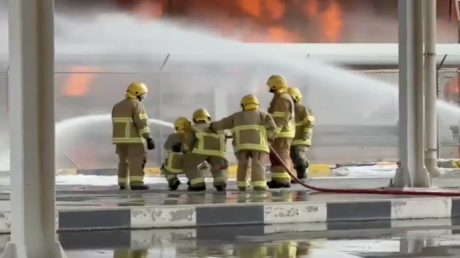
The Kuwait Fire Service announced its successful control over the fire that erupted at the fuel tanks of Kuwait International Airport after a strenuous effort lasting 58 hours. The fire, which began early last week, caused considerable anxiety among travelers and airport staff, but authorities confirmed that no human injuries were reported.
Firefighting teams rushed to the scene as soon as the fire broke out, employing advanced techniques and specialized equipment to combat the flames. The firefighting efforts helped minimize material damage, as the fire was contained before it could spread to other areas of the airport.
Details of the Incident
The fire ignited in the fuel tanks at Kuwait International Airport, one of the largest airports in the region, prompting a significant mobilization of firefighting teams. Over 200 firefighters, along with fire trucks and heavy equipment, were summoned to deal with the blaze that threatened the safety of the airport.
Firefighting operations continued throughout the night, with teams divided into groups to ensure effective control of the fire. Water and specialized chemicals were used to extinguish the flames, which helped reduce the smoke billowing into the sky.
Background & Context
Kuwait is considered one of the leading aviation countries in the region, with Kuwait International Airport hosting numerous domestic and international flights. Incidents related to fires at airports are not new; many countries have experienced similar events, necessitating stringent preventive measures.
In recent years, the Kuwaiti government has upgraded safety systems at the airport, including enhancing the capabilities of firefighting teams and training for handling major incidents. This incident highlights the importance of such training and preparedness in facing crises.
Impact & Consequences
The impact of the fire on air traffic was limited, as swift actions were taken to ensure passenger safety. However, the incident may affect the airport's reputation and raise questions about the efficiency of the safety systems in place.
It is worth noting that similar incidents could lead to a comprehensive review of security and preventive measures at airports, which may require additional investments in infrastructure and modern technologies.
Regional Significance
Incidents related to fires at airports are a concern for all Arab countries, as any incident could impact air travel and tourism in the region. Kuwait, being a regional aviation hub, may face additional challenges in attracting tourists and investors following this incident.
Moreover, the incident underscores the necessity of enhancing cooperation among Arab countries in the field of aviation safety, where experiences and modern technologies can be shared to mitigate risks.
In conclusion, controlling the fire at Kuwait International Airport is a significant achievement for the firefighting service, reflecting the efforts made to ensure passenger safety. However, this incident should serve as a catalyst for improving preventive measures and enhancing safety in Arab airports.