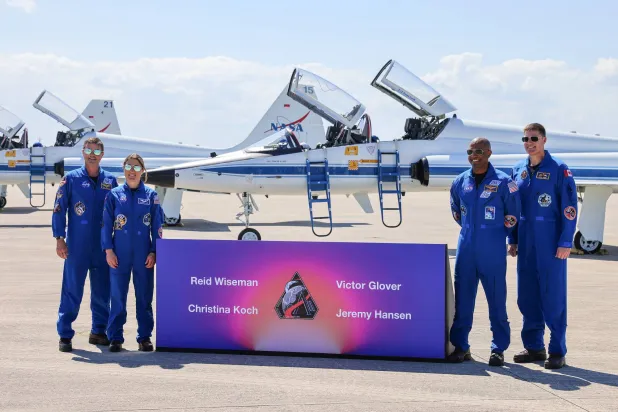
NASA has initiated the countdown for the first manned mission to the Moon in 53 years, with the launch date set for next Monday. This mission, named Artemis, aims to return humans to the lunar surface and is considered a crucial step in space exploration and preparing for future missions to Mars.
This initiative comes after decades of hiatus from manned lunar flights, with the last crewed mission to the Moon occurring in 1972. Since then, NASA has focused on developing new technologies and exploring outer space through uncrewed vehicles.
Event Details
The new mission will see astronauts sent to the Moon, where they will conduct scientific experiments and explore uncharted areas. The mission is expected to include the first woman and the first person of color to land on the lunar surface, reflecting NASA's commitment to diversity and inclusivity in its programs.
The mission will utilize a new rocket known as SLS (Space Launch System) and the Orion spacecraft, which will transport the astronauts to the Moon. After launch, the spacecraft will orbit the Moon before landing in the lunar south pole region, which is considered rich in resources.
Background & Context
Historically, the United States has been a pioneer in space exploration, launching the Apollo program in the 1960s and 1970s, which resulted in 12 astronauts landing on the Moon. However, interest in lunar missions waned after the Apollo program ended, with space agencies focusing on exploring other planets such as Mars.
In recent years, competition in the space sector has increased, with countries like China, Russia, and India seeking to advance their space programs. In this context, NASA launched the Artemis program as part of its strategy to regain leadership in space exploration.
Impact & Consequences
The Artemis mission is a strategic step that enhances the United States' standing in space, potentially leading to the development of new technologies in various fields such as communications and energy. Furthermore, this mission may open new avenues for international cooperation in space exploration.
Moreover, success in this mission could encourage further investments in the space sector, contributing to the development of the global economy and fostering technological innovation.
Regional Significance
For Arab countries, this event represents an opportunity to enhance cooperation in space and technology fields. Many Arab nations have begun developing their own space programs, such as the United Arab Emirates, which launched the Hope Probe to Mars.
This new mission could inspire Arab youth and encourage them to engage in science, technology, engineering, and mathematics (STEM) fields, contributing to building a new generation of scientists and engineers in the region.
In conclusion, the countdown to the Artemis mission launch marks a milestone in the history of space exploration and reflects humanity's commitment to continue exploring the unknown.